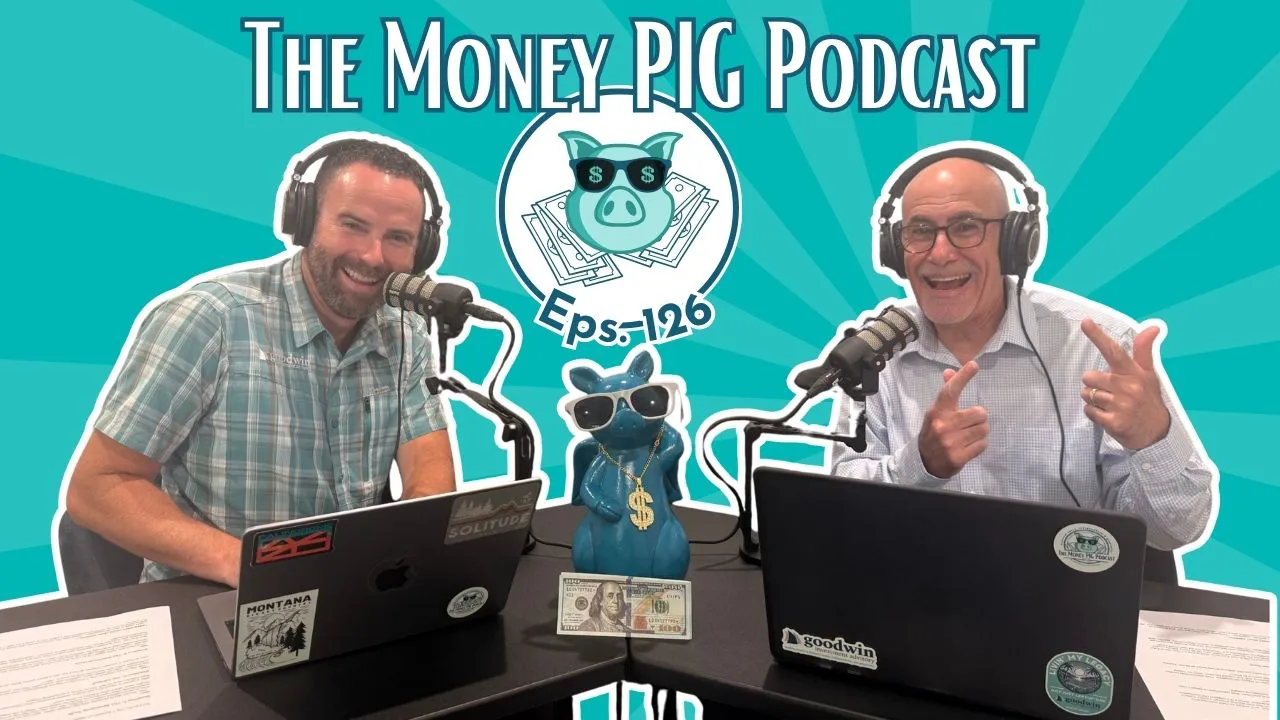


In this episode of The Money Pig Podcast, Tim Goodwin sits down with financial planner and author Justin Pitcock to unpack the powerful strategies behind his new book, The Tax Wise Wealth Blueprint, a practical guide designed to help families, business owners, retirees, and investors legally keep more of what they earn. Justin explains why tax planning should never be separated from investing, revealing how smart decisions around Roth conversions, capital gains, donor advised funds, and retirement withdrawals can potentially save people tens or even hundreds of thousands of dollars over their lifetime. If you have ever wondered why wealthy families seem to “play by different rules,” this episode explains the strategies hiding in plain sight.
The conversation dives deep into the hidden tax traps that quietly destroy long term wealth, including the infamous Social Security tax torpedo, ACA subsidy cliffs, poorly timed retirement withdrawals, and missed opportunities during low income years. Justin shares how most people unknowingly overpay taxes simply because they lack a coordinated strategy between their CPA, investments, and financial plan. He also breaks down advanced concepts like tax loss harvesting, gain harvesting, and building wealth across the three major tax buckets: taxable, tax deferred, and tax free. The message is clear: tax planning is not just for accountants. It is one of the most important wealth building tools available.
Perhaps the biggest takeaway from the episode is that retirement tax planning is not one size fits all. Justin challenges common “radio advice” and generic financial rules by showing why personalized planning matters far more than cookie cutter strategies. Whether you are preparing for retirement, building a business, investing in real estate, or simply trying to stop giving the IRS more than necessary, The Tax Wise Wealth Blueprint offers actionable strategies that can immediately improve your financial future. This episode is a must listen for anyone serious about lowering taxes, increasing investment efficiency, and creating lasting wealth for future generations.
Additional Resources:
https://www.goodwininvestment.com/the-tax-wise-wealth-blueprint/
https://www.amazon.com/Tax-Wise-Wealth-Blueprint-Generously-Legacy/dp/B0GZDZ813B
The following transcript of the podcast audio was software-generated, and not reviewed for accuracy. Therefore, the transcript below should not be used without verifying the validity and accuracy of its content. Please contact Goodwin Investment Advisory with any questions.
Tim (00:02)
And welcome back to the money pick podcast. I’m your host with special guest Justin. Wow. Wow. Wow. Wow. All right. And we are very excited to have Justin here to be talking about his new book, The Tax-Wise Wealth Blueprint. But before we get into your book, Justin, which I’m super excited to talk about, who would win the race between the lettuce and the tomato?
Justin (00:02)
And welcome back to the money pick podcast. I’m your host with special guest Justin. Wow. Wow. Wow. Wow. All right. And we are very excited to have Justin here to be talking about his new book, The Tax-Wise Wealth Blueprint. But before we get into your book, Justin, which I’m super excited to talk about, who would win the race between the lettuce and the tomato?
Tim (00:30)
Oh gosh, I have no idea the tomato. The lettuce would be ahead and the tomato would catch up. That’s a good one. That’s a good one. my gosh. Yeah, you gotta you gotta give that one to your kids. Alright Justin, share with the audience something that’s interesting about yourself. Well, I’m a girl dad now. Yeah, let’s go. I’ve got two boys and a girl. She’s six weeks old at this point. Yeah, she’s sleeping through the night.
Justin (00:30)
Oh gosh, I have no idea the tomato. The lettuce would be ahead and the tomato would catch up. That’s a good one. That’s a good one. gosh. Yeah, you gotta you gotta give that one to your kids. Alright, Justin share with the audience something that’s interesting about yourself. Well, I’m a girl dead now. Yeah, let’s go. I’ve got two boys and a girl. She’s six weeks old at this point. Yeah, she’s sleeping through the night.
Tim (00:57)
Not at all. Not at all. Oh, man. It’s a rough period of time for parent. It is. It’s harder this time, too, than it was with the last one, because the boys have to like get up for school. And so like no matter how little sleep we got in the middle of the night, like we still have to be up, you know, for the 650 bus arrival. God, Lee, that’s brutal. But, you know, it’s slow, but it’s like every day gets a tiny bit. It’s getting better. Yeah, it’s getting better. It’s very small and incremental at first. So.
Justin (00:57)
Not at all. Not at all. Oh, man. It’s a rough period of time for parent. It is. It’s harder this time, too, than it was with the last one, because the boys have to like get up for school. And so like no matter how little sleep we got in the middle of the night, like we still have to be up, you know, for the 650 bus arrival. God, Lee, that’s brutal. But, you know, it’s slow, but it’s like every day gets a tiny bit. It’s getting better. Yeah, it’s getting better. It’s very small and incremental at first. So.
Tim (01:26)
Well, we’re super, super, I’m super excited that you’re a girl dad now as well. So. yeah, you’re not biased, are you? So I am very biased, highly biased. So, ⁓ well, awesome. So we want to unpack this. you know, no, don’t know. Have you ever met anybody that’s like, I’m fine paying all the taxes I pay. You know, I don’t mind if I pay more taxes. That’s not. So nobody wants to like pay off our national debt.
Justin (01:26)
Well, we’re super, super, I’m super excited that you’re a girl dad now as well. So. yeah, you’re not biased, are you? So I am very biased, highly biased. So, ⁓ well, awesome. So we want to unpack this. you know, no, don’t know. Have you ever met anybody that’s like, I’m fine paying all the taxes I pay. You know, I don’t mind if I pay more taxes. That’s not. So nobody wants to like pay off our national debt.
Tim (01:51)
all by themselves. 37 trillion. No big deal. No big deal. Some people try but I don’t think they really want to. my goodness. Yeah. So you I think have been very passionate about this for a long time really helping us as a practice and our clients really be more intentional about what they’re doing in terms of investing and planning and how it affects their taxes. And because everybody would really like to just.
Justin (01:51)
all by themselves. 37 trillion. No big deal. No big deal. Some people try but I don’t think they really want to. my goodness. Yeah. So you I think have been very passionate about this for a long time really helping us as a practice and our clients really be more intentional about what they’re doing in terms of investing and planning and how it affects their taxes. And because everybody would really like to just.
Tim (02:18)
pay less, right? Right. So now you’ve taken it to the nth degree and published show the watchers the watchers viewers at home. The tax wise wealth blueprint. So how to keep more of what you earn give generously and build a legacy that lasts. Okay, ladies and gentlemen, he literally right up here author in the house y’all. it is on Amazon.
Justin (02:18)
pay less, right? Right. So now you’ve taken it to the nth degree and published show the watchers the watchers viewers at home. The tax wise wealth blueprint. So how to keep more of what you earn give generously and build a legacy that lasts. Okay, ladies and gentlemen, he literally right up here author in the house y’all. So it is on Amazon.
Tim (02:45)
We are super you said you’re working on the Kindle version. There’s going to be an ebook version hopefully in the next maybe next week it’ll be available so you can by the time this podcast is released it’ll be paperback ebook and then I don’t know I might do an audio version. Yes do one do one. That would be great. So now you can go and download this book for free and we’ll get to that. We’ll remind you about that again at the end but you also can can buy the book on Amazon so.
Justin (02:45)
We are super you said you’re working on the Kindle version. There’s going to be an ebook version hopefully in the next maybe next week it’ll be available so you can by the time this podcast is released it’ll be paperback ebook and then I don’t know I might do an audio version. Yes do one do one. That would be great. So now you can go and download this book for free and we’ll get to that. We’ll remind you about that again at the end but you also can can buy the book on Amazon so.
Tim (03:13)
Justin, let’s just go ahead and get started. What inspired you to write this book and who did you have in mind when you wrote it? All right. So I wanted to start this book back in 2019. Come on. And actually I started it and then life got in the way, it got busy and I just dropped it for a while. So about a year ago, I picked it back up, started writing and I’ve learned a lot along the way just from working with clients. And so it came a lot more naturally. It wasn’t just like,
Justin (03:13)
Justin, let’s just go ahead and get started. What inspired you to write this book and who did you have in mind when you wrote it? All right. So I wanted to start this book back in 2019. Come on. And actually I started it and then life got in the way, it got busy and I just dropped it for a while. So about a year ago, I picked it back up, started writing and I’ve learned a lot along the way just from working with clients. And so it came a lot more naturally. It wasn’t just like,
Tim (03:43)
All this cool stuff that I learned doing the CFP program is like, no, this is actually what I help people with every day. And so the target audience really, mean, feel like anybody, whether you’re a business owner, somebody in your forties building wealth for retirement, somebody who is just about to retire or a real estate investor, there’s some nuggets in here for everybody. I’ve broken it down in plain English where hopefully even folks that
Justin (03:43)
All this cool stuff that I learned doing the CFP program is like, no, this is actually what I help people with every day. And so the target audience really, mean, feel like anybody, whether you’re a business owner, somebody in your forties building wealth for retirement, somebody who is just about to retire or a real estate investor, there’s some nuggets in here for everybody. I’ve broken it down in plain English where hopefully even folks that
Tim (04:13)
would typically be reading this as something to help them fall to sleep. Hopefully it’s more engaging. It’s told through stories. There’s dad jokes mixed in. You’ll pick up a few that you’ll like. that. And when I agree, because I haven’t gotten to finish yet. We just had it for a couple of days, you know, in print. but but I agree with you. Like it is not I guess if I heard about a tax a book on taxes, I would think it would be like a textbook. Like, yes, things that make me fall asleep. Like you were saying, like this is something some.
Justin (04:13)
would typically be reading this as something to help them fall to sleep. Hopefully it’s more engaging. It’s told through stories. There’s dad jokes mixed in. You’ll pick up a few that you’ll like. that. And when I agree, because I haven’t gotten to finish yet. We just had it for a couple of days, you know, in print. but but I agree with you. Like it is not I guess if I heard about a tax a book on taxes, I would think it would be like a textbook. Like, yes, things that make me fall asleep. Like you were saying, like this is something some.
Tim (04:41)
CPA should be reading to take a test but I really feel like you did a good job making it layman’s terms making it very kind of palatable ⁓ and so I’m really enjoying reading through it and I think it’s it’s literally the book that pays you to read through it right. Yes. a book on how to save taxes because because of those things that you’re sharing that you’re sharing in the book so your your ROI is going to be very likely it’s all about the people there are books that are just interesting to read or challenge you or grow you in areas.
Justin (04:41)
CPA should be reading to take a test but I really feel like you did a good job making it layman’s terms making it very kind of palatable ⁓ and so I’m really enjoying reading through it and I think it’s it’s literally the book that pays you to read through it right. Yes. a book on how to save taxes because because of those things that you’re sharing that you’re sharing in the book so your your ROI is going to be very likely it’s all about the people there are books that are just interesting to read or challenge you or grow you in areas.
Tim (05:11)
This book is literally designed to make you money. So yes. And like you said, Justin, you were inspired six, seven years ago to start writing it and took a break. You you got got kids and right now some some really, really really happened. But and but but all along that time, you now have more experience. So you’re leaning from your ⁓ education.
Justin (05:11)
This book is literally designed to make you money. So yes. And like you said, Justin, you were inspired six, seven years ago to start writing it and took a break. You you got got kids and right now some some really, really really happened. But and but but all along that time, you now have more experience. So you’re leaning from your ⁓ education.
Tim (05:34)
and knowledge between your college degree or master’s degree and your CFP, somewhat degree, certified financial planner. Right, yeah, that’s like a master’s degree basically. It really is, it really is. So you’ve got that really strong education and now you’re also speaking with lots of experience. mean, you could be bumping up on a thousand meetings that you’ve had, right? Yeah, mean, easily. Easily, easily a thousand meetings with clients.
Justin (05:34)
and knowledge between your college degree or master’s degree and your CFP, somewhat degree, certified financial planner. Right, yeah, that’s like a master’s degree basically. It really is, it really is. So you’ve got that really strong education and now you’re also speaking with lots of experience. mean, you could be bumping up on 1,000 meetings that you’ve had, right? Yeah, mean, easily. Easily, easily 1,000 meetings with clients.
Tim (05:59)
Yeah, you’re not. It’s not just hearsay. It’s not just like I hope this works for you. It’s not just like, I read this article one time. Do this. A lot of it. You’ve got some good experience with stuff. It’s stuff that I help people with every day. And that’s the thing that I wanted to share here because, you know, I don’t have the opportunity to meet with an unlimited number of people. And so it can certainly have a larger impact by putting that into a book where folks can read that. Hopefully, you know, it
Justin (05:59)
Yeah, you’re not. It’s not just hearsay. It’s not just like I hope this works for you. It’s not just like, I read this article one time. Do this. A lot of it. You’ve got some good experience with stuff. It’s stuff that I help people with every day. And that’s the thing that I wanted to share here because, you know, I don’t have the opportunity to meet with an unlimited number of people. And so it can certainly have a larger impact by putting that into a book where folks can read that. Hopefully, you know, it
Tim (06:28)
It sparks questions even like if one of my clients were to read this, know great. You’ll probably come up with some questions. It’s like Justin. Why haven’t we talked about this yet and hey, that’s a great question will unpack that that yeah yeah there’s so many things. So let’s let’s unpack a couple of the things we were just told by the producers don’t give too much of the book away Justin. This is supposed to be the teaser but why do you believe that like tax planning investing should not be separate conversations? Why is this such an integrated thing?
Justin (06:28)
It sparks questions even like if one of my clients were to read this, know great. You’ll probably come up with some questions. It’s like Justin. Why haven’t we talked about this yet and hey, that’s a great question will unpack that that yeah yeah there’s so many things. So let’s let’s unpack a couple of the things we were just told by the producers don’t give too much of the book away Justin. This is supposed to be the teaser but why do you believe that like tax planning investing should not be separate conversations? Why is this such an integrated thing?
Tim (06:56)
Why is it better to think about it together? So investments and taxes go hand in hand. There’s a ton of reasons why, like, yes, like your investment advisor should be your financial planner, should be your tax planner. everything from just like what you’re invested in, it kicks out dividends that shows up on your tax return, the interest, things like asset location, the
Justin (06:56)
Why is it better to think about it together? So investments and taxes go hand in hand. There’s a ton of reasons why, like, yes, like your investment advisor should be your financial planner, should be your tax planner. everything from just like what you’re invested in, it kicks out dividends that shows up on your tax return, the interest, things like asset location, the
Tim (07:25)
account type that things are invested in. For example, high income producing investments need to be in tax sheltered accounts like an IRA. Growth assets that pay little income, okay, that could be outside of a retirement account because it could grow basically tax free until you sell it. we would call that asset location. So the number one rule of tax planning is start early.
Justin (07:25)
account type that things are invested in. For example, high income producing investments need to be in tax sheltered accounts like an IRA. Growth assets that pay little income, okay, that could be outside of a retirement account because it could grow basically tax free until you sell it. we would call that asset location. So the number one rule of tax planning is start early.
Tim (07:55)
The second one is timing. And we wouldn’t say like as an investment advisor, we’re trying to time the market. I mean, it’s always nice to buy the dip, but we’re not like market timers. Well, with tax planning, it’s all about timing. And that’s easy. You have all year to plan. If it’s a low income year, what you can do is accelerate income. So how do you do that? You could realize capital gains. You could do a Roth conversion. You could…
Justin (07:55)
The second one is timing. And we wouldn’t say like as an investment advisor, we’re trying to time the market. I mean, it’s always nice to buy the dip, but we’re not like market timers. Well, with tax planning, it’s all about timing. And that’s easy. You have all year to plan. If it’s a low income year, what you can do is accelerate income. So how do you do that? You could realize capital gains. You could do a Roth conversion. You could…
Tim (08:24)
Contribute to your 401k on a Roth basis versus pre-tax. Okay, let’s say it’s a high income year. Now, what do we do? We defer income so we could do pre-tax contributions to the 401k You could not realize gains on your portfolio ⁓ You could bunch deductions accelerate deductions into those high income years, so ⁓ We use tools like a donor advice fund where you can
Justin (08:24)
Contribute to your 401k on a Roth basis versus pre-tax. Okay, let’s say it’s a high income year. Now, what do we do? We defer income so we could do pre-tax contributions to the 401k You could not realize gains on your portfolio ⁓ You could bunch deductions accelerate deductions into those high income years, so ⁓ We use tools like a donor advice fund where you can
Tim (08:54)
group multiple years of planned giving into an account where you control that account but you get the tax deduction that year and you can still give out of that account direct grants out of that account to go to church or charity wherever you want it to go and you can keep that month you know like for example if the church is getting a check from you every month like they probably don’t want one check in December skip a year and then get their next check the January you know like planning
Justin (08:54)
group multiple years of planned giving into an account where you control that account but you get the tax deduction that year and you can still give out of that account direct grants out of that account to go to church or charity wherever you want it to go and you can keep that month you know like for example if the church is getting a check from you every month like they probably don’t want one check in December skip a year and then get their next check the January you know like planning
Tim (09:24)
Yeah, exactly. So you can still support your charities on a monthly basis, but you can change when you get that tax deduction. So timing matters a lot. There are things like tax torpedoes, tax cliffs, and phase outs that when you have, if somebody who’s managing your portfolio isn’t aware of your tax situation and they’re realizing capital gains or they’re investing things that spit out a lot of income,
Justin (09:24)
Yeah, exactly. So you can still support your charities on a monthly basis, but you can change when you get that tax deduction. So timing matters a lot. There are things like tax torpedoes, tax cliffs, and phase outs that when you have, if somebody who’s managing your portfolio isn’t aware of your tax situation and they’re realizing capital gains or they’re investing things that spit out a lot of income,
Tim (09:53)
they could put you into something like what I would call the social security tax torpedo. Or if you’re retired early and you’re on the marketplace healthcare plan and receiving the ACA healthcare subsidy, that’s a lot of money. And if they realize too much income, if they sold a stock or an investment at a gain and it pushed your adjusted gross income above the phase out, boom, you just lost, I don’t know, $10,000 or $20,000 in tax credits.
Justin (09:53)
they could put you into something like what I would call the social security tax torpedo. Or if you’re retired early and you’re on the marketplace healthcare plan and receiving the ACA healthcare subsidy, that’s a lot of money. And if they realize too much income, if they sold a stock or an investment at a gain and it pushed your adjusted gross income above the phase out, boom, you just lost, I don’t know, $10,000 or $20,000 in tax credits.
Tim (10:23)
Like the stakes are pretty high. What and what I like about what you’re sharing. I know you got a couple more before I move on. But I think if I was listening to this. And the first time I’m starting to try to think about OK well how to taxes play a role in my investments doesn’t my CPA just handles that right. Like the person that just handles my my tax return and they don’t. And they might want to. But just the nature of the beast is know CPAs.
Justin (10:23)
Like the stakes are pretty high. What and what I like about what you’re sharing. I know you got a couple more before I move on. But I think if I was listening to this. And the first time I’m starting to try to think about OK well how to taxes play a role in my investments doesn’t my CPA just handles that right. Like the person that just handles my my tax return and they don’t. And they might want to. But just the nature of the beast is know CPAs.
Tim (10:51)
that do your tax return and do your tax prep and file your return are in such high demand, they’re so needed, having to pay taxes on our income is so complex that they are doing their best just to get all the right information from you to do their best to pretty much guess how much taxes you owe. Sitting down and doing, them telling you these strategies that Justin is articulating that he talks about in his book and that we talk to our clients about.
Justin (10:51)
that do your tax return and do your tax prep and file your return are in such high demand, they’re so needed, having to pay taxes on our income is so complex that they are doing their best just to get all the right information from you to do their best to pretty much guess how much taxes you owe. Sitting down and doing, them telling you these strategies that Justin is articulating that he talks about in his book and that we talk to our clients about.
Tim (11:19)
It’s a different category entirely. It’s strategy. It’s planning. And again, we’ve got great CPAs that I know would love to be able to help you with that, but generally can’t. I do intentionally meet with my CPA during the slow season to try to have some of these conversations that I learned about in your book with them because they just don’t usually have the capacity to reach out. So that financial advisor, like we are, like Justin’s talking about,
Justin (11:19)
It’s a different category entirely. It’s strategy. It’s planning. And again, we’ve got great CPAs that I know would love to be able to help you with that, but generally can’t. I do intentionally meet with my CPA during the slow season to try to have some of these conversations that I learned about in your book with them because they just don’t usually have the capacity to reach out. So that financial advisor, like we are, like Justin’s talking about,
Tim (11:46)
Yes it’s a lot about your financial planning your investments but the taxes have to be considered because there’s all these planning opportunities or pitfalls like you said torpedoes and cliffs that can cause you to pay more taxes than you need to. I’ll reference something that you mentioned at the beginning of your book which is the tax code right. So the IRS tax code is something close to like four million words four million words but a very small percentage of those words I think something like 20 percent or less.
Justin (11:46)
Yes it’s a lot about your financial planning your investments but the taxes have to be considered because there’s all these planning opportunities or pitfalls like you said torpedoes and cliffs that can cause you to pay more taxes than you need to. I’ll reference something that you mentioned at the beginning of your book which is the tax code right. So the IRS tax code is something close to like four million words four million words but a very small percentage of those words I think something like 20 percent or less.
Tim (12:14)
actually talks about the taxes that you pay 80 percent of the code. Millions and millions of words are there to talk about deductions how to pay less how to pay less. But can you imagine you know you a CPA is a person you imagine individual having to keep up with those four million words. It’s constantly changing and growing. They can’t. They’ve got to focus on the part about the taxes you owe so you don’t get in trouble and you don’t have penalties etc etc.
Justin (12:14)
actually talks about the taxes that you pay 80 percent of the code. Millions and millions of words are there to talk about deductions how to pay less how to pay less. But can you imagine you know you a CPA is a person you imagine individual having to keep up with those four million words. It’s constantly changing and growing. They can’t. They’ve got to focus on the part about the taxes you owe so you don’t get in trouble and you don’t have penalties etc etc.
Tim (12:41)
It’s advisors like Justin and the team here at GI that care enough to try to unpack what is the other 80 % of the tax code talk about and how do I make sure that my clients and my friends and my family aren’t paying more taxes than they need to be paying. That’s that’s right. Your CPA is often looking at what happened in the past and that’s really the difference between what a CPA typically does. There’s some CPAs that do some tax planning but most of them are looking at what happened in the past. That’s right. And that’s a good point. There are some
Justin (12:41)
It’s advisors like Justin and the team here at GI that care enough to try to unpack what is the other 80 % of the tax code talk about and how do I make sure that my clients and my friends and my family aren’t paying more taxes than they need to be paying. That’s that’s right. Your CPA is often looking at what happened in the past and that’s really the difference between what a CPA typically does. There’s some CPAs that do some tax planning but most of them are looking at what happened in the past. That’s right. And that’s a good point. There are some
Tim (13:11)
things that after December 31st that you can still do until like April 15th. So that’s like their planning opportunity. What those few levers that you can pull. All right, all right. You could still make an IRA or Roth contribution. You could do a five to nine contribution or top off your HSA. That’s about it. And that’s the only opportunity the CPA has to influence your taxes for last year. Now it’s very different when we’re looking at.
Justin (13:11)
things that after December 31st that you can still do until like April 15th. So that’s like their planning opportunity. What those few levers that you can pull. All right, all right. You could still make an IRA or Roth contribution. You could do a five to nine contribution or top off your HSA. That’s about it. And that’s the only opportunity the CPA has to influence your taxes for last year. Now it’s very different when we’re looking at.
Tim (13:38)
a roadmap or just a projection of your whole financial future for the rest of your life. And we’re trying to figure out what can we do now to help your future self pay less in taxes compounded over your lifetime. Yeah it’s a big difference. It’s a big difference. It’s a really big difference. So are there any other you know I know we said don’t give away the farm here but any other reasons that you believe tax investing should go together that you want to share.
Justin (13:38)
a roadmap or just a projection of your whole financial future for the rest of your life. And we’re trying to figure out what can we do now to help your future self pay less in taxes compounded over your lifetime. Yeah it’s a big difference. It’s a big difference. It’s a really big difference. So are there any other you know I know we said don’t give away the farm here but any other reasons that you believe tax investing should go together that you want to share.
Tim (14:07)
I’ll give one other example. really just ties it to the investment. like, let’s say you have an investment property or you own a business and you’re planning to sell your business one day. knowing that that’s part of your plan, there’s things you could start doing with your investments to plan for that. You may have heard of tax loss harvesting. All right, so if you have a taxable brokerage account and one of your investments is down, well, we can turn that lemon into lemonade.
Justin (14:07)
I’ll give one other example. really just ties it to the investment. like, let’s say you have an investment property or you own a business and you’re planning to sell your business one day. knowing that that’s part of your plan, there’s things you could start doing with your investments to plan for that. You may have heard of tax loss harvesting. All right, so if you have a taxable brokerage account and one of your investments is down, well, we can turn that lemon into lemonade.
Tim (14:37)
sell it, realize the loss, buy replacement so that when the market rebounds, your portfolio still grows. But that loss can be used to offset future capital gains. there’s a whole order of operations here. And you can get you can read my book on this. ⁓ anyways, so you can plan for those future tax events by things that you do with your investments. Okay. Love it. That’s great.
Justin (14:37)
sell it, realize the loss, buy replacement so that when the market rebounds, your portfolio still grows. But that loss can be used to offset future capital gains. there’s a whole order of operations here. And you can get you can read my book on this. ⁓ anyways, so you can plan for those future tax events by things that you do with your investments. Okay. Love it. That’s great.
Tim (15:06)
And, you know, some of the things that we do internally as a team, you’re talking about the tax loss harvesting, we even talk about gain harvesting. Gain harvest. Yeah, as well, like on the lower income years, you were talking about that’s something that’s something that we’re constantly doing, as well. And then, you know, we’re so ingrained about generosity here, you were mentioning some of that with donor advice funds and giving that there’s a lot of strategies around how you give we realize that if our clients are giving cash,
Justin (15:06)
And, you know, some of the things that we do internally as a team, you’re talking about the tax loss harvesting, we even talk about gain harvesting. Gain harvest. Yeah, as well, like on the lower income years, you were talking about that’s something that’s something that we’re constantly doing, as well. And then, you know, we’re so ingrained about generosity here, you were mentioning some of that with donor advice funds and giving that there’s a lot of strategies around how you give we realize that if our clients are giving cash,
Tim (15:35)
but they have appreciated securities and a taxable account. They’re actually essentially quote unquote paying more taxes. Missing an opportunity. They’re an opportunity number three here. Yeah. right. Okay. Good. Well, let’s let’s jump into that number three here. What are some common tax related mistakes that can quietly erode wealth over time? I kind of mentioned it a second ago, but it’s it’s not realizing income in low income years. And so you just mentioned gain harvesting. So
Justin (15:35)
but they have appreciated securities and a taxable account. They’re actually essentially quote unquote paying more taxes. Missing an opportunity. They’re an opportunity number three here. Yeah. right. Okay. Good. Well, let’s let’s jump into that number three here. What are some common tax related mistakes that can quietly erode wealth over time? I kind of mentioned it a second ago, but it’s it’s not realizing income in low income years. And so you just mentioned gain harvesting. So
Tim (16:05)
capital gains are taxed differently than your ordinary income. And just like with the ordinary income brackets, there are capital gains tax brackets as well. Guess what? There’s a zero bracket. That means if you’re in that bracket and any portion of your capital gains happen to fit into that bracket, you pay zero on those gains. So if you’re in a low income year, just to give you an example, if you’re a couple filing jointly,
Justin (16:05)
capital gains are taxed differently than your ordinary income. And just like with the ordinary income brackets, there are capital gains tax brackets as well. Guess what? There’s a zero bracket. That means if you’re in that bracket and any portion of your capital gains happen to fit into that bracket, you pay zero on those gains. So if you’re in a low income year, just to give you an example, if you’re a couple filing jointly,
Tim (16:33)
and your income is below about 135,000, because after you take account for the standard deduction, any portion of that that’s attributed to long-term capital gains, you would pay zero tax on. So if you are in that situation, we should be realizing long-term capital gains when we can so that you pay zero on it now, because maybe in five years, you
Justin (16:33)
and your income is below about 135,000, because after you take account for the standard deduction, any portion of that that’s attributed to long-term capital gains, you would pay zero tax on. So if you are in that situation, we should be realizing long-term capital gains when we can so that you pay zero on it now, because maybe in five years, you
Tim (17:00)
you wanna buy a piece of land, you need a new car, whatever, big expense, and you need to withdraw a bunch of money from your portfolio. If we reset your basis, now you can access that money without paying potentially any tax on it then, because we realize those gains tax-free and advanced. And another common threshold there is doing Roth conversions. So while you’re earning,
Justin (17:00)
you wanna buy a piece of land, you need a new car, whatever, big expense, and you need to withdraw a bunch of money from your portfolio. If we reset your basis, now you can access that money without paying potentially any tax on it then, because we realize those gains tax-free and advanced. And another common threshold there is doing Roth conversions. So while you’re earning,
Tim (17:26)
money, you’re building wealth, you’re often in higher tax brackets. But once you retire, you normally drop down into a lower bracket. And then later on in life, when required minimum distributions kick in, it forces you to withdraw a certain amount from your pre tax accounts. And that often will bump you back up into a higher tax bracket. If not the highest of your life. It can be if you saved well, yes, it absolutely can be so during those gap years.
Justin (17:26)
money, you’re building wealth, you’re often in higher tax brackets. But once you retire, you normally drop down into a lower bracket. And then later on in life, when required minimum distributions kick in, it forces you to withdraw a certain amount from your pre tax accounts. And that often will bump you back up into a higher tax bracket. If not the highest of your life. It can be if you saved well, yes, it absolutely can be so during those gap years.
Tim (17:53)
If you were for example, in the 12 % ordinary income bracket, what if we did Roth conversions, then it’s going to lower your future RMDs, you would only pay 12 % federal income tax if we just filled up that bracket. So missing opportunities like that, like once the year is gone, and you didn’t take advantage of one of those things, you can’t go back, you can’t even amend that return because you didn’t do it. You didn’t do it. So you know, missing those opportunities. And the same thing applies to deductions.
Justin (17:53)
If you were for example, in the 12 % ordinary income bracket, what if we did Roth conversions, then it’s going to lower your future RMDs, you would only pay 12 % federal income tax if we just filled up that bracket. So missing opportunities like that, like once the year is gone, and you didn’t take advantage of one of those things, you can’t go back, you can’t even amend that return because you didn’t do it. You didn’t do it. So you know, missing those opportunities. And the same thing applies to deductions.
Tim (18:22)
And when you’re in a high income year and you have the opportunity to bunch deductions or accelerate deductions into that year Great, you should take it, you know take advantage of that opportunity Absolutely. So you’ve got some other reasons here some other tax mistakes you want to unpack some of those ⁓ We didn’t talk about like building wealth in the three different tax buckets so this you know the number one rule about tax planning is starting early and If you’re listening this and you’re still building wealth
Justin (18:22)
And when you’re in a high income year and you have the opportunity to bunch deductions or accelerate deductions into that year Great, you should take it, you know take advantage of that opportunity Absolutely. So you’ve got some other reasons here some other tax mistakes you want to unpack some of those ⁓ We didn’t talk about like building wealth in the three different tax buckets so this you know the number one rule about tax planning is starting early and If you’re listening this and you’re still building wealth
Tim (18:52)
intentionally build your wealth in all three tax types. So tax deferred, like a pre tax 401k or an IRA, tax free Roth, and then taxable, which would be like an individual or joint brokerage account. Those three tax types will give you a lot of ⁓ flat. Gosh, can’t talk tax flexibility so that later in life, you can craft your own tax bracket and oftentimes potentially pay zero
Justin (18:52)
intentionally build your wealth in all three tax types. So tax deferred, like a pre tax 401k or an IRA, tax free Roth, and then taxable, which would be like an individual or joint brokerage account. Those three tax types will give you a lot of ⁓ flat. Gosh, can’t talk tax flexibility so that later in life, you can craft your own tax bracket and oftentimes potentially pay zero
Tim (19:21)
on the money that you deferred later, maybe zero on the capital gains and well on the Roth you already paid tax on that so you don’t have to pay tax on it again. Yeah I think one of the things you’re helping me realize is because even though there are all are those three tax types I’ve always felt like well just get everything that you can into Roth what beats tax-free but the reality is based on the environment you’re in you know if you’ve got some tax deferred and some low-income years you could be realizing you some of that you know at a much lower tax bracket than when you put it in or to help offset
Justin (19:21)
on the money that you deferred later, maybe zero on the capital gains and well on the Roth you already paid tax on that so you don’t have to pay tax on it again. Yeah I think one of the things you’re helping me realize is because even though there are all are those three tax types I’ve always felt like well just get everything that you can into Roth what beats tax-free but the reality is based on the environment you’re in you know if you’ve got some tax deferred and some low-income years you could be realizing you some of that you know at a much lower tax bracket than when you put it in or to help offset
Tim (19:51)
some other loss you got or I have clients that deferred my you know they deferred money so pre tax money and because of their situation like they are withdrawing a certain amount it’s not a whole lot but a certain amount from their pre tax accounts they pay zero on it so they avoid it paying 22 24 percent years ago now they’re getting to take it out and they get to pay zero yeah that’s magic right there zero tax retirement it’s possible if you plan for it so ⁓ as we wrap up
Justin (19:51)
some other loss you got or I have clients that deferred my you know they deferred money so pre tax money and because of their situation like they are withdrawing a certain amount it’s not a whole lot but a certain amount from their pre tax accounts they pay zero on it so they avoid it paying 22 24 percent years ago now they’re getting to take it out and they get to pay zero yeah that’s magic right there zero tax retirement it’s possible if you plan for it so ⁓ as we wrap up
Tim (20:21)
is the last thing that you want our listeners to hear is that they should take the advice of the radio on taxes. So radio tax advice. ⁓ I would say that’s like another one of those common tax mistakes because if you’ve listened to the radio and you’re following the just the typical advice, they would tell you to do things that don’t make sense for your financial situation. For example, you’ll you’ll often hear if you just look this up, you’d say,
Justin (20:21)
is the last thing that you want our listeners to hear is that they should take the advice of the radio on taxes. So radio tax advice. ⁓ I would say that’s like another one of those common tax mistakes because if you’ve listened to the radio and you’re following the just the typical advice, they would tell you to do things that don’t make sense for your financial situation. For example, you’ll you’ll often hear if you just look this up, you’d say,
Tim (20:51)
for a retiree regarding their distribution strategy, they would say pull from the non retirement accounts first, then go to pre tax, then go to Roth. No, in reality, like we need to be strategic about that. We can lower significantly your lifetime taxes if we pull some from each, be smart about it. What it reminds me of is when people are like when that you’re out and about and they find out you’re a financial advisor and like, well, when should I take Social Security? And you’re like,
Justin (20:51)
for a retiree regarding their distribution strategy, they would say pull from the non retirement accounts first, then go to pre tax, then go to Roth. No, in reality, like we need to be strategic about that. We can lower significantly your lifetime taxes if we pull some from each, be smart about it. What it reminds me of is when people are like when that you’re out and about and they find out you’re a financial advisor and like, well, when should I take Social Security? And you’re like,
Tim (21:19)
Terris has all time on intro calls people are just like trying to get that free advice and you know, like you said the radio might say well take it early You never know if the government or take it late because then you’re gonna get the most like it really always depends on the plan It depends it really does and it’s the same with with what you’re talking about What when you’re withdrawing from what tax bracket it needs to be dynamic and personalized to you. Absolutely. Yeah, very cool Well as we kind of wrap up here and we love to kind of share things that we’re grateful for while you’re thinking about that I also wanted to just
Justin (21:19)
Terris has all time on intro calls people are just like trying to get that free advice and you know, like you said the radio might say well take it early You never know if the government or take it late because then you’re gonna get the most like it really always depends on the plan It depends it really does and it’s the same with with what you’re talking about What when you’re withdrawing from what tax bracket it needs to be dynamic and personalized to you. Absolutely. Yeah, very cool Well as we kind of wrap up here and we love to kind of share things that we’re grateful for while you’re thinking about that I also wanted to just
Tim (21:49)
you know, tell you how proud I am of you for writing this book. I think it’s a big deal. It’s really hard when you’re married, grown a family and being a part of a thriving business to just take time out in the afternoons and evenings and weekends and, you know, write a book. So this is really fantastic material. If you guys want to buy it, go to Amazon. If you want to download it for free, we have a landing page. If you just search Justin Pickock and the tax free free wealth tax wise wealth blueprint, you’ll
Justin (21:49)
you know, tell you how proud I am of you for writing this book. I think it’s a big deal. It’s really hard when you’re married, grown a family and being a part of a thriving business to just take time out in the afternoons and evenings and weekends and, you know, write a book. So this is really fantastic material. If you guys want to buy it, go to Amazon. If you want to download it for free, we have a landing page. If you just search Justin Pickock and the tax free free wealth tax wise wealth blueprint, you’ll
Tim (22:18)
you’ll find the site where you can download that instead of me just rattling off the URL to you guys. So yeah, Justin, go ahead, share what you’re grateful for. want to share two things. First, like having this third child has been really hard. And so I want to thank my wife for helping me to get more sleep. Appreciate that. then relating to my book, I had a bunch of people that…
Justin (22:18)
you’ll find the site where you can download that instead of me just rattling off the URL to you guys. So yeah, Justin, go ahead, share what you’re grateful for. want to share two things. First, like having this third child has been really hard. And so I want to thank my wife for helping me to get more sleep. Appreciate that. then relating to my book, I had a bunch of people that…
Tim (22:41)
that have helped with this. so my mother-in-law, especially she was my first beta reader. Nice. And went through. That’s a commitment of love right there. Oh yes, yes. She went through it and provided all kinds of suggestions. I implemented those and then she was willing to go through it a second time. So glutton for punishment. were a lot of other people that helped with it as well, but grateful for that. Shout out, shout out. Well, I’m grateful for you, Justin. I’m grateful you’re on the team and.
Justin (22:41)
that have helped with this. so my mother-in-law, especially she was my first beta reader. Nice. And went through. That’s a commitment of love right there. Oh yes, yes. She went through it and provided all kinds of suggestions. I implemented those and then she was willing to go through it a second time. So glutton for punishment. were a lot of other people that helped with it as well, but grateful for that. Shout out, shout out. Well, I’m grateful for you, Justin. I’m grateful you’re on the team and.
Tim (23:07)
and so bought in and helping folks by writing a book. I’m just grateful for you and that you’ve got that kind of passion in your life to share. that’s pretty awesome. So thank you guys so much. If you want any more information or to get connected with us, please go to goodwininvestment.com and connect. Otherwise, have a great day. Thanks for listening. Bye bye.
Justin (23:07)
and so bought in and helping folks by writing a book. I’m just grateful for you and that you’ve got that kind of passion in your life to share. that’s pretty awesome. So thank you guys so much. If you want any more information or to get connected with us, please go to goodwininvestment.com and connect. Otherwise, have a great day. Thanks for listening. Bye bye.
The Money PIG podcast is hosted by Reid Trego. Goodwin Investment Advisory is a Registered Investment Advisory firm regulated by the Securities and Exchange Commission in accordance and compliance with securities laws and regulations. Goodwin Investment Advisory does not render or offer to render personalized investment or tax advice through the Money PIG podcast. The information provided is for informational purposes only and does not constitute financial, tax, investment or legal advice.
For personalized financial guidance, schedule an intro call with our team at Goodwin Investment Advisory in Woodstock, Georgia . Our CFP® professionals can provide advice and help you navigate how to invest your wealth and plan for your retirement. We’d love to help you live out your legacy! To learn more about the benefits and services we offer click here.
Goodwin Investment Advisory is an SEC-registered investment adviser (CRD #131193), and this episode is produced by evanced.net. This podcast is for informational purposes only and is not investment advice or a recommendation to buy or sell any financial products, securities, digital assets, or other investments. It should not be used as the basis for any financial decisions. The host and/or guests may personally hold investments mentioned in this episode. All investments involve risk, and past performance does not guarantee future results. Please consult with a qualified financial adviser, tax professional, and attorney before taking action on any information shared.
Share This Story, Choose Your Platform!
Related Posts