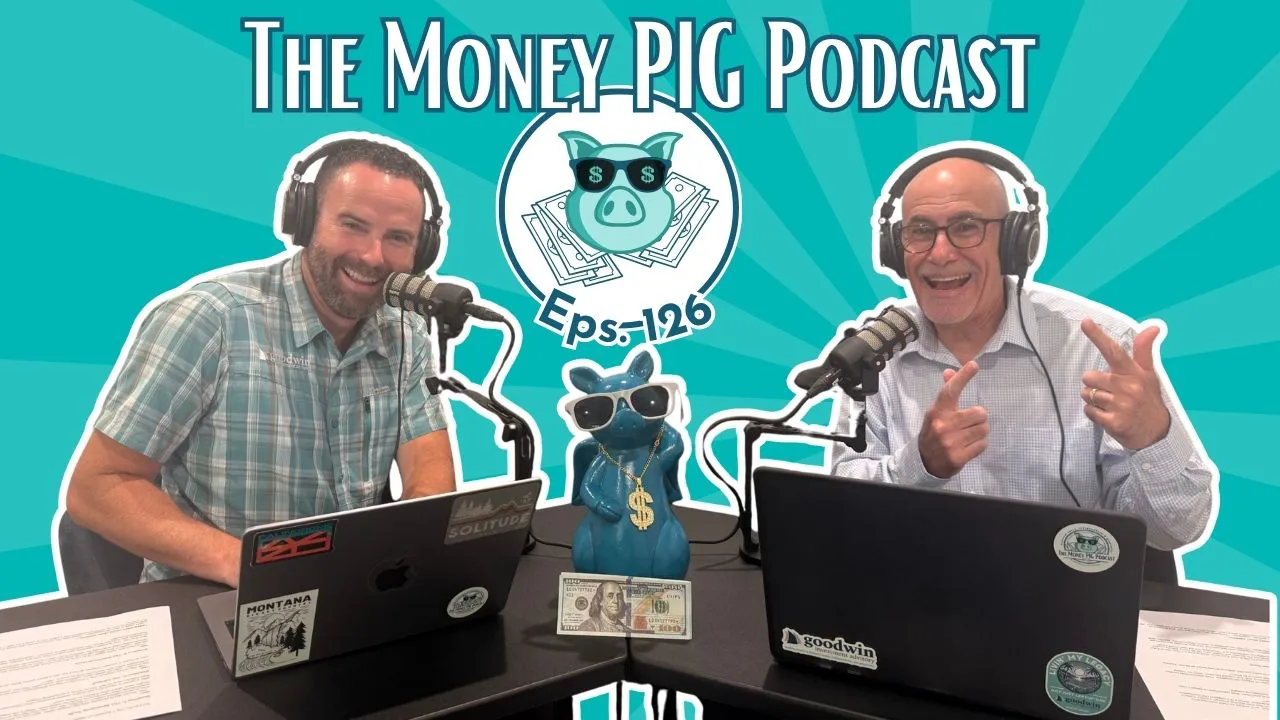

In this powerful episode of The Money Pig Podcast, Tim Goodwin and Joe Beckford tackle one of the biggest questions wealthy families face: will your money become a blessing or a burden for your children? The hosts unpack the harsh reality that most generational wealth disappears within just two generations, not because families lacked money, but because they failed to pass down the mindset, discipline, and values required to manage it wisely. Drawing from books like The Millionaire Next Door, they explain why simply handing wealth to heirs without preparation can unintentionally create entitlement, reduced ambition, and financial dysfunction.
Throughout the conversation, Tim and Joe share practical ways parents can raise grounded kids even while living with financial success. They discuss teaching delayed gratification, rewarding stewardship instead of entitlement, and helping children understand how wealth is actually built. From using apps like Greenlight to teach saving and investing, to creating intentional family conversations around money, generosity, and responsibility, the episode offers real world strategies families can begin using immediately. One of the strongest themes is that kids are always watching. Parents who model discipline, stewardship, and wise decision making are far more likely to pass down lasting wealth than parents who only pass down money.
The emotional centerpiece of the episode is the story of “Vanessa,” a woman who unexpectedly inherited significant wealth from parents who never discussed money openly. Rather than squander it, she transformed her inheritance into a multigenerational family mission built around stewardship, intentional giving, and family education. Her annual “State of the Trust” family meetings now teach future generations how to manage wealth wisely while preserving the values that created it in the first place. This episode is packed with practical financial wisdom, parenting insight, and legacy building advice for anyone who wants their wealth to strengthen future generations instead of quietly destroying them.
Additional Resources:
https://www.goodwininvestment.com/how-to-teach-your-kids-to-be-generous-with-money/
https://www.goodwininvestment.com/financial-life-hacks-for-college-students/
https://www.goodwininvestment.com/category/kids/
Enjoy the episode?
Subscribe, share it, and leave us a review on Apple or Spotify!
Like, subscribe, and leave us a review on YouTube if this resonated with you!
The following transcript of the podcast audio was software-generated, and not reviewed for accuracy. Therefore, the transcript below should not be used without verifying the validity and accuracy of its content. Please contact Goodwin Investment Advisory with any questions.
Tim (00:01)
And welcome back to the money pig podcast. We’re your hosts Joe Beckford and Tim Goodwin. And today we are really looking forward to talking to you guys about will your wealth help or hurt your kids. But before we do Joe I don’t know if you’ve ever gone out in the field and tried to like throw a boomerang. I couldn’t quite remember how to throw one the other day but it did eventually come back to me.
Joe (00:01)
And welcome back to the money pig podcast. We’re your hosts Joe Beckford and Tim Goodwin. And today we are really looking forward to talking to you guys about will your wealth help or hurt your kids. But before we do Joe I don’t know if you’ve ever gone out in the field and tried to like throw a boomerang. I couldn’t quite remember how to throw one the other day but it did eventually come back to me.
Tim (00:31)
That reminds me of a story. ⁓ gosh, let’s hear it. So you know, we’re all about people’s careers and advancing their careers and stuff like that, right? So why did the invisible man turn down the job? Why? He couldn’t see himself doing it. Fantastic. So great. I know that’s why you guys all tune in is for these fantastic dad jokes we have. We just can’t help it. So
Joe (00:31)
That reminds me of a story. ⁓ gosh, let’s hear it. So you know, we’re all about people’s careers and advancing their careers and stuff like that, right? So why did the invisible man turn down the job? Why? He couldn’t see himself doing it. Fantastic. So great. I know that’s why you guys all tune in is for these fantastic dad jokes we have. We just can’t help it. So
Joe, share something interesting about yourself with the audience. Your favorite segment of the show, of course. Oh, my favorite segment of the show. OK, so let’s see. So you know how people are mountain people or beach people? Yeah. Mostly. I’m a mountain person. you? Yeah. For sure. you have kind of a mountain house. I mountain cabin. prefer that. Georgia. Yeah. So why the mountains over the beach, I like the beach.
Tim (00:58)
Joe, share something interesting about yourself with the audience. Your favorite segment of the show, of course. Oh, my favorite segment of the show. OK, so let’s see. So you know how people are mountain people or beach people? Mostly. I’m a mountain person. you? Yeah. For Well, you have kind of a mountain house. I mountain cabin. prefer that. Georgia. Yeah. So why the mountains over the beach, I like the beach.
But like salt, just feel like ick is on me from the salt water and stuff. I’m saying I don’t go to the beach, I don’t like it, and it’s fun. But sand gets everywhere and the salt. It just eats up everything. so much. You know, I think you knew me before I got rid of the 4Runner, the 97 Toyota 4Runner that I drove 333,000 miles. When I would go to the beach and take the 4Runner, and you’re moving the chairs, the beach chairs in and out of the back of the 4Runner.
Joe (01:28)
But like salt, just feel like ick is on me from the salt water and stuff. I’m saying I don’t go to the beach, I don’t like it, and it’s fun. But sand gets everywhere and the salt. It just eats up everything. so much. You know, I think you knew me before I got rid of the 4Runner, the 97 Toyota 4Runner that I drove 333,000 miles. When I would go to the beach and take the 4Runner, and you’re moving the chairs, the beach chairs in and out of the back of the 4Runner.
Tim (01:57)
and so sand would get in my car. I would refuse to vacuum that sand for months because it just reminded me of being at the beach so much. So like I always hear people like they’re like saying it’s ever I’m like I know it’s great and it reminds you about that great trip to the beach. I don’t know. really do. I love the beach. The other the other and I had mentioned that before so I had one more thing about myself and I probably share this a little bit but my family really loves camping and.
Joe (01:57)
and so sand would get in my car. I would refuse to vacuum that sand for months because it just reminded me of being at the beach so much. So like I always hear people like they’re like saying it’s ever I’m like I know it’s great and it reminds you about that great trip to the beach. I don’t know. really do. I love the beach. The other the other and I had mentioned that before so I had one more thing about myself and I probably share this a little bit but my family really loves camping and.
Tim (02:27)
It’s more glamping. Let’s be honest. Let’s be real. Let’s be real We’re now like in a class a motorhome, but as opposed to a tent Yes, yes did a lot of that as an Eagle Scout I guess it’s something else interesting about me plenty of plenty of tent camping in my life I paid my dues in tents snow rain, whatever But yeah, it’s just fun that we all five of us really enjoy that I would say seven because the two little dogs we have Pippin Roxy if they even see me go near the RV or if I turn it on
Joe (02:27)
It’s more glamping. Let’s be honest. Let’s be real. Let’s be real We’re now like in a class a motorhome, but as opposed to a tent Yes, yes did a lot of that as an Eagle Scout I guess it’s something else interesting about me plenty of plenty of tent camping in my life I paid my dues in tents snow rain, whatever But yeah, it’s just fun that we all five of us really enjoy that I would say seven because the two little dogs we have Pippin Roxy if they even see me go near the RV or if I turn it on
Tim (02:57)
They are there. They are there. They’re coming in. Roxy is like my little hood ornament. If you think about how big the windshield is of class A, it’s like a bus. But there’s this really big dash inside, obviously, in front of that windshield. And she just will perch there, which is adorable. But she also, yeah, she’s got the best view in the house, man. I feel like she’s watching IMAX theater. Anyway, so that’s super fun.
Joe (02:57)
They are there. They are there. They’re coming in. Roxy is like my little hood ornament. If you think about how big the windshield is of class A, it’s like a bus. But there’s this really big dash inside, obviously, in front of that windshield. And she just will perch there, which is adorable. But she also, yeah, she’s got the best view in the house, man. I feel like she’s watching IMAX theater. Anyway, so that’s super fun.
Tim (03:26)
Well Joe so we are going to dive into will your wealth help or hurt your kids. mean this this is a topic I think a lot of folks are aware of and I think when it comes to our clients they are really hoping it helps their kids. I don’t know that folks are acquiring wealth going this is going to hurt my kids. You know what mean. But we know if we’re not super intentional it can. 100 percent. And this is a conversation that I have all the time with clients. So this is a it’s a it’s a big big deal.
Joe (03:26)
Well Joe so we are going to dive into will your wealth help or hurt your kids. mean this this is a topic I think a lot of folks are aware of and I think when it comes to our clients they are really hoping it helps their kids. I don’t know that folks are acquiring wealth going this is going to hurt my kids. You know what mean. But we know if we’re not super intentional it can. 100 percent. And this is a conversation that I have all the time with clients. So this is a it’s a it’s a big big deal.
Tim (03:56)
You know, and our clients, I we’re private wealth firm, and so a lot of our clients are affluence, and so there is gonna be money that’s passed down. And so it’s a big thing. And there’s a wide range of opinions on how to pass it down and all that stuff. So it’s something that we talk about a lot. It is. So.
Joe (03:56)
You know, and our clients, I we’re private wealth firm, and so a lot of our clients are affluence, and so there is gonna be money that’s passed down. And so it’s a big thing. And there’s a wide range of opinions on how to pass it down and all that stuff. So it’s something that we talk about a lot. It is. So.
Tim (04:20)
You get to go first this time. Usually you’re asking me questions, right? This time I ask you a question. So tell me, why would you say that it’s important for people, families in particular, to pass down their values before they pass down money? I know you’re really, you got a lot of ideas on this, unpack. ⁓ Well, I think we need to start with like, what’s the problem?
Joe (04:20)
You get to go first this time. Usually you’re asking me questions, right? This time I ask you a question. So tell me, why would you say that it’s important for people, families in particular, to pass down their values before they pass down money? I know you’re really, you got a lot of ideas on this, unpack. ⁓ Well, I think we need to start with like, what’s the problem?
Tim (04:50)
We just make money and we give it to our kids and that should be fine, right? But at least in America, and I’m sure this is probably beyond, but at least the study that I’m aware of was studying Americans that when Gen 1 passes down the wealth to Gen 2, on average, right now in America, Gen 2 will spend 70 % of Gen 1’s wealth. In their lifetime. In their lifetime.
Joe (04:50)
We just make money and we give it to our kids and that should be fine, right? But at least in America, and I’m sure this is probably beyond, but at least the study that I’m aware of was studying Americans that when Gen 1 passes down the wealth to Gen 2, on average, right now in America, Gen 2 will spend 70 % of Gen 1’s wealth. In their lifetime. In their lifetime.
Tim (05:14)
The reality is it keeps going. that 30 % that’s left that Gen 2 didn’t spend, ⁓ Gen 3 will spend 70 % of that. So the way the math works is after two generations of Gen 1’s money, only 10 % is left, 90 % is spent on average. And to me, that’s bananas because Gen 1 actually created the wealth, managed the wealth, grew the wealth.
Joe (05:14)
The reality is it keeps going. that 30 % that’s left that Gen 2 didn’t spend, ⁓ Gen 3 will spend 70 % of that. So the way the math works is after two generations of Gen 1’s money, only 10 % is left, 90 % is spent on average. And to me, that’s bananas because Gen 1 actually created the wealth, managed the wealth, grew the wealth.
Tim (05:43)
Like how come Gen 2 isn’t growing it or at least just living off the interest? mean, kind of duh, but isn’t even just living off the interest. They are spending the principal and Gen 2 does it as well. And so I think that’s a big problem. If you guys haven’t heard of this book before, I highly, highly recommend you read it. It’s something we ask our new employees to read. It’s on our…
Joe (05:43)
Like how come Gen 2 isn’t growing it or at least just living off the interest? mean, kind of duh, but isn’t even just living off the interest. They are spending the principal and Gen 2 does it as well. And so I think that’s a big problem. If you guys haven’t heard of this book before, I highly, highly recommend you read it. It’s something we ask our new employees to read. It’s on our…
Tim (06:09)
list of recommended books for clients and it’s a book by a guy named Thomas Stanley and it’s called The Millionaire Next Door. Famous, famous book. It’s still it’s not a new book. It’s just like an ageless one. There’s a chapter in that book that’s called Economic Outpatient Support. OK. And what he’s talking about is when he looks at basically Gen 2. So Gen 1 is really wealthy and they’re starting to give money to Gen 2 subsidized you know maybe
Joe (06:09)
list of recommended books for clients and it’s a book by a guy named Thomas Stanley and it’s called The Millionaire Next Door. Famous, famous book. It’s still it’s not a new book. It’s just like an ageless one. There’s a chapter in that book that’s called Economic Outpatient Support. OK. And what he’s talking about is when he looks at basically Gen 2. So Gen 1 is really wealthy and they’re starting to give money to Gen 2 subsidized you know maybe
Tim (06:37)
private school or fancy cars or fancy trips and maybe there’s more. Maybe they’re just giving the money a lot of money. ⁓ When he did some research or at least he references research of like let’s say Jen to that particular kid ⁓ was an accountant when he looked at their income their average income was substantial significantly below the normal average income of that career. And so what he revealed is that they
Joe (06:37)
private school or fancy cars or fancy trips and maybe there’s more. Maybe they’re just giving the money a lot of money. ⁓ When he did some research or at least he references research of like let’s say Jen to that particular kid ⁓ was an accountant when he looked at their income their average income was substantial significantly below the normal average income of that career. And so what he revealed is that they
Tim (07:07)
a lot of times are sort of, don’t know, quote unquote, under producing citizens. Like they’re not as ambitious, they’re not producing as much value in the marketplace because maybe they don’t have to because they’re subsidized by rich parents. But I know millionaires that read that book don’t want their kids to have the same result, generally speaking. So yeah, why is it so important for families to…
Joe (07:07)
a lot of times are sort of, don’t know, quote unquote, under producing citizens. Like they’re not as ambitious, they’re not producing as much value in the marketplace because maybe they don’t have to because they’re subsidized by rich parents. But I know millionaires that read that book don’t want their kids to have the same result, generally speaking. So yeah, why is it so important for families to…
Tim (07:34)
try to prevent that from happening is because that’s what, you you’ve worked really hard for this money, they start spending it down, and you don’t want them to be underperforming citizens or however you want to say that. ⁓ So I think if you can start to be, it seems like we had to be intentional about it, because it just doesn’t happen naturally, to start talking to your kids about how you created wealth and how you manage wealth and your kind of philosophy and values.
Joe (07:34)
try to prevent that from happening is because that’s what, you you’ve worked really hard for this money, they start spending it down, and you don’t want them to be, you know, underperforming citizens or however you want to say that. ⁓ So I think if you can start to be, it seems like we had to be intentional about it because it just doesn’t happen naturally. To start talking to your kids about how you created wealth and how you manage wealth and your kind of philosophy and values.
Tim (08:03)
and habits behind managing that wealth. seems like parents just don’t talk to their kids enough about money and then eventually they just get the money. They don’t really know exactly. They might be aware of like, my parents had this job or my parents started this business or whatever, my parents were in this career for decades, but they don’t really understand the principles like living less, living a lesson you make and things like that. So, well, I mean, what are your thoughts? Why do you feel like it’s so important for families to?
Joe (08:03)
and habits behind managing that wealth. seems like parents just don’t talk to their kids enough about money and then eventually they just get the money. They don’t really know exactly. They might be aware of like, my parents had this job or my parents started this business or whatever, my parents were in this career for decades, but they don’t really understand the principles like living less, living a lesson you make and things like that. So, well, I mean, what are your thoughts? Why do you feel like it’s so important for families to?
Tim (08:33)
to start talking about the values and not just passing down the money. Well, it’s in the same vein as what you’re talking about. don’t have any ⁓ super new stuff here other than I would just say I feel like it’s super important that you pass down character before you pass down money and that you’re modeling that behavior. It’s one thing, and you have to be careful, right? So you’re an entrepreneur, you don’t come from a family of wealth, you went and you’ve built this company, and so.
Joe (08:33)
to start talking about the values and not just passing down the money. Well, it’s in the same vein as what you’re talking about. don’t have any ⁓ super new stuff here other than I would just say I feel like it’s super important that you pass down character before you pass down money and that you’re modeling that behavior. It’s one thing, and you have to be careful, right? So you’re an entrepreneur, you don’t come from a family of wealth, you went and you’ve built this company, and so.
Tim (09:02)
you’ve built a level of effluence that you didn’t grow up with, right? And so that’s awesome, but you did that and you’re modeling that for your kids. I feel like you also have to be careful because you could be the over-worker and your kids might just never see you. Dad’s always gone. Like he’s, in his mind, he’s bringing home the bacon, he’s taking care of the family and everything else, but the family doesn’t even know it. So you’re not modeling the behavior of the kids of how to…
Joe (09:02)
you’ve built a level of effluence that you didn’t grow up with, right? And so that’s awesome, but you did that and you’re modeling that for your kids. I feel like you also have to be careful because you could be the over-worker and your kids might just never see you. Dad’s always gone. Like he’s, in his mind, he’s bringing home the bacon, he’s taking care of the family and everything else, but the family doesn’t even know it. So you’re not modeling the behavior of the kids of how to…
Tim (09:30)
build wealth and be a good steward of wealth, you’re modeling, dad’s a workaholic, he’s gone all the time, I would never wanna live like that, and then you dump money in their lap at the end. And so they’re like, wow, they don’t even know what to do. So I think what you said about being intentional around having those conversations, so it’s modeling the behavior, but it’s also having the conversations around character are important. Yeah, and I’m not.
Joe (09:30)
build wealth and be a good steward of wealth, you’re modeling, dad’s a workaholic, he’s gone all the time, I would never wanna live like that, and then you dump money in their lap at the end. And so they’re like, wow, they don’t even know what to do. So I think what you said about being intentional around having those conversations, so it’s modeling the behavior, but it’s also having the conversations around character are important. Yeah, and I’m not.
Tim (09:57)
Like I’m not dissing anybody who’s listening that’s helping out their kids. It’s called HEMS, acronym is called HEMS. It’s actually kind of a legal trust related kind of a state planning term. Do you remember what any of the HEMS acronyms stand for? ⁓ Health, education, maintenance, and support. Nailed it. Ladies and gentlemen, hit the clap button over there, Tara. I don’t know, do you know? Just hit a button and see what it does. Hey, ooh. Good choice, good choice.
Joe (09:57)
Like I’m not dissing anybody who’s listening that’s helping out their kids. It’s called HEMS, acronym is called HEMS. It’s actually kind of a legal trust related kind of a state planning term. Do you remember what any of the HEMS acronyms stand for? ⁓ Health, education, maintenance, and support. Nailed it. Ladies and gentlemen, hit the clap button over there, Tara. I don’t know, do you know? Just hit a button and see what it does. Hey, ooh. Good choice, good choice.
Tim (10:27)
I don’t think we’ve ever hit that button before, but it worked. that button, that’s a good That’s fantastic. yeah, so like I’m not, you I know you used an example from the book about maybe, you know, helping with private school, whatever. I think those things are really great. Like if you’re able to help your grain kids, you know, have more experiences or potentially get better education, I think that’s fine. But like Joe was saying, and one of the ways that I’ve said it around here is whenever you give cash,
Joe (10:27)
I don’t think we’ve ever hit that button before, but it worked. that button, that’s a good That’s fantastic. yeah, so like I’m not, you I know you used an example from the book about maybe, you know, helping with private school, whatever. I think those things are really great. Like if you’re able to help your grain kids, you know, have more experiences or potentially get better education, I think that’s fine. But like Joe was saying, and one of the ways that I’ve said it around here is whenever you give cash,
Tim (10:53)
you’re going to do one of two things. You’re either going to build entitlement or character and you get to choose. If you just give them cash because their last name is Beckford right. It could foster a sense of entitlement. But if Joe and Mary Ellen decide to give their kids some cash but it’s tied to a behavior you want repeated you know then it can build character. You know 100 percent. Yeah. And I’ll just give some examples of like what we do for our kids. What are some ⁓ behaviors we want repeated saving. That’s something we want repeated.
Joe (10:53)
you’re going to do one of two things. You’re either going to build entitlement or character and you get to choose. If you just give them cash because their last name is Beckford right. It could foster a sense of entitlement. But if Joe and Mary Ellen decide to give their kids some cash but it’s tied to a behavior you want repeated you know then it can build character. You know 100 percent. Yeah. And I’ll just give some examples of like what we do for our kids. What are some ⁓ behaviors we want repeated saving. That’s something we want repeated.
Tim (11:24)
So we help to build their savings account. We help to match ⁓ on their car, but we don’t pay for it fully. It’s part of us seeing them saving for that car as well. ⁓ We want good grades. Good grades lead to good scholarships. Good grades lead to more open doors and more opportunities. And so we’re incentivizing those grades because we want those good grades. ⁓ So I think those are some examples of ways that we’ve started to try to build that character and then to have these conversations around.
Joe (11:24)
So we help to build their savings account. We help to match ⁓ on their car, but we don’t pay for it fully. It’s part of us seeing them saving for that car as well. ⁓ We want good grades. Good grades lead to good scholarships. Good grades lead to more open doors and more opportunities. And so we’re incentivizing those grades because we want those good grades. ⁓ So I think those are some examples of ways that we’ve started to try to build that character and then to have these conversations around.
Tim (11:54)
the wealth. I don’t really talk to my kids so much about the actual numbers at this point. I don’t really say like this is how much we make as a family. This is how much taxes we spend. This is what our net worth is. I don’t really have we have rough ballpark conversations ⁓ but but I will say I make one exception for that isn’t that it’s on the giving side of things. We actually do talk in a little more detail or a lot of detail about where do we give and how much and is it monthly and is it one time etc etc.
Joe (11:54)
the wealth. I don’t really talk to my kids so much about the actual numbers at this point. I don’t really say like this is how much we make as a family. This is how much taxes we spend. This is what our net worth is. I don’t really have we have rough ballpark conversations ⁓ but but I will say I make one exception for that isn’t that it’s on the giving side of things. We actually do talk in a little more detail or a lot of detail about where do we give and how much and is it monthly and is it one time etc etc.
Tim (12:24)
But yeah, think having these value conversations start to pass that down with the money. Like what you’ve learned, like your values and your habits, pass that down. We continue to say this, that the difference between being rich and being poor is not money. It’s a mindset. You either have the habits that will compound and lead to growing wealth or you have the habits that don’t. That keep you there.
Joe (12:24)
But yeah, think having these value conversations start to pass that down with the money. Like what you’ve learned, like your values and your habits, pass that down. We continue to say this, that the difference between being rich and being poor is not money. It’s a mindset. You either have the habits that will compound and lead to growing wealth or you have the habits that don’t. That keep you there.
Tim (12:51)
Joe, what are some ways that parents can raise grounded kids, especially when the family has ⁓ financial comfort or success? Well, this can be harder to do than to say, but I think modeling and teaching your kids delayed gratification. Yes. ⁓ man. Is helpful. If you are a person who is kind of a spin thrift and like, ⁓ I see it, I want it, I buy it, your kids are watching.
Joe (12:51)
Joe, what are some ways that parents can raise grounded kids, especially when the family has ⁓ financial comfort or success? Well, this can be harder to do than to say, but I think modeling and teaching your kids delayed gratification. Yes. ⁓ man. Is helpful. If you are a person who is kind of a spin thrift and like, ⁓ I see it, I want it, I buy it, your kids are watching.
Tim (13:17)
Right, they’re always watching. if that’s the kind of behavior that they see, you don’t really want that. Now, you can still have impulsive kids who are going to spend every time I mean, how many people of us have kids, it’s like, I’ve got a saver kid, I’ve got a spend kid, and you’re not going to make the spend kid, not be a spend kid, you just have to educate them and give them tools. like, hey, this is your natural propensity. How do you combat that and still end up being wealthy and not spend all your money? So you just have to have different
Joe (13:17)
Right, they’re always watching. if that’s the kind of behavior that they see, you don’t really want that. Now, you can still have impulsive kids who are going to spend every time I mean, how many people of us have kids, it’s like, I’ve got a saver kid, I’ve got a spend kid, and you’re not going to make the spend kid, not be a spend kid, you just have to educate them and give them tools. like, hey, this is your natural propensity. How do you combat that and still end up being wealthy and not spend all your money? So you just have to have different
Tim (13:45)
different conversations. I can’t I can’t answer that somewhat rhetorical question Joe because I actually am that kid. You’re the same kid. I’m the spend kid. I am and that might shock folks because I’m like a financial advisor and stuff. I host a podcast about it and all that. But like I have to automate it. That’s how I that’s how I eventually figured it out.
Joe (13:45)
different conversations. I can’t I can’t answer that somewhat rhetorical question Joe because I actually am that kid. You’re the same kid. I’m the spend kid. I am and that might shock folks because I’m like a financial advisor and stuff. I host a podcast about it and all that. But like I have to automate it. That’s how I that’s how I eventually figured it out.
Tim (14:06)
Say more about automating. I mean, mean, it reminds me of one of my favorite quotes that you and Mary Ellen have, which is money either has names or wings. You know, so I wasn’t giving all my money names and so it just took wings and flew away. So right after I got paid, you know, now we got a 401k at work. So that’s pretty sweet. This is coming out of my paycheck before I even get it. Talk about automating it. Automatic millionaire, automatic millionaire. Guy wrote a whole book on that one concept, right? So like, it’s the same thing for all my other goals for for kids or education or whatever I’m saving for. I just have it.
Joe (14:06)
Say more about automating. I mean, mean, it reminds me of one of my favorite quotes that you and Mary Ellen have, which is money either has names or wings. You know, so I wasn’t giving all my money names and so it just took wings and flew away. So right after I got paid, you know, now we got a 401k at work. So that’s pretty sweet. This is coming out of my paycheck before I even get it. Talk about automating it. Automatic millionaire, automatic millionaire. Guy wrote a whole book on that one concept, right? So like, it’s the same thing for all my other goals for for kids or education or whatever I’m saving for. I just have it.
Tim (14:36)
pull automatically right out of the checking count right after the paycheck hits there and then I just then we live on the rest. So I and Maureen’s kind of the same way too. You know we kind of we have to limit ourselves on how much is in our spend accounts because like yeah I filled up our spend spend accounts today. We do it weekly and then Maureen was down to a dollar and thirty four cents in her and her account. Shout out to Moe. But I mean I love her and it’s great and she’s supposed to spend it all but she literally will spend it down to the last penny and then
Joe (14:36)
pull automatically right out of the checking count right after the paycheck hits there and then I just then we live on the rest. So I and Maureen’s kind of the same way too. You know we kind of we have to limit ourselves on how much is in our spend accounts because like yeah I filled up our spend spend accounts today. We do it weekly and then Maureen was down to a dollar and thirty four cents in her and her account. Shout out to Moe. But I mean I love her and it’s great and she’s supposed to spend it all but she literally will spend it down to the last penny and then
Tim (15:05)
She gets her weekly, we both get a weekly spend on Thursdays. But that’s awesome because you already know I have this propensity, so I have to have discipline. And I think part of what we’re talking about is discipline, right? So we’re trying to pass down and teach discipline and what causes success in any endeavor is discipline, in exercise or whatever. So you know that about yourself and so you took steps, you put up guardrails to make sure that that happened and you teach your kids who are the spenders.
Joe (15:05)
She gets her weekly, we both get a weekly spend on Thursdays. But that’s awesome because you already know I have this propensity, so I have to have discipline. And I think part of what we’re talking about is discipline, right? So we’re trying to pass down and teach discipline and what causes success in any endeavor is discipline, in exercise or whatever. So you know that about yourself and so you took steps, you put up guardrails to make sure that that happened and you teach your kids who are the spenders.
Tim (15:34)
hey, this is more important for you than the one that’s the saver. So I think that’s important. for us as well, some of ways we’ve done it for the kids, and we’ve talked about this before, is ⁓ we use this app called Greenlight. I swear, guys, I do not get paid to endorse them. There was no sign-on coupon code or anything like that. I will give another shout out to Tara. She wrote a really great blog on Greenlight back in the day. ⁓ we did a pod, and my kids came in, and we had a conversation about Greenlight.
Joe (15:34)
hey, this is more important for you than the one that’s the saver. So I think that’s important. for us as well, some of ways we’ve done it for the kids, and we’ve talked about this before, is ⁓ we use this app called Greenlight. I swear, guys, I do not get paid to endorse them. There was no sign-on coupon code or anything like that. I will give another shout out to Tara. She wrote a really great blog on Greenlight back in the day. ⁓ we did a pod, and my kids came in, and we had a conversation about Greenlight.
Tim (16:04)
When you install the app, you’ve got to kind of choose a subscription and then they will ship your kids like physical real debit cards and you’ll set a pen and all that stuff regardless of their age. I mean, I’m trying to remember how young Eden was when we started doing this, but she might have been like six or seven ⁓ years old when we were when we were doing that. So ⁓ what’s cool is we don’t pay them an allowance just for existing for another week. ⁓ I get that. I get that temptation because like they need money for things and it lets them start managing that money. But we still again.
Joe (16:04)
When you install the app, you’ve got to kind of choose a subscription and then they will ship your kids like physical real debit cards and you’ll set a pen and all that stuff regardless of their age. I mean, I’m trying to remember how young Eden was when we started doing this, but she might have been like six or seven ⁓ years old when we were when we were doing that. So ⁓ what’s cool is we don’t pay them an allowance just for existing for another week. ⁓ I get that. I get that temptation because like they need money for things and it lets them start managing that money. But we still again.
Tim (16:33)
Water will reward the behavior want repeated so there’s work they are paid for chores and what’s cool is in the app they check off whether they did their chore not and it will only pay them if they checked it off. So that is cool yeah yeah exactly so and there’s a window for if I have to get that short done by this date otherwise they’re on to the next pay period. ⁓ So we pay them their age per week I learned that from somebody I wish I remember who it was that’s always been a great great concept and then you have this these age appropriate chores.
Joe (16:33)
Water will reward the behavior want repeated so there’s work they are paid for chores and what’s cool is in the app they check off whether they did their chore not and it will only pay them if they checked it off. So that is cool yeah yeah exactly so and there’s a window for if I have to get that short done by this date otherwise they’re on to the next pay period. ⁓ So we pay them their age per week I learned that from somebody I wish I remember who it was that’s always been a great great concept and then you have this these age appropriate chores.
Tim (17:01)
But then the Greenlight app you can choose how much goes to give save spent and so and then they’re able to see on their phone once they have a phone I mean even obviously didn’t have a phone when she was six years old yet but she would have to ask us like how much is in my Greenlight account but as a kids got older got phones they can install the app and see. And then we actually just moved up one level of subscription so they could invest their savings in stocks. So that’s been really cool because now they’re.
Joe (17:01)
But then the Greenlight app you can choose how much goes to give save spent and so and then they’re able to see on their phone once they have a phone I mean even obviously didn’t have a phone when she was six years old yet but she would have to ask us like how much is in my Greenlight account but as a kids got older got phones they can install the app and see. And then we actually just moved up one level of subscription so they could invest their savings in stocks. So that’s been really cool because now they’re.
Tim (17:26)
Now they’re learning about the stock market and they’ve got a little bit of a competition competition going on. We’ve got my my my middle daughter shallow bought a video really early on so nobody can compete with her now. You know but but it’s fun to kind of kind of share a little bit about that. I think that has been one of the coolest tools that we’ve been able to use in kind of the modern day that we live in to use that green light account. I could put other money in there. It kind of has a nice little tie in. They call it a parent wallet but especially disconnected to one of my checking accounts.
Joe (17:26)
Now they’re learning about the stock market and they’ve got a little bit of a competition competition going on. We’ve got my my my middle daughter shallow bought a video really early on so nobody can compete with her now. You know but but it’s fun to kind of kind of share a little bit about that. But I think that has been one of the coolest tools that we’ve been able to use in kind of the modern day that we live in to use that green light account. I could put other money in there. It kind of has a nice little tie in. They call it a parent wallet but especially disconnected to one of my checking accounts.
Tim (17:56)
And so, Kaynen literally called me yesterday. I was like, I’m at Tractor Supply, I’m trying to buy feed for the animals. I don’t have enough money in my Greenlight account, because I could just reimburse her really fast, but if she doesn’t have enough money to buy it, she can’t buy it. And I just clicked a button and put it in her account within seconds, and then she could check out and pay for it. So, it’s really good Plus, was buying feed for animals. I mean, it’s just awesome. It’s like those, you know.
Joe (17:56)
And so, Kaynen literally called me yesterday. I was like, I’m at Tractor Supply, I’m trying to buy feed for the animals. I don’t have enough money in my Greenlight account, because I could just reimburse her really fast, but if she doesn’t have enough money to buy it, she can’t buy it. And I just clicked a button and put it in her account within seconds, and then she could check out and pay for it. So, it’s really good Plus, was buying feed for animals. I mean, it’s just awesome. It’s like those, you know.
Tim (18:19)
But that’s the animal she was begging for. Right. But it is part of her job, actually. One of her jobs to feed the animals. so, you know, she’s got to go get the feed when we run out. And then she does. So yeah, it’s cool. That’s awesome. Yeah. You know, I think part of what we’re talking about, too, is you mentioned this earlier. What’s the difference between being broke and being wealthy? Yeah. What is it? Mindset. Right. Yeah. I think another mindset that’s super important to pass on is stewardship. Come on. The idea.
Joe (18:19)
But that’s the animal she was begging for. Right. But it is part of her job, actually. One of her jobs to feed the animals. so, you know, she’s got to go get the feed when we run out. And then she does. So yeah, it’s cool. That’s awesome. Yeah. You know, I think part of what we’re talking about, too, is you mentioned this earlier. What’s the difference between being broke and being wealthy? Yeah. What is it? Mindset. Right. Yeah. I think another mindset that’s super important to pass on is stewardship. Come on. The idea.
Tim (18:48)
I think how you make sure that your money that you’re passing down is a blessing and how to help create or maintain that generational wealth that we’re talking about. Because ultimately, we’re kind of talking about that, right? We’re talking about the travesty that we’re losing generational wealth. Like you work so hard to build it. And if your kids just wander most of it, you’re like, well, that stonk. That wasn’t that wasn’t worthwhile. That’s not what I was looking for. I’m looking to bless generations of good ones. That would be awesome. Let’s do that. ⁓ Why people set up endowments and things like that. Right.
Joe (18:48)
I think how you make sure that your money that you’re passing down is a blessing and how to help create or maintain that generational wealth that we’re talking about. Because ultimately, we’re kind of talking about that, right? We’re talking about the travesty that we’re losing generational wealth. Like you work so hard to build it. And if your kids just wander most of it, you’re like, well, that stonk. That wasn’t that wasn’t worthwhile. That’s not what I was looking for. I’m looking to bless generations of good ones. That would be awesome. Let’s do that. ⁓ Why people set up endowments and things like that. Right.
Tim (19:18)
But you have to have an act of stewardship, I feel like. Like this money isn’t just mine to blow. ⁓ You know, this is, I mean, and ultimately, we’re people of faith, ultimately it’s God’s money. Anyway, it’s all his. So ⁓ I’m just interested to take care of it well. And me squandering it or allowing my kids to squander it later is not taking care of it well. So I need to be better.
Joe (19:18)
But you have to have an act of stewardship, I feel like. Like this money isn’t just mine to blow. ⁓ You know, this is, I mean, and ultimately, we’re people of faith, ultimately it’s God’s money. Anyway, it’s all his. So ⁓ I’m just interested to take care of it well. And me squandering it or allowing my kids to squander it later is not taking care of it well. So I need to be better.
Tim (19:42)
It’s so important. I think that’s so critical. I’m glad you brought that up. It is one of the seven secrets in my book that will be coming out soon. The seven secrets of happy millionaires and I did not get paid for that. I know somebody can maybe get you a deal on that book. So but the copy. Well that my caution. No I’m just kidding. The it’s so important that concept of ownership versus stewardship. And I think if you can really think about stewardship.
Joe (19:42)
It’s so important. I think that’s so critical. I’m glad you brought that up. It is one of the seven secrets in my book that will be coming out soon. The seven secrets of happy millionaires and I did not get paid for that. I know somebody can maybe get you a deal on that book. So but the copy. Well that my caution. No I’m just kidding. The it’s so important that concept of ownership versus stewardship. And I think if you can really think about stewardship.
Tim (20:12)
instead of ownership with your money like you were talking about. I think it actually reduces stress, anxiety and depression a ton. You need to look at yourself like a manager, like God’s entrusted you to steward this wealth. And I think, kind of God’s rules, it’s like you steward that well, He tends to give you more. And so I think there’s… ⁓
Joe (20:12)
instead of ownership with your money like you were talking about. I think it actually reduces stress, anxiety and depression a ton. You need to look at yourself like a manager, like God’s entrusted you to steward this wealth. And I think, kind of God’s rules, it’s like you steward that well, He tends to give you more. And so I think there’s… ⁓
Tim (20:37)
That concept is so important, but it’s hard. It’s hard for folks that kind of have that ownership and they’re hanging onto it, but you can’t take it with you when you die and you really just want a good, well-done, good and faithful servant slash steward of the resources that you have. So I’m really glad you brought that up. ⁓ Joe, what are some conversations or planning steps that families can prepare heirs to receive wealth wisely? Well, I feel like as kids age,
Joe (20:37)
That concept is so important, but it’s hard. It’s hard for folks that kind of have that ownership and they’re hanging onto it, but you can’t take it with you when you die and you really just want a good, well-done, good and faithful servant slash steward of the resources that you have. So I’m really glad you brought that up. ⁓ Joe, what are some conversations or planning steps that families can prepare heirs to receive wealth wisely? Well, I feel like as kids age,
Tim (21:05)
talk to them about money. You just described, you’re doing that really well. And I’m not saying like, kids, we’ve got X million dollars and you’re gonna get X million dollars. That’s not it. That’s not the dollar conversation. But it’s more like the mindset of stewardship and this is God’s money and I’m building wealth and I will be passing it to you and I would expect you to pass it to the next and pass it to the next and keep the next generation better off than your previous generation.
Joe (21:05)
talk to them about money. You just described, you’re doing that really well. And I’m not saying like, kids, we’ve got X million dollars and you’re gonna get X million dollars. That’s not it. That’s not the dollar conversation. But it’s more like the mindset of stewardship and this is God’s money and I’m building wealth and I will be passing it to you and I would expect you to pass it to the next and pass it to the next and keep the next generation better off than your previous generation.
Tim (21:34)
It’s having a lot of conversations, intentional conversations with your kids as they age, know, and age appropriate conversations, of course. And letting them know kind of what your wishes are. And I think ask ask the kids questions to get a handle on where they are. There’s there’s there’s one sort of precept where you’re preaching to them. You have to know where they are and are they going to be receptive to that? So ask them questions that give them agency like, hey, you know, so and so passed away.
Joe (21:34)
It’s having a lot of conversations, intentional conversations with your kids as they age, know, and age appropriate conversations, of course. And letting them know kind of what your wishes are. And I think ask ask the kids questions to get a handle on where they are. There’s there’s there’s one sort of precept where you’re preaching to them. You have to know where they are and are they going to be receptive to that? So ask them questions that give them agency like, hey, you know, so and so passed away.
Tim (22:04)
and he left his kids $5 million and in two years it was gone. ⁓ How do you feel about that? Just get, you know, I’d be curious to know what is that 10 year old’s reaction or the 15 year old’s reaction or the 20 year old’s reaction to that? Like, ooh. Gauge where they are. That’s great, yeah. I’m with you, mean, my answer is just to stop making it so taboo. It’s crazy. It’s crazy when I meet clients.
Joe (22:04)
and he left his kids $5 million and in two years it was gone. ⁓ How do you feel about that? Just get, you know, I’d be curious to know what is that 10 year old’s reaction or the 15 year old’s reaction or the 20 year old’s reaction to that? Like, ooh. Gauge where they are. That’s great, yeah. I’m with you, mean, my answer is just to stop making it so taboo. It’s crazy. It’s crazy when I meet clients.
Tim (22:31)
and I’ll ask about their parents and they’re like, I kind of know what my parents do and I think there’s potentially a lot of wealth there but I have no idea. I know how much wealth is there, I don’t know what the plan is, and I think the conversation that I think is even more taboo about then like is the family wealthy or not is just like what you’re talking about. How did you make that money and how do you manage it? Not just, here’s this money that’s coming to you.
Joe (22:31)
and I’ll ask about their parents and they’re like, I kind of know what my parents do and I think there’s potentially a lot of wealth there but I have no idea. I know how much wealth is there, I don’t know what the plan is, and I think the conversation that I think is even more taboo about then like is the family wealthy or not is just like what you’re talking about. How did you make that money and how do you manage it? Not just, here’s this money that’s coming to you.
Tim (22:58)
but those principles, those tools, that work ethic, that grit ⁓ that your family did to earn and manage and grow that money. I did want to share a client’s story, so we do reach out to our advisors when we’re filming these podcast topics and say, hey, do you have a story from one of the clients? So one of our advisors provided this story, so I’m gonna not share the name of the advisor and the name of the client has been changed to protect the innocent.
Joe (22:58)
but those principles, those tools, that work ethic, that grit ⁓ that your family did to earn and manage and grow that money. I did want to share a client’s story, so we do reach out to our advisors when we’re filming these podcast topics and say, hey, do you have a story from one of the clients? So one of our advisors provided this story, so I’m gonna not share the name of the advisor and the name of the client has been changed to protect the innocent.
Tim (23:27)
But I’m just gonna go ahead and read this. He sent it really well written and I think it’s probably just best conveyed written word for word here. So Vanessa received a life-changing inheritance from her parents, but along with gratitude came mixed emotions. She often thought back to the years when she and her husband struggled financially, living on ramen noodles and rotisserie chicken while raising their children and trying to build a life. By the time the inheritance arrived, she no longer truly needed it.
Joe (23:27)
But I’m just gonna go ahead and read this. He sent it really well written and I think it’s probably just best conveyed written word for word here. So Vanessa received a life-changing inheritance from her parents, but along with gratitude came mixed emotions. She often thought back to the years when she and her husband struggled financially, living on ramen noodles and rotisserie chicken while raising their children and trying to build a life. By the time the inheritance arrived, she no longer truly needed it.
Tim (23:55)
What surprised her even more was that she never knew her family had significant wealth at all. Overnight overnight she found herself responsible for stewarding assets she had never been prepared to manage. That experience changed the way she viewed wealth forever. Vanessa began to see the money not as her wealth but as family wealth. I that so cool. Something to be stewarded carefully and passed down with wisdom values and intentionality. Today she holds an annual state of the trust family meeting.
Joe (23:55)
What surprised her even more was that she never knew her family had significant wealth at all. Overnight overnight she found herself responsible for stewarding assets she had never been prepared to manage. That experience changed the way she viewed wealth forever. Vanessa began to see the money not as her wealth but as family wealth. I that so cool. Something to be stewarded carefully and passed down with wisdom values and intentionality. Today she holds an annual state of the trust family meeting.
Tim (24:25)
Her children are invited and highly encouraged to attend. Schedules are coordinated so everyone can participate. Together we will review investment strategy, tax planning, family values, and a long-term vision for the family legacy. Rather than waiting until her passing to transfer the wealth, Vanessa intentionally helps her children while she is alive and able to guide them. She has helped cover medical bills.
Joe (24:25)
Her children are invited and highly encouraged to attend. Schedules are coordinated so everyone can participate. Together we will review investment strategy, tax planning, family values, and a long-term vision for the family legacy. Rather than waiting until her passing to transfer the wealth, Vanessa intentionally helps her children while she is alive and able to guide them. She has helped cover medical bills.
Tim (24:50)
supported important life needs and gradually transferred assets as each child demonstrates maturity and stewardship. There you go, reward the behavior you want repeated. The goal was never simply to give money away, the goal was to prepare the next generation to handle it wisely. Over time her children have learned not only how to invest ⁓ and manage, no, I’m reading this wrong, learned not only how investing and wealth management work, but also the values and discipline.
Joe (24:50)
supported important life needs and gradually transferred assets as each child demonstrates maturity and stewardship. There you go, reward the behavior you want repeated. The goal was never simply to give money away, the goal was to prepare the next generation to handle it wisely. Over time her children have learned not only how to invest ⁓ and manage, no, I’m reading this wrong, learned not only how investing and wealth management work, but also the values and discipline.
Tim (25:18)
that helped their grandparents build that wealth in the first place. Most importantly, they now see themselves as stewards for future generations as well. Vanessa’s story is a reminder that successful wealth transfer is about far more than money. It is about preparing errors, passing down values, and building a legacy that lasts. It’s pretty good, huh? I want to be Vanessa. I know. That’s crazy. But I think Vanessa wishes that she knew her.
Joe (25:18)
that helped their grandparents build that wealth in the first place. Most importantly, they now see themselves as stewards for future generations as well. Vanessa’s story is a reminder that successful wealth transfer is about far more than money. It is about preparing errors, passing down values, and building a legacy that lasts. It’s pretty good, huh? I want to be Vanessa. I know. That’s crazy. But I think Vanessa wishes that she knew her.
Tim (25:45)
what wealthier family had and that she got it to her when they were trying to survive off Raymond and chicken. know what I get it like because that brings resilience and and that’s your story that you overcome. But yeah knowing Vanessa personally I think I understand the mixed emotions and I like though how she’s responding and trying to not have generation three with the with the same situation. That’s a high bar to be able to come out from where she is and.
Joe (25:45)
what wealthier family had and that she got it to her when they were trying to survive off Raymond and chicken. know what I get it like because that brings resilience and and that’s your story that you overcome. But yeah knowing Vanessa personally I think I understand the mixed emotions and I like though how she’s responding and trying to not have generation three with the with the same situation. That’s a high bar to be able to come out from where she is and.
Tim (26:14)
where she came from and be able to respond in that way. That’s a high bar that I would encourage everybody to try to take that as an example. Model Vanessa’s story here. So Joe, we love to end with gratitude. So as you’re thinking about something to end with gratitude, I will recommend to the audience here, ⁓ if you haven’t read The Millionaire Next Door, check it out, listen to it, read it. There’s another book called When Helping Hurts that also could be a really great book to help with this concept.
Joe (26:14)
where she came from and be able to respond in that way. That’s a high bar that I would encourage everybody to try to take that as an example. Model Vanessa’s story here. So Joe, we love to end with gratitude. So as you’re thinking about something to end with gratitude, I will recommend to the audience here, ⁓ if you haven’t read The Millionaire Next Door, check it out, listen to it, read it. There’s another book called When Helping Hurts that also could be a really great book to help with this concept.
Tim (26:43)
Joe, what are you grateful for as we sign off here? I am going to say I’m grateful for my place in geography. Yeah. So I live in the southeast. And it’s just a really nice place to live. Like, the weather is relatively temperate, you know? We haven’t even hit 90. Right. Yet this year. And…
Joe (26:43)
Joe, what are you grateful for as we sign off here? I am going to say I’m grateful for my place in geography. Yeah. So I live in the southeast. And it’s just a really nice place to live. Like, the weather is relatively temperate, you know? We haven’t even hit 90. Right. Yet this year. And…
Tim (27:06)
We’re having a spring like we rarely have. think like it’s skip spring and goes right to Hell’s Kitchen or whatever. You know what mean? The humidity and the steam. But we’ve actually had a decently long spring here. So anyway, I’m just grateful I get to live in a really pretty nice place to live. People are generally friendly and…
Joe (27:06)
We’re having a spring like we rarely have. think like it’s skip spring and goes right to Hell’s Kitchen or whatever. You know what mean? The humidity and the steam. But we’ve actually had a decently long spring here. So anyway, I’m just grateful I get to live in a really pretty nice place to live. People are generally friendly and…
Tim (27:25)
Traffic hasn’t driven me totally out of my mind yet. So far, so good. Well, I’ll sort of be on brand there with what I’m grateful for. And I thought about this earlier. But I’m grateful for ponds. Ponds. Ponds, yeah. Just these bodies of water. I have one on my property. And it’s just so fun. It’s so full of life. There’s just so much going on. There are some geese with little.
Joe (27:25)
Traffic hasn’t driven me totally out of my mind yet. So far, so good. Well, I’ll sort of be on brand there with what I’m grateful for. And I thought about this earlier. But I’m grateful for ponds. Ponds. Ponds, yeah. Like just these bodies of water. I have one on my property. And it’s just so fun. It’s so full of life. There’s just so much going on. There are some geese with little.
Tim (27:48)
Goose slings, ⁓ you know, I saw a turtle laying eggs the other day. There was a big heron trying to catch some fish this morning. So the frogs are chirping at night. I don’t know. just I think it’s pretty cool that there’s so much life going on with water, which gives us life. So there it is. All right. So grateful for a pond. So we thank you guys so much for listening and we’ll catch you next time. Bye bye.
Joe (27:48)
Goose slings, ⁓ you know, I saw a turtle laying eggs the other day. There was a big heron trying to catch some fish this morning. So the frogs are chirping at night. I don’t know. just I think it’s pretty cool that there’s so much life going on with water, which gives us life. So there it is. All right. So grateful for a pond. So we thank you guys so much for listening and we’ll catch you next time. Bye bye.
The Money PIG podcast is hosted by Reid Trego. Goodwin Investment Advisory is a Registered Investment Advisory firm regulated by the Securities and Exchange Commission in accordance and compliance with securities laws and regulations. Goodwin Investment Advisory does not render or offer to render personalized investment or tax advice through the Money PIG podcast. The information provided is for informational purposes only and does not constitute financial, tax, investment or legal advice.
For personalized financial guidance, schedule an intro call with our team at Goodwin Investment Advisory in Woodstock, Georgia . Our CFP® professionals can provide advice and help you navigate how to invest your wealth and plan for your retirement. We’d love to help you live out your legacy! To learn more about the benefits and services we offer click here.
Goodwin Investment Advisory is an SEC-registered investment adviser (CRD #131193), and this episode is produced by evanced.net. This podcast is for informational purposes only and is not investment advice or a recommendation to buy or sell any financial products, securities, digital assets, or other investments. It should not be used as the basis for any financial decisions. The host and/or guests may personally hold investments mentioned in this episode. All investments involve risk, and past performance does not guarantee future results. Please consult with a qualified financial adviser, tax professional, and attorney before taking action on any information shared.
Share This Story, Choose Your Platform!
Related Posts