
Insider Guide
September 2026
We love celebrating these important and meaningful milestones with our clients! Who is next to ring the bell?
Watch Glenn ring the bell! He celebrated his recent retirement by ringing the bell with Joe Beckford!
Watch the Frakers ring the bell to celebrate their retirement with Joe Beckford!
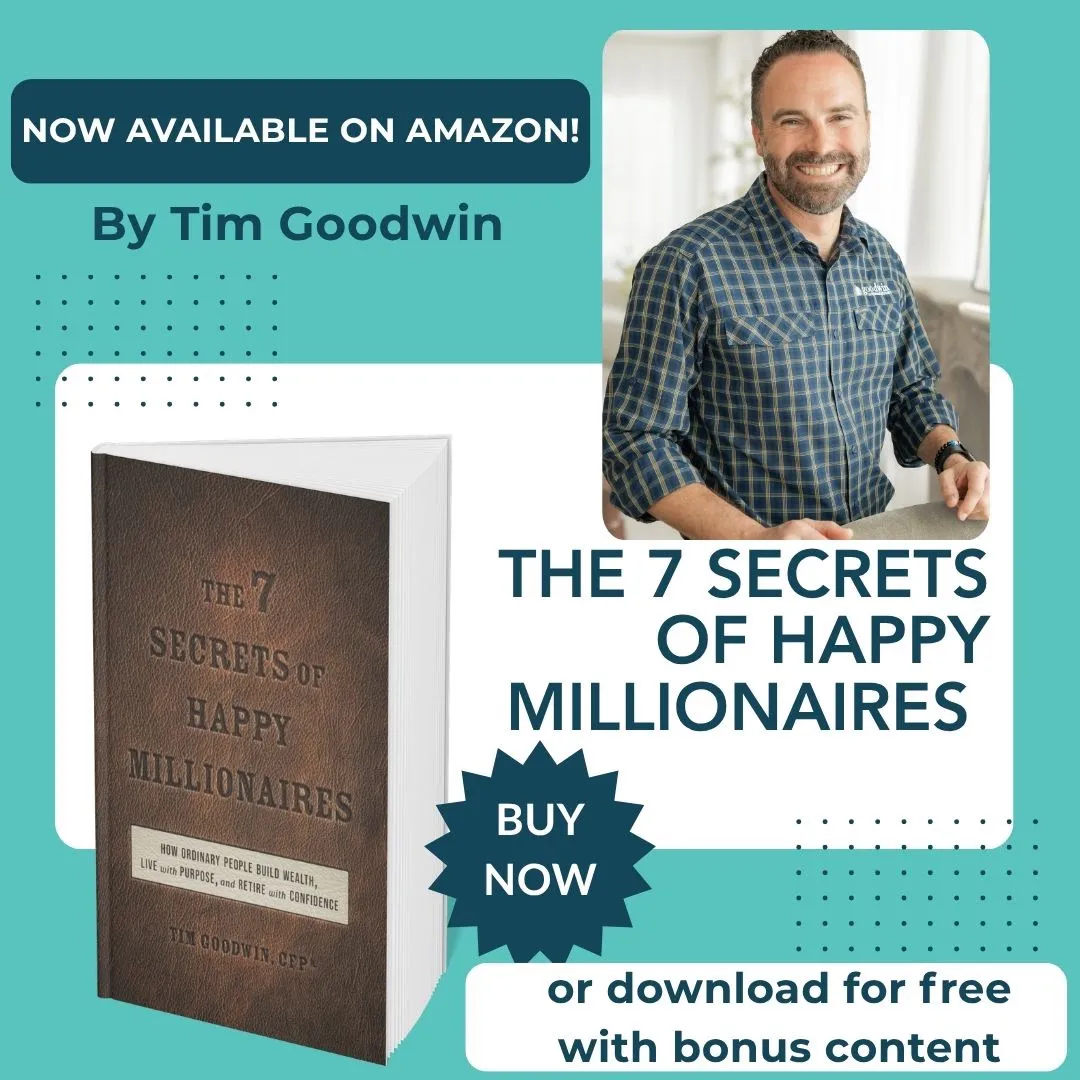
Tim Goodwin wrote another book,
The 7 Secrets of Happy Millionaires
Tim’s new book is a practical, principle-driven guide for affluent people who want more than having enough money to retire. They want clarity, confidence, and a life that feels rich and meaningful long after the spreadsheets are closed.
- Retire with clarity and confidence – not lingering doubt
- Align your wealth with your values, marriage, and purpose
- Avoid the quiet mistakes that erode joy in retirement
Get your very own copy free or buy on Amazon below!
Tax Planning
by Justin Pitcock
For those approaching retirement, choosing between traditional and Roth 401(k) contributions becomes increasingly important. At its core, good tax planning is about timing. Recognizing income when tax rates are relatively low and deferring income when rates are relatively high. As a general rule of thumb, we tend to favor Roth contributions for someone in the 24% federal tax bracket or lower and traditional, pre-tax contributions in the 32% bracket or higher. But the closer you get to retirement, the more important your individual roadmap becomes.
Having a mix of traditional, Roth, and taxable assets can provide tremendous flexibility in retirement. It allows us to choose where your income comes from each year, helping manage tax brackets, Medicare premiums, and even ACA health insurance subsidies before age 65. That’s why projecting your future cash flows and tax rates is such an important part of retirement planning. If you’re within a few years of retirement, talk with your advisor about your retirement roadmap and whether Roth or traditional 401(k) contributions make the most sense for you today.
We Give Back: The Kathy B. Davis Foundation
The Kathy B. Davis Foundation creates life-enhancing opportunities for individuals with intellectual and developmental challenges through scholarships, grants, and community support.
We believe every person deserves dignity, opportunity, and the chance to thrive.
If you want to give to the Kathy B. Davis Foundation, we will match your donation up to $2,000. You can email the receipt to Christy Peacock at cpeacock@goodwininvestment.

Blog: Empty Nest, Full Life
How to Create Meaning in Your Next Season
The kids are grown. The calendar looks different. The house is quieter than it used to be. There may be fewer shoes by the door, fewer practices to attend, and fewer voices calling your name from another room.
For years, so much of life may have revolved around raising children: school schedules, family dinners, carpools, sports, college decisions, and the thousand ordinary moments that shaped your days. Then, almost without warning, the rhythm changes.
In this blog, we explore some ways that you can navigate this season with peace and find ways to invest your time and energy in new ways that are meaningful to you and your spouse.
Podcast: Will Your Wealth Help or Hurt Your Kids
In this powerful episode of The Money Pig Podcast, Tim Goodwin and Joe Beckford tackle one of the biggest questions wealthy families face: will your money become a blessing or a burden for your children? The hosts unpack the harsh reality that most generational wealth disappears within just two generations, not because families lacked money, but because they failed to pass down the mindset, discipline, and values required to manage it wisely. Drawing from books like The Millionaire Next Door, they explain why simply handing wealth to heirs without preparation can unintentionally create entitlement, reduced ambition, and financial dysfunction.
Throughout the conversation, Tim and Joe share practical ways parents can raise grounded kids even while living with financial success. They discuss teaching delayed gratification, rewarding stewardship instead of entitlement, and helping children understand how wealth is actually built. From using apps like Greenlight to teach saving and investing, to creating intentional family conversations around money, generosity, and responsibility, the episode offers real world strategies families can begin using immediately. One of the strongest themes is that kids are always watching. Parents who model discipline, stewardship, and wise decision-making are far more likely to pass down lasting wealth than parents who only pass down money.
Nourish to Flourish
by Tara Bruce
Give your stress a smaller suitcase
Stress has a sneaky little habit of showing up uninvited, kicking off its shoes, and making itself comfortable in your brain.
Suddenly, everything feels urgent.
The market moves. A family member is struggling. Your calendar resembles a game of Tetris. Your phone keeps buzzing. Before breakfast, your brain has opened 37 tabs, and one of them is playing mysterious music you cannot locate.
Deep breath. We have a tool for that. 
The Three Circles Tool can help you sort through the mental confetti and decide what needs action, what may benefit from your influence, and what you can lovingly release.
Circle one: What can I control?
This circle includes your choices, actions, words, habits, preparation, and boundaries.
You may not control what happens next, but you can decide how you want to meet it.
Ask yourself:
- What can I do today?
- What small step would help me feel more prepared?
- What boundary might protect my peace?
- What conversation have I been avoiding?
- Who can help me carry this?
If you are worried about retirement, you cannot predict exactly what the markets, tax laws, or economy will do. If only we had that sparkly crystal ball!
You can review your financial plan, adjust your spending, strengthen your savings, or talk with your advisor.
One small action can transform nervous energy into forward motion. Tiny step, big gold star. 
Circle two: What can I influence?
Some things are not yours to control, but your words, presence, and choices may still make a difference. For example:
You cannot control someone else’s decision, but you can listen, ask thoughtful questions, offer encouragement, and communicate honestly.
You cannot control everything that happens at work, but you can prepare well, contribute ideas, and decide how you want to show up.
Ask yourself:
- Could a conversation help?
- Can I ask for support or clarification?
- Is there someone I can encourage?
- How can I help without trying to control the outcome?
This circle requires courage, care, and a little humility.
You can water the garden. You can pull a few weeds. You can even sing an encouraging power ballad to the tomatoes. But you cannot tug on the plants and force them to grow faster.
Offer what you can, then give the outcome room to breathe.
Circle three: What can I release?
Here comes the tricky one.
This circle includes other people’s reactions, past decisions, market fluctuations, unexpected delays, future unknowns, and the 2:00 a.m. scenarios your imagination has produced, directed, and nominated for an award.
Releasing something does not mean you do not care. It means you are choosing not to carry a responsibility that was never yours to hold.
Ask yourself:
- Am I trying to solve something outside my control?
- Is worrying about this changing the outcome?
- What would happen if I loosened my grip?
- Can I trust myself to respond when I know more?
Sometimes peace comes from taking action. Sometimes it comes from saying, “This is not mine to carry today,” and setting it down.
Try this five-minute stress reset:
When your thoughts begin running laps around your brain, grab a piece of paper and create three circles:
Control | Influence | Release
Now give every worry a home.
Then:
- Choose one small action from the Control column.
- Choose one conversation or caring response from the Influence column.
- Take a slow breath and intentionally release one item from the Release column.
You can even say:
“I will act where I can, offer care where I have influence, and release what is not mine to control.”
Will this magically fix every problem before lunch? Probably not.
But it can help your nervous system step away from the flashing red panic button and return to what is actually yours to do.
You do not have to solve everything today.
A flourishing life is not a life without uncertainty. It is a life in which you become more intentional about where you place your time, attention, and energy.
- Do what is yours to do.
- Ask for help when you need it.
- Stay curious about what might unfold.
- Then give yourself permission to put down the rest.
You were never meant to carry every worry, solve every problem, or predict every plot twist. Your peace is worth protecting, and sometimes the most nourishing thing you can do is give your stress a much smaller suitcase. 🌱
A poem and an activity
Activity: Take a “notice what is changing” walk
September sits in that beautiful in-between space, when summer begins loosening its grip and fall starts peeking around the corner.
Take a 20-minute walk without headphones and notice five signs of change around you. Look for shifting light, cooler air, changing leaves, late-summer flowers, or new sounds. When you return, write down one thing you are ready to welcome and one thing you are ready to release.
The flowers are at it again
by Tara Bruce
The flowers are at it again,
throwing petals everywhere,
flinging crimson, tangerine,
fuchsia and sun-drunk yellow,
wildly stringing themselves about,
dressed in impossible colors,
dancing with the wind,
prancing all over the lawn
like nobody told them to behave.
September does this.
That wild little space
between summer and surrender,
when everything seems to know
the anticipated release is coming
and dances a little wilder,
becoming its own colorful crescendo
before letting go.
Disclosure – All investment carries risk, and we cannot guarantee performance or results. Past performance does not guarantee future results. The comments regarding taxes and tax planning, market insights, podcast, blogs, guides, self improvement thoughts, activities and food & drink ideas are based on our perspectives and experience, and may not apply to your unique situation or be appropriate for your wellness. You should consult with your tax and legal professionals and your investment advisor to determine what is applicable in your specific situation. GIA’s CEO, Tim Goodwin, is a volunteer board member of Cherokee FCA, and GIA supports FCA financially, but neither Tim Goodwin nor GIA derives any financial benefit from this.
Please contact us for any questions relating to the content above, or to discuss how we can support you in your specific situation and help you to reach your financial and personal goals.
Share This Story, Choose Your Platform!
Related Posts