Why Human Behavior and Accountability Drive Lasting Change
In this episode of the Money PIG podcast, co-hosts Tim Goodwin and Joe Beckford explore why information alone is insufficient for driving change, especially in finance and personal habits. They delve into the importance of accountability, trust, and behavioral psychology as the true catalysts for sustainable transformation.
Key insights include the understanding that human resistance to change is often due to the path of least resistance and the lure of immediate gratification. Information can be overwhelming and dull, which diminishes motivation to act. However, sharing goals with trusted individuals creates accountability and increases commitment. External expectations, such as those from a spouse or mentor, can make change less painful by applying social pressure.
The episode highlights that humans are more motivated by pain avoidance than pleasure, and accountability taps into this tendency. Thoughtful, slow decision-making fosters better long-term habits, and successful clients often possess a “how” mindset—willing to learn, adapt, and collaborate. Regular financial check-ins with significant others and accountability partners are emphasized as crucial for strengthening results. The hosts also note that the most resilient investment accounts are those left untouched, underscoring the power of patience and gradual change. Real change involves a mindset shift from “fire” to “aim,” with deliberate reflection.
Resources & Links:
Connect with Tim Goodwin:
Connect with Joe Beckford:
Remember: Lasting change is less about acquiring new information and more about cultivating the right behaviors, accountability, and mindset shifts. Start small, involve others, and focus on slow, deliberate progress.
Additional Resources:
https://www.goodwininvestment.com/lessons-learned-from-people-20-years-ahead-of-you/
https://www.goodwininvestment.com/book-recommendations-and-life-advice-with-dale-alexander-part-2/
https://www.goodwininvestment.com/why-ai-isnt-your-life-coach-the-power-of-real-mentors/
Hosto Bio’s
Joe https://www.goodwininvestment.com/team-profiles/joe-beckford/
Tim https://www.goodwininvestment.com/team-profiles/tim-goodwin/
The following transcript of the podcast audio was software-generated, and not reviewed for accuracy. Therefore, the transcript below should not be used without verifying the validity and accuracy of its content. Please contact Goodwin Investment Advisory with any questions.
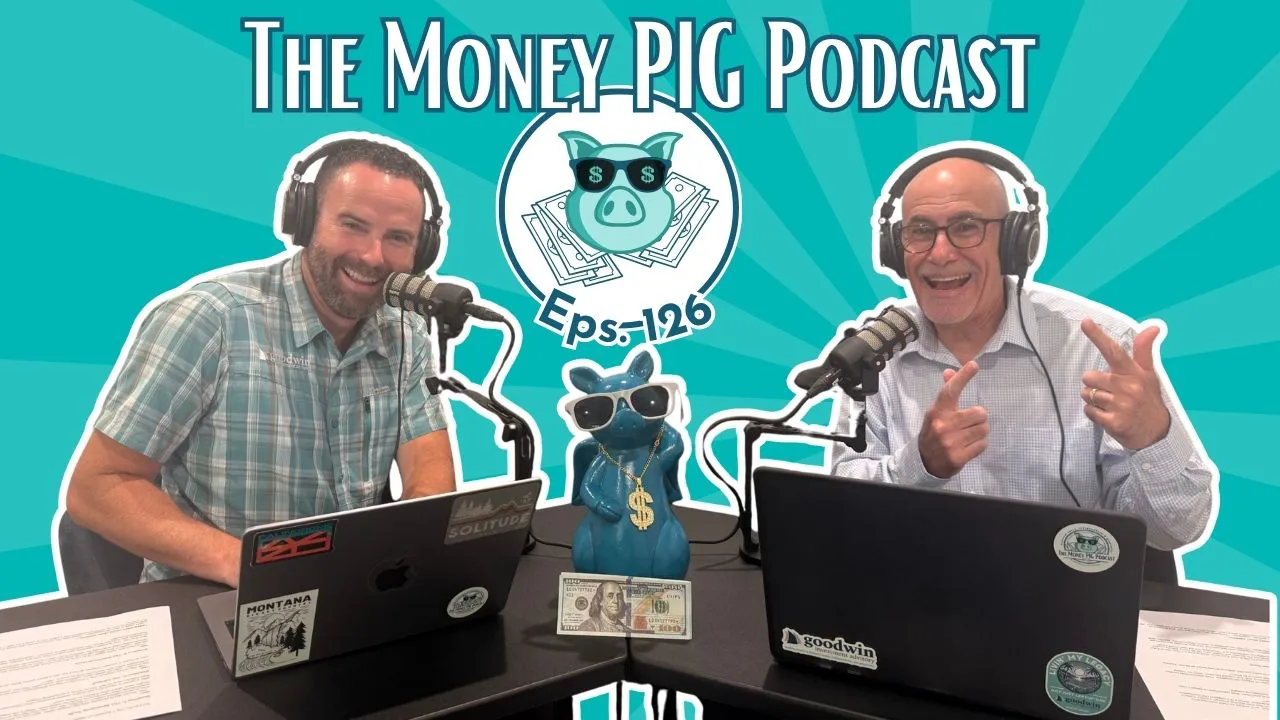
Welcome back to the Money Pig Podcast. Here we are. That’s my co-host over there, the one, the only. Joe Beckford. Yes, and I am also your co-host today, Tim Goodwin. Welcome to the Money Pig Podcast. This right here, we haven’t given a shout out to Notorious PIG in a little while for those that are listening, not watching, you’re missing out on our pretty awesome.
Statue of a pig here with some cool shades and a gold necklace. blinged out. Money pig stands for what, Joe? Peace, independence, and generosity. So those are the topics we like to have and sometimes we get really deep here, which I think we’re getting a little bit deeper today, Joe. You don’t need more advice, you need this. Ooh. Dot, dot, dot. What is this? What is this? What are they going to talk about? I need need it. I’m waiting with bait and breath.
All right, so here is my queued up dad joke. Are you ready, Joe? Probably not. What is the difference between a psychologist and a magician? A magician pulls a rabbit out of a hat or a psychologist pulls habits out of rats. I’m sorry. That was pretty good. I think that’s pretty good. don’t know. OK, OK. We’re diving in. Go ahead. Let’s it. Are ready? OK.
What’s the difference between a poorly dressed man on a bicycle and a well dressed man on a tricycle? I don’t know, Joe. What? A tire. That’s it. Those are the only difference. That’s right. One’s got three, one’s got two. A tire. A tire. A tire.
But about TV. See, that’s why my kids say if you have to explain it, it’s not funny. I appreciate that you’re contributing now to the dad jokes. a million of them, unfortunately. Joe, share with the audience something interesting about yourself other than your vast knowledge of great dad jokes that took me a second to get. Something interesting about myself. I really enjoy traveling. I think that’s kind of my jam. If you were like, hey Joe, if you had, you know.
whatever extra money you have, like what do you think about doing with it? Like I basically start planning trips. All right, so what’s the next trip or two that you would love to go on or that you already have planned? New York. Yeah? Okay. Going to New York in a few weeks for…
Long weekend, see some shows. It’s always a fan fave. Looking at Hawaii in the fall. But these are not two places that you’ve gone to, but you’re okay going back. yeah. It’s not just new places. No, it doesn’t have to be a new place. No, it doesn’t have to be a new place. I like new places. Yeah. Yeah. They’re just not planned yet. Right. That’s okay. It’s exciting. That’s exciting.
It’s hard to always think of something new and interesting, right? You get enough episodes under your belt and it’s like, ⁓ everybody knows Joe. That’s old. Yeah, you got to give some new content. What about you? What’s new content for you? I realized the other day that I never penny pinch when it comes to spending money on ice cream. That’s true. That’s true. I love taking like my kids out for ice cream or my kids with their friends out or my family, like, you know, friends, whatever. I don’t know. I just…
I think it’s fun. How can you ever have a bad time eating ice cream?
I would say it warms your heart, but it’s pretty cold. When it’s winter, it’s kind of crazy to go eat ice cream. I don’t know, just always people are like, ice cream? Everybody gets excited about it. So that is true. Yeah. Even superwoman. was a wonder woman, not superwoman. Wonder woman. She was so excited to get to try ice cream. So I was like, of course she is. Everybody loves ice cream. Right. Yeah. But I just realized that I have no, I realized I have like no constraints. I’m like ice cream, let’s go guys. It’s your kryptonite. It is. There’s just no government.
to ice cream yesterday or we had ice cream at lunch. Well, that’s okay. We can have ice cream again. I didn’t realize I was such an ice cream fan until I really thought it through the other day. There we go. All right, well, let’s get back to our episode, Joe. Tell me what is it that we need? I’m so excited. Yes. Well, I do like this little…
caveat here that Tara, who is so great at producing these, helped us to prepare. She’s so great. Rock star. She said, we’re over-informed and under-transformed. Dun, dun, dun. Dun, dun, dun. And that really is true, especially in the world of AI. If you missed our last episode, on AI, go check it out. But lots of information. But does that information actually make us change? Does it make us do things? Not.
necessarily, not always. And that’s why I kind of did like the psychologist joke, because it’s a lot more about human behavior that causes us studying that to figure out what causes us to change and really the information. So Joe, we’ll get started here with you. I’ll ask you our first question. Why do you think smart, capable people often don’t change even when they know exactly what to do? Well, I think
Thank you for asking me that question. It’s multifaceted answer. I have so many thoughts on that question. One reason, it’s not the path of least resistance, right? Because if I’m engulfed in a behavior, it’s my way of life, it’s my normal thinking, it’s my normal doing, and I stop and I eat junk food for lunch every single day, and I’ve been doing it forever.
It’s not the path of least resistance. It’s like, hey, Joe, you know, you probably live longer and feel better if you didn’t do that. Yeah, it’s so powerful. Like if you’re getting information about change that could be helpful to you and it’s not the path of least resistance, then you’re working uphill. I have to make a new habit. usually the other part of that is, so if I don’t change, I know I should. It’s one of those should things. know I should, but what if I don’t?
What’s the calamity gonna be? You you should fix the brakes on your car. Okay, you could die on the way home if you don’t fix your brakes on the car. But if you’re just eating junk food, if you’re just not exercising, if you’re just not doing those things, you don’t feel the consequences immediately, right? So your brain kind of tells you like, those consequences are years away. Who knows if I even live that long? Or I’ll always have time to fix that and change it. I just don’t have to do it today.
And today, it usually doesn’t happen.
Yeah, it kind of reminds me of even simple things like I’ve got to get gas in my car. You’ve got this information. You’ve got this gauge that tells you you need to get gas, right? If you’re like, that’s not fun. That doesn’t feel good. It’s not the path to least resistance to figure out how much worse the cheapest gas and where do I pull over and blah, blah. But what feels worse is run out of gas. And yeah, and your wife telling you, I told you, you’re an idiot. You walked five miles to go get gas anymore. Right. Or even like the oil change or whatever. Like smart people know like you’re supposed to get your oil.
so your car doesn’t break down, but it’s not fun to do. I think one of the other reasons why a lot of times we just don’t do what we’re supposed to do is because it’s kind of boring to talk about. It’s like not a fun water cooler conversation, you know? It’s not like you walk up at your friends at work and you’re like, yeah, I mean, I got paid again, so a percentage of my paycheck was deferred into my 401k and was diversified into my spread out mutual funds in there.
Like everybody’s gonna be like, what are you talking about Tim? Like I don’t care at all about that. But if you’re like, I bought Palantir last week and I bought it on margin, went up 5 % yesterday, don’t I sound good, right? I don’t know why I went into like a country accent there. I’m really sorry for- I don’t think that all country people bought Palantir last week. Palantir, no, they missed it. Yeah, so, but that just seems like it’s more fun to talk about. I remember in the book, The Psychology of Money, we broke that down a lot. Awesome Like you get this information.
You’re like, why are your clients not doing the right thing? Why are you not saving and compounding over time? It’s like, I don’t know. That’s not really fun to talk about at Thanksgiving or Christmas or hanging out with your friends or your family at different times. It’s like this exciting thing. Sometimes though, the information that leads you to better change is kind of boring and disciplined. And like…
You don’t really win until a long time down the road. Yeah, right. It’s not like this immediate gratification. There’s all those things I think working against our brains going, yeah, go ahead and change Tim, because you got new information. Right, right. Right. Like if we only told you what to do, everybody would do it. No, it doesn’t work that way. Yeah. And luckily, again, tying back to our last episode, we’re not walking around as the only human with just AI giving us information. There’s other humans around. It makes life way more enjoyable. And so
When it comes to human beings in our lives, like we’re married with our spouse, we have a significant other, we have a mentor, we have a counselor. Why is it that, you were joking about your wife being like, you’re out of gas, you know, you’re going to walk, right? Like that kind of ties into my question here of why is it that information, instead of that we just have the information we’re maybe sharing with a spouse, a counselor, a friend,
seems to lead more to change than just on our own sheer willpower. Why is that so different when the information is shared between somebody I guess that you trust? I like that because now you’ve let somebody into your inner circle, right? So if you just keep all those things in your head and you know, like I know I should not be getting.
the cheeseburger and fries on the way home. And the two large Frosties. Yeah, because one is for dipping fries. Exactly. You know this Joe. Exactly. A friend told me. So we know those things, but then if I’ve told my wife like, my goal is to lose 20 pounds and then come home and she’s like, hey, what’d have for lunch?
I had a cheeseburger and two orders of fries and two frosties. Like, ⁓ how’s that working for you? Yeah. You know? And there’s this whole concept. We gave Tara a shout out a little bit ago, right? Which love to give Tara shout outs. So I think it comes into.
If it’s all in your head and it’s all just willpower and it’s all just knowledge that you have, who’s calling you up? Right? I would say call you out and she’s like, no, it’s call you up. Call you up, right? To be a better version of yourself. Who is doing that for you? Because somebody else expects something from you. And whether we like it or not, it’s powerful to not want to disappoint somebody that you respect. So if you’ve picked somebody that’s your accountability partner that you respect, it’s inherent. Kids don’t like to disappoint their parents.
I still don’t want to disappoint my parents. You never outgrow that. I don’t want to disappoint my wife. don’t want to disappoint whoever I’ve entrusted with that knowledge because I let you into the circle. I’ve let you in and I don’t want to disappoint you now. I’ll connect this now like full circle to what we said before is you’ve kind of changed what the path of least resistance is now. Because if you said this is my goal or I’m going to do this thing to not do it now feels more painful because you’re to come home. You’re going to tell Mary Helen that you didn’t eat.
the salad for lunch or whatever, or your parents or whatever. Yeah, when those expectations are set and you share that with folks and they’re going to check in with you, the pain of admitting failure is maybe more painful than just actually doing the new, better thing. The change. So that’s really interesting. I don’t think I’ve thought about that before, is if I’ve got information and I want to do that, I’m just not doing it, sharing it with somebody else, it does provide the accountability. What I’ve done is I’ve made the path of least resistance different.
because I’ve made the path of not doing it now painful because I told somebody I was going to do it. Right.
Right? It’s interesting. I had this talk with Ray, one of our other advisors yesterday, and he was talking about motivation is either pleasure or pain. Humans are motivated by pleasure and pain, all of those things, right? And we’re very heavily motivated by pain. We see that in our clients and in our own behavior and stuff like that. Pain avoidance is high. People don’t like to lose money. They don’t like to lose money more than they like to gain money even, right? So to your point, so…
If I fail in my goal and I go eat the cheeseburger and I do all the things, that actually might feel pleasurable for me at the time. And the pain of like dealing with that like, well, I didn’t lose that pound in the last week. Well, that was negligible. The pain of going and admitting that to my wife and seeing the look on her face after I let her into the circle, that’s real pain. So you’re right. You’ve totally changed the path of least resistance now. So.
I think you made it. I know you did. You made a good point. One of the things that I liked about what you said too is like, it’s somebody that you trust. Has to be right. It’s somebody that you trust. So I don’t know. Right. Obviously if you just told some random passerby or some stranger on the street that you were going to, I’m going to run a 5k tomorrow and you didn’t, it doesn’t matter. You’re not going to see that person even if you saw him again, because you know, who cares? You don’t really trust them. you know, that’s, I guess something I’ve noticed as well is
Like when folks go to school, or at least for finance, and maybe you hear that at some point, like, well, okay, if you start saving every month when you’re young and you invested in the stock market, you’re gonna be a millionaire. You know, I did some math earlier. If you wanted to start saving to get to a million dollars, you did it monthly for 40 years and you averaged 10 % return, you’d only have to save $158 a month.
And we hear stuff like that in school, or maybe you hear it from a show or reading. The math works every time. But like nobody does it. Nobody does it. And it sounds like it’s so simple at the time. And again, why don’t they do it? Path of least resistance is not to do it. You got other things going on. You need that money now for other things. But then you sit down.
with a financial advisor. Dun, dun, dun. Dun, dun, dun. And maybe you begin to trust that financial advisor because you’ve got shared values, whatever. And then that financial advisor is like, hey, how come you’re not saving $158 a month? You’re in your 20s. So when you’re in your 60s, if the averages of the past of history keep moving forward, then you’ll have a million dollars. Why aren’t you doing that? Now it’s just changed, right? Now the…
the path of these resistance has changed. You have somebody like you said earlier that expects, like, hey, we expect people to do that. They can do that if that’s where you’re at in your financial plan and your journey, then we need to start doing that. And I think that’s really powerful too. We’ve always kind of shared about, it’s not just that financial advisors can often pick better investments and cheaper investments. It’s the behavior impact that has a longer.
and more substantial effect on people’s portfolios over time of just asking those questions, why aren’t you doing this? Why aren’t we changing that? Why aren’t we increasing the amount you’re saving, et cetera, right? That had that big impact over time because if they’re just doing it on their own and nobody expects it of them, nobody knows about it, there’s no accountability, then the path of these resistance remains to do to make no change. Just don’t do it. Yeah. Yeah. For sure.
All right, Joe, you wanna ask me that last question there? I think we kinda jump through the others unless you have something else to ask you the last question, but I also wanna weigh in on this one when you’re done. But in case you steal my answer, I reserve the right to say it anyway. Okay, so what would you say, let me back up. We have kind of this perception of what makes a really good client, right? Interactive, open to…
open to knowledge and being teachable and all the things like that, right? So we’d call that an ideal client sometimes. So let me ask you, what are the habits that our ideal client has or that we would like them to have? You can piggyback on that and say, habits might you encourage them to take if they’re not already doing these things?
I do see that a lot of our most successful clients have that kind of how attitude that my wife calls it, a humble, open and willing attitude. Nice. They have a how attitude. so I think the ones that come in and feel like they are fine, they don’t need to change, they’re good with their ways, they don’t want to hear what you think, they don’t want to know what other clients are doing.
They’re not going to be an ideal client, right? Right. Even if they have a bunch of money for whatever reason. But the ones that come in and want to know what we think, that want to know what other clients and people do at their stage of life, want to know what different scenarios are. So they just have that kind of mindset. Like you said, they’re open to ideas. think that they’re also open to making
better decisions together, right? They don’t want to make decisions in silos. They want to make decisions with their financial advisor, with their significant other in the room as well. So I see like decision making, that’s a together decision making instead of, you know, solo on their own. And then I think as well that, you know, sometimes I want clients to make very quick decisions, right? When they’re not in a good place. But over time, it’s helpful that that client is making
change decisions slowly. And maybe that sounds like it goes against a little bit of what we’re talking about, but they’re getting information, they’re just being slow to change. They’re considering, maybe I need to be more aggressive or less aggressive or contribute to a Roth instead of traditional, you know, or do a Roth conversion like that. They just are thorough and thoughtful about it and not so quick to make the decision. So it’s this mindset of being open to things they haven’t thought about doing it differently. It’s making a decision.
not by themselves, with us and with their significant other. And it’s making changes slowly over time. So, because I was reminded of this the other day that I was reading something that said, often the best performing brokerage accounts are the brokerage accounts of owners that have died.
So, nobody’s looking at it. Nobody’s looking at it. Nobody’s having been claimed. Nobody’s changing it. Nobody’s changing anything. Nobody’s messing with it. And they just kind of bought and hold something and it just keeps working. it reminded me of that usually like, you know, like investment clubs, these groups get together and they invest together and they pick stocks together that the investment clubs typically outperform actively managed funds.
but these aren’t professionals, it’s just a group of folks. Could be a bunch of senior ladies that get together mostly for the fun of it and just pick a basket of securities. And so there is an aspect of, you need to change to get to the point where you’re building wealth and you hit your goals, but also there’s a point where changing what you’re doing needs to be very thoughtful and tactful and a little more slow than probably culture or the news media or… ⁓
you feel like you need to make these changes all the time to keep up with the best of the best of the best. Sorry, super long answer, but what about you? I like that. I like one thing you said is like, have the mindset of ready, aim, fire, not fire, ready.
Yeah, exactly. And look back over what you did before. So I like that. Mine more focuses on, you kind of gave us three points, which is great. And mine really kind of focuses on the second one of doing it together and accountability. And this whole thing is talking about accountability and why is it that knowledge isn’t enough? It’s somebody else expecting of you. So one habit that I encourage clients to do, and it’s not always super easy, is to have both people
Come to the meeting.
Yeah. When we’re clients and we come to the meeting, usually, and I believe you’d probably back me up on this, my experience is there’s usually a financial spouse and a non-financial spouse, and usually it’s not a lack of education or it’s more a lack of interest. It’s interest. Yeah. Yeah. You I love you. I trust you. You’re good at this. Please go to that advisor meeting and don’t take me, but you’re missing out, you know, and then you’re missing out on that accountability part. And then it’s, you just miss out so much. So I encourage clients, like if at all possible,
Bring both people. If you’re not married, bring your significant other. If you are totally single,
bring your accountability partner, whoever that is. I had a client reach out to me today and said, hey, I’m gonna be booking my meeting in April and I’m gonna bring my oldest son with me. I’m like, awesome. That is, you know, they’re in lockstep together. I actually have a lot of clients like that who bring their oldest child family member with them. So it’s that doing it together. And then the other thing, in a previous episode you had made to mention like weekly I try to get together and I count the state of my flock, I think is the way you worded it, right?
have a money talk. And so that’s what we do. It’s like weekly we have a money talk. We schedule it. Now it might be the night we pay bills, it might be the night we work on our budget, it might just be talking about like, what are the strategic things we’re gonna work on this year, you know, from our money standpoint, but you’re having an intentional money talk, just don’t do it alone, have it.
with whoever that person is. So those are two things that I always tell people to do. That’s great. That’s really great. Yeah. You got me thinking too, like, you know, if you’re listening or watching, hello, and, you know, you don’t typically go to the meeting with a financial advisor with your spouse. Your spouse goes to those meetings.
I know that they can be boring and I know that if they’re sitting there talking about things we talked about, traditional verse Roth, conversion, whatever, that sounds really boring. But a good financial advisor who’s helping you retire is also talking to you about your dreams and your goals and your legacy and what makes you happy and what you want to do with your future. And so it’s probably a really great idea, you know, to be able to be a part of that or at least.
find out what your spouse is going to say or what they did say afterwards. But I think that’s very powerful. And when we see couples coming here together, they typically have better experiences and better outcomes long term. For sure. Yeah. well, excellent. We do like to sign off with gratitude here at the Money Pig podcast. So, yeah, I just want to say I’m grateful for…
having habits like you were bringing up, Joe, about checking in with the money, having really great software to keep up with those things, and then having that ongoing habit of sitting down with my wife and going over the finances. Yeah, I think that’s great. That’s powerful for us.
I think what I’m grateful for is that in that last question we talked about our ideal client and you mentioned the how. I love having how clients and I’m really grateful that I have lots and lots of them. Yeah, open and willing. the job so much more fulfilling when they walk out and they’re like, know, they’re like, wow, thank you, that really helped. And then the next time you meet and they’re like, hey.
We did this, this, and this. I’m like, yes, that’s awesome. That is a good feeling. awesome. Well, if you’re listening or watching and you are thinking, you know what, maybe I need a guide to help me implement a lot of this information. Maybe you need, maybe you’re over informed, but under transformed Joe and you’re.
You’re ready to flip the script. So we would love for you to consider using us as a guide. so feel free to check out GoodwinInvestment.com. And if you’re ready to have a conversation, you can click schedule and intro call and ⁓ we’ll continue the conversation from there. Otherwise, have a great day. We’ll catch you next time. Bye bye.
The Money PIG podcast is hosted by Reid Trego. Goodwin Investment Advisory is a Registered Investment Advisory firm regulated by the Securities and Exchange Commission in accordance and compliance with securities laws and regulations. Goodwin Investment Advisory does not render or offer to render personalized investment or tax advice through the Money PIG podcast. The information provided is for informational purposes only and does not constitute financial, tax, investment or legal advice.
For personalized financial guidance, schedule an intro call with our team at Goodwin Investment Advisory in Woodstock, Georgia . Our CFP® professionals can provide advice and help you navigate how to invest your wealth and plan for your retirement. We’d love to help you live out your legacy! To learn more about the benefits and services we offer click here.
Goodwin Investment Advisory is an SEC-registered investment adviser (CRD #131193), and this episode is produced by evanced.net. This podcast is for informational purposes only and is not investment advice or a recommendation to buy or sell any financial products, securities, digital assets, or other investments. It should not be used as the basis for any financial decisions. The host and/or guests may personally hold investments mentioned in this episode. All investments involve risk, and past performance does not guarantee future results. Please consult with a qualified financial adviser, tax professional, and attorney before taking action on any information shared.
Share This Story, Choose Your Platform!
Related Posts