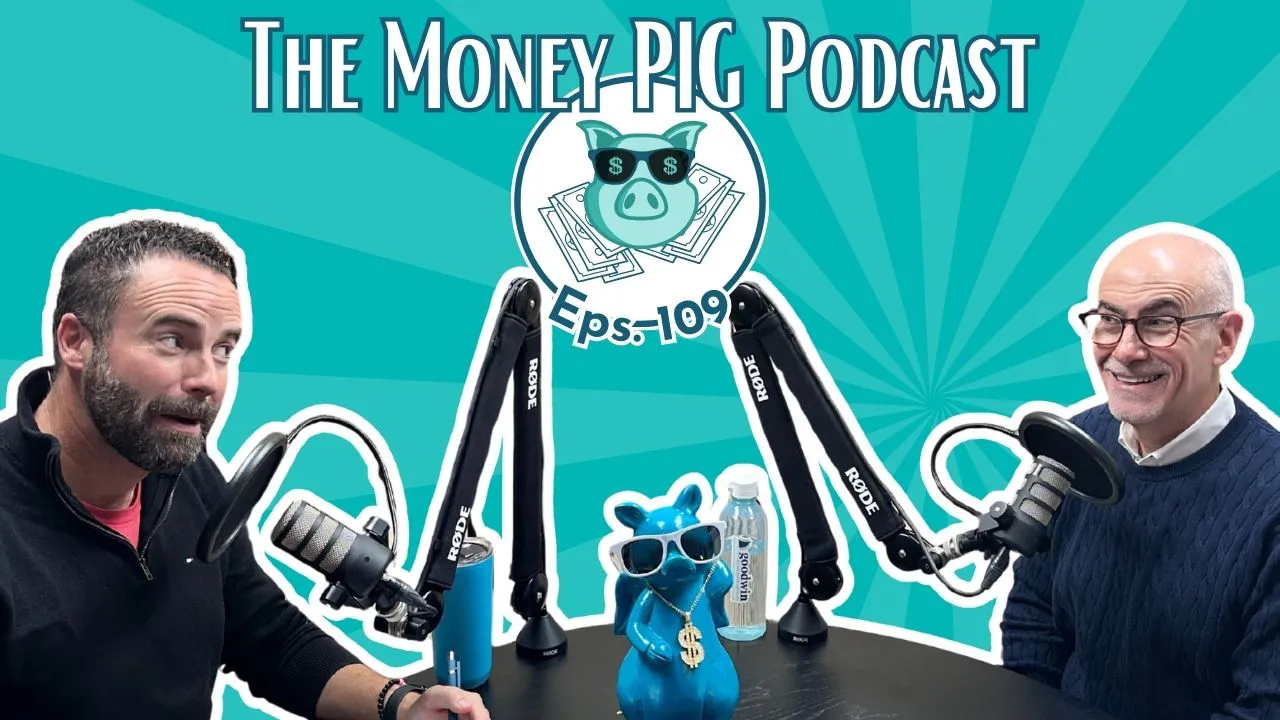
In this episode of the Money PIG Podcast, host Tim Goodwin sits down with Joe Beckford to explore one of the most clarifying questions in financial planning: What do people who are 20 years ahead of you wish they had done sooner? Drawing from nearly 15 years as a financial advisor, Joe shares a recurring theme he hears from retirees who have both financial stability and inner peace: don’t sweat the small stuff—by getting the small stuff handled early. In other words, when debt, cash flow, saving, taxes, and planning are organized, people are freed up to focus on what actually matters most—purpose, relationships, legacy, meaningful experiences, travel, and time with the people they love.
Joe and Tim unpack the habits they consistently see in retirees who feel calm and confident: living below their means, avoiding unnecessary debt, and regularly reassessing what truly brings happiness (not just what looks impressive). They also address the most common regret Joe hears from people in their 60s and 70s: working too long and not retiring sooner. Often, this is because health or energy didn’t cooperate when the retirement they meticulously planned for finally arrived. The encouragement for younger listeners is simple but powerful: make smart choices now so you can move your retirement date up—and protect your freedom while you still have your time and health.
The episode closes with two practical takeaways: avoid debt whenever possible (because it makes life harder to “weather storms”), and pursue the passions and work that genuinely matter to you—because life is too short to stay stuck in something that drains your relationships, health, and joy. Joe also recommends Die With Zero and Choosing to Cheat (Andy Stanley), and Tim shares how listeners can learn more or schedule a short introductory call at Goodwin Investment Advisory.
If you’d like more insight, read this blog post:
https://www.goodwininvestment.com/the-talk-on-money/
The following transcript of the podcast audio was software-generated, and not reviewed for accuracy. Therefore, the transcript below should not be used without verifying the validity and accuracy of its content. Please contact Goodwin Investment Advisory with any questions.
Tim: Welcome to the Money Pig podcast presented by Goodwin Investment Advisory, where our mission is to lead you to financial pig, peace, independence, and generosity. I’m your host, Tim Goodwin. Welcome back to the Money Pig podcast.
Joe: Here we are. Here we are.
Tim: Joe, super excited to have you back once again for this episode on lessons learned from people 20 years ahead of you. So 20 years… we’re talking about ancient, ancient people. Methuselah.
Joe: Oh my goodness.
Tim: I mean, obviously the audience—if they’re watching this episode—can see how young and handsome you really are.
Joe: That’s right. Spry.
Tim: I love it. Awesome. Excited to have you here today, Joe.
Before we get started, maybe share something with the audience that they don’t know about you. Something interesting.
Joe: Gosh… something interesting about me. God, you hate when you put me on the spot because I keep doing that and I’m like, okay, I’m getting all my two truths and a lie out—giving it away, right?
Tim: You can start over. You’ve been on here quite a bit, so you don’t have to have new content. Something super interesting.
Joe: Okay. One super fun thing—one of my brushes with greatness that I wish I’d taken more advantage of… I got to meet Neil Armstrong one time.
Tim: Whoa. Come on. Unpack that for us.
Joe: I was in Houston, Texas. I worked for Delta at the time, and he walked up to me to cancel his flight.
Tim: Oh yes, that’s right. I’ve heard this story.
Joe: I took care of him, and he walked away before I was like, “Wait… was that really him?” And he was gone by the time I looked up his info and saw—yeah, that was really him.
So, I didn’t get to ask questions. I wanted to be like, “I have so many questions,” but he was gone. Busy guy, you know.
Tim: Well, I don’t understand all the questions—but what’s the question you would ask Neil Armstrong if you met him now?
Joe: What was the first thing that popped into your head when you put your foot down on the moon?
Tim: Wow.
Joe: Well, we know what he said… but it just makes me wonder. You had a view that nobody’s ever had before.
Tim: That’s cool. That’s a good question. I’m curious—I feel like I’m getting that quote wrong though. What was it? “One small step for man, one giant leap for mankind”?
Joe: Yep.
Tim: So cool. So cool.
Tim: Well, speaking of otherworldly, Joe… you’re reaching. If Santa and Mrs. Claus had a baby, what would he be?
Joe: Buddy Claus.
Tim: Buddy. Yeah. Buddy the elf. “Bye, Buddy!”
Joe: Your dad jokes…
Tim: Sorry, sorry. Okay—if Santa and Mrs. Claus had a baby, what would he be?
Joe: A subordinate clause.
Tim: I feel like I should invoke the escape clause right now. Hit the eject button. Get me out of here.
Joe: That would have been a great one when Sarah White—the estate attorney we love so much—was here.
Tim: A subordinate clause. You can subject her to that. I’ll do that next week.
Alright—welcome back to the Money Pig podcast, everybody. Let’s get back to the topic: lessons learned from people 20 years ahead of you.
Tim: Joe, we’ll start off with you today. You’re the only guest here.
You’ve been a financial adviser for almost 15 years now. That’s pretty cool.
Tim: Do you get a special gold watch or anything like that?
Joe: I got a certificate to the Jelly of the Month Club.
Tim: Oh did you? That is the gift that keeps on giving.
Joe: So I’m told.
Tim: Sorry—we can’t help the Christmas cheer.
Alright. You’ve been a financial adviser for 15 years. You’ve sat across the table from hundreds—maybe close to a thousand—families or at least meetings. What’s a lesson you consistently hear from people who are at the next stage of life? And what’s something you wish you knew earlier… or wish more people knew earlier?
Joe: The theme is: Don’t sweat the small stuff.
And I translate that to: focus on what is important to you. I consistently hear that the “keeping up with the Joneses” stuff doesn’t matter. The most important stuff is usually family and pursuing what makes you happy. Just do that.
Tim: That’s got me thinking about Maslow’s hierarchy of needs. We’ve talked on this podcast about our financial adviser version of that: the Good Life Pyramid.
Joe: Yep.
Tim: When you say “don’t sweat the small stuff,” it’s like the stuff at the bottom of the pyramid—debt management, cash flow, building wealth, taxes.
And what’s interesting is when people are ahead of us, they’ve either figured that stuff out—or they haven’t. But if they have, they realize there’s more meaningful stuff in life than just getting out of debt, assessing risk, building wealth, or paying less in taxes.
If you can get a plan and systems in place, it lets you move up the pyramid. People start talking about purpose, legacy, travel, time with loved ones, feeling organized and in control—and they realize it’s more substantial. That’s where inner peace and joy come from.
Joe: Right. The peace part is where it’s at. People either figure out habits to build wealth or they don’t. And over decades, compound interest takes over.
Tim: The eighth wonder of the world.
Joe: Exactly. But I feel bad for people who can’t figure out the financial piece—because they are sweating the small stuff. And it steals joy and peace. It’s hard to think about legacy when you’ve got $120,000 in credit card debt. It’s hard to think about legacy when you have no assets, let alone enough to cover your own expenses.
Tim: So when you look at retirees who are truly at peace—financially and emotionally—what habits got them there?
Joe: The overriding theme is intentionality. They live below their means. They avoid debt as much as possible. Sure, people get mortgages—but they work to pay them off and try not to be a debtor.
And they constantly reassess what actually makes them happy—and choose that rather than choosing flash.
Tim: And that includes career. We talk to people all the time who are stuck in jobs they hate. And they feel trapped—health insurance is a big one.
Joe: For sure.
Tim: And there are options, but it’s a trigger for us when we hear it. Life is too short. Even if it doesn’t pay the most, you need a job you enjoy.
Tim: You mentioned “smart choices.” How do we help clients make smart choices?
Joe: We bring things to their attention they may not have thought about. Like Roth vs. pre-tax. Or “You’re saving 10%—if you went to 15%, would you even notice?” It’s those small tweaks, done intentionally, that make a huge difference.
Tim: And at the base level, what we do is reduce financial anxiety. That anxiety comes from uncertainty—am I doing this right? Am I saving enough? Am I investing correctly?
We walk clients through options and scenarios so they feel confident in the decision they choose. We guide, but we want the client to be the hero.
Tim: What’s one regret you hear most often from people in their 60s or 70s that younger listeners could adjust for today?
Joe: They worked too long. They didn’t retire soon enough. People say, “I was ready to retire at 60 and do all these things… and my health didn’t cooperate.”
So the takeaway for younger people is: get your financial house in order. Save toward retirement. Live below your means. Make smart choices now so you can afford to retire earlier than you think. Move the retirement date up.
Tim: I love that. Move it up.
If somebody dies with a million dollars, part of me wonders: did they retire five years too late? We try to guide clients to give and spend intentionally while they’re alive—especially if the goal is generosity or family impact. Do it now, not later.
Tim: Have you noticed themes around what matters most later in life—relationships, time, generosity—and how does that shape your planning advice?
Joe: Absolutely. And notice: none of those are necessarily money. Even generosity can be time, talent, treasure.
The happiest retirees aren’t chasing dollars—they’re chasing purpose, relationships, and meaningful time. So my advice becomes: how do I help you live in that state as quickly as possible?
Let’s address the pain points like a surgeon—fix the things that keep you stuck so you can move up the pyramid.
Tim: And there’s also the tension: many of us love our jobs. But the question is—can you be as satisfied building a life that isn’t centered around work?
Because the gravitational pull is usually to cheat family and cheat God and give extra time to work. Andy Stanley wrote about this—Choosing to Cheat (I think the title changed). You have to cheat something, and most people default to cheating what matters most.
Joe: Exactly. And if you ruin relationships in pursuit of work and wealth, who’s there to enjoy retirement with you?
Tim: Okay, let’s land the plane. If someone is in their 30s, 40s, or 50s and wants fewer regrets—what’s one practical step they can take?
Joe: I’m going to give you two.
First: avoid debt wherever possible. It’s storm-proofing your life. Storms will come, and it’s hard to weather storms when you’re in debt.
Second: pursue passions that matter. If you’re in a job you hate—get out. Life is too short. It impacts relationships, health, everything. Be passionate about what you do.
Tim: That’s great.
Any book recommendations?
Tim: I mentioned Choosing to Cheat by Andy Stanley. Joe, any other book?
Joe: Die With Zero.
Tim: Great one. Easy listen too, if you do audiobooks.
Tim: And if you’ve been listening to the podcast and want to learn more about our services, go to goodwininvestment.com and click “Schedule a Call.” It’s a short 15–20 minute intro call with a member of our team.
Tim: Joe, what are some common pain points that bring people to us?
Joe: A big one is being within five years of retirement—big decisions: Medicare, Social Security, pension vs. lump sum, tax impacts, deferred comp—stuff you haven’t dealt with before.
Also major life changes: losing a spouse, divorce, a business sale, a liquidity event.
And sometimes it’s simply that managing wealth gets more stressful as the numbers grow—investment decisions matter more, and complexity increases.
Tim: Exactly.
Tim: Let’s sign off with gratitude. I’ll go first. Two of my three daughters recently had surgery. They’re doing great, but as a parent, anesthesia and hospitals are stressful. I’m grateful for the healthcare access and technology we have, and that they’re okay.
Joe: That’s a good one. I’m going to say family. Over the last six months, I’ve had family show up in a lot of ways without even being asked—and I’m just really grateful.
Tim: That’s great. Thanks again for coming today, Joe. Thanks to everyone for listening. We’ll catch you next time. Bye-bye.
Tara : Goodwin Investment Advisory is an SEC registered investment advisory, CRD number 131193. This episode is produced by evance.net. This podcast is for informational purposes only and is not investment advice or a recommendation to buy or sell any financial products, securities, digital assets, or other investments. It should not be used as the basis for any financial decisions. The host and guests may personally hold investments mentioned in this episode. All investments involve risk and past performance does not guarantee future results. Please consult with a qualified financial adviser, tax professional, and attorney before taking action on any information shared.
The Money PIG podcast is hosted by Reid Trego. Goodwin Investment Advisory is a Registered Investment Advisory firm regulated by the Securities and Exchange Commission in accordance and compliance with securities laws and regulations. Goodwin Investment Advisory does not render or offer to render personalized investment or tax advice through the Money PIG podcast. The information provided is for informational purposes only and does not constitute financial, tax, investment or legal advice.
For personalized financial guidance, schedule an intro call with our team at Goodwin Investment Advisory in Woodstock, Georgia . Our CFP® professionals can provide advice and help you navigate how to invest your wealth and plan for your retirement. We’d love to help you live out your legacy! To learn more about the benefits and services we offer click here.
Goodwin Investment Advisory is an SEC-registered investment adviser (CRD #131193), and this episode is produced by evanced.net. This podcast is for informational purposes only and is not investment advice or a recommendation to buy or sell any financial products, securities, digital assets, or other investments. It should not be used as the basis for any financial decisions. The host and/or guests may personally hold investments mentioned in this episode. All investments involve risk, and past performance does not guarantee future results. Please consult with a qualified financial adviser, tax professional, and attorney before taking action on any information shared.
Share This Story, Choose Your Platform!
Related Posts