Why AI Isn’t Your Life Coach — The Power of Real Mentors.
In this episode, we explore the limitations of AI as a life coach and highlight the irreplaceable value of human mentorship. While AI tools like ChatGPT can assist with decision-making and emotional regulation, they lack the depth of understanding, empathy, and accountability that come from real relationships. Discover why genuine mentors are crucial for personal growth, decision clarity, and long-term success.
Key topics:
- The practical use of AI for navigating conversations and emotional responses
- Why AI cannot replace the emotional intelligence of mentors or therapists
- The critical role of human mentors in providing context, accountability, and personalized advice
- How trusted guides influence decision-making and long-term goals
- The risks of relying solely on AI for personal and relational development
- How technology can complement, but not substitute, human connection and wisdom
Resources & Links:
- Book: The Gift of Mentoring by Malcolm S. Knowles — For insights on mentoring relationships
- How to Build Trust and Influence Mentors — Article on cultivating meaningful mentorship
- Dave Ramsey — Financial mentorship inspiration
- The Power of Human Mentors — Harvard Business Review piece on mentorship importance
Connect with Tim & Joe:
In a world increasingly powered by AI, remember that human connection, experience, and wisdom remain the foundation of meaningful growth. Use technology to assist, but never replace the mentors who truly see and understand you.
Additional Resources:
https://www.goodwininvestment.com/why-ai-isnt-your-life-coach-the-power-of-real-mentors/
https://www.goodwininvestment.com/white-water-rafting-guides-are-like-good-financial-advisors/
https://www.goodwininvestment.com/get-your-end-of-the-year-planning-guide/
Host Bio’s
Joe https://www.goodwininvestment.com/team-profiles/joe-beckford/
Tim https://www.goodwininvestment.com/team-profiles/tim-goodwin/
Enjoy the episode?
Subscribe, share it, and leave us a review on Apple, Spotify, or Buzzsprout!
Like, subscribe, and leave us a review on YouTube if this resonated with you!
For personalized financial guidance, schedule an intro call with our team at Goodwin Investment Advisory in Woodstock, Georgia . Our CFP® professionals can provide advice and help you navigate how to invest your wealth and plan for your retirement. We’d love to help you live out your legacy! To learn more about the benefits and services we offer click here.
Goodwin Investment Advisory is an SEC-registered investment adviser (CRD #131193), and this episode is produced by evanced.net. This podcast is for informational purposes only and is not investment advice or a recommendation to buy or sell any financial products, securities, digital assets, or other investments. It should not be used as the basis for any financial decisions. The host and/or guests may personally hold investments mentioned in this episode. All investments involve risk, and past performance does not guarantee future results. Please consult with a qualified financial adviser, tax professional, and attorney before taking action on any information shared.
The following transcript of the podcast audio was software-generated, and not reviewed for accuracy. Therefore, the transcript below should not be used without verifying the validity and accuracy of its content. Please contact Goodwin Investment Advisory with any questions.
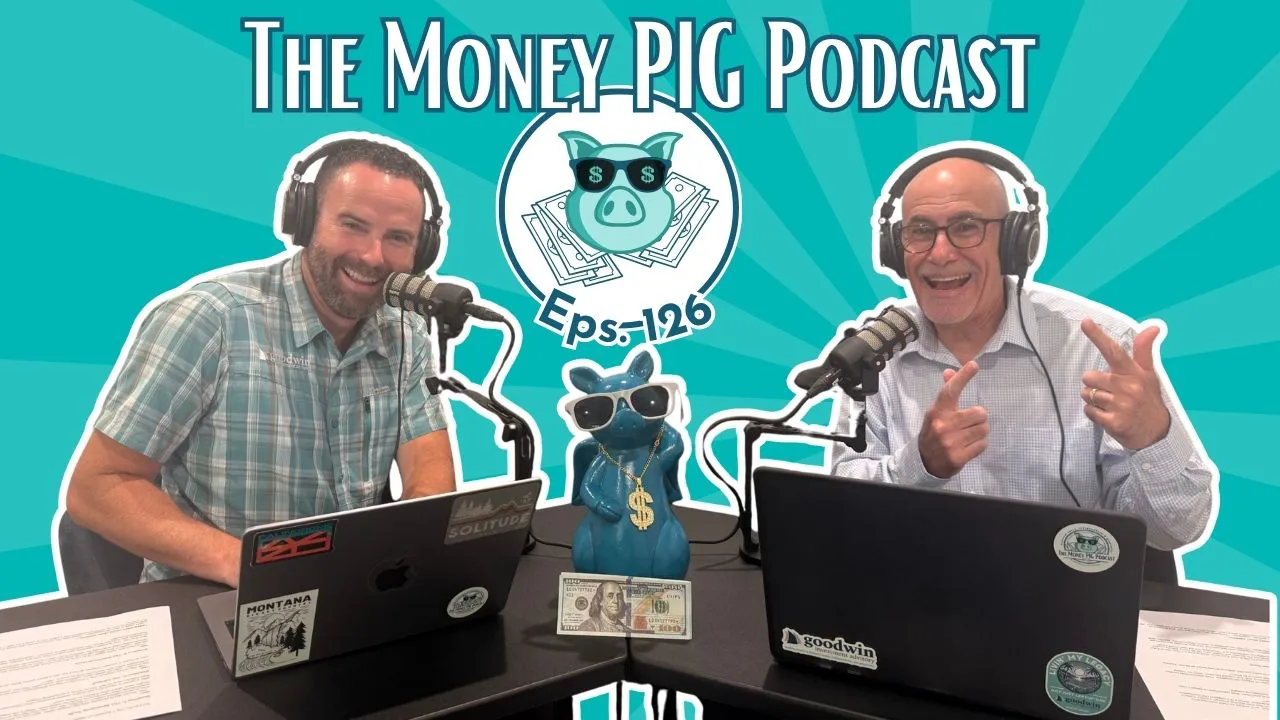
And welcome back to the Money Pig Podcast. I’m your host, Tim Goodwin. And I’m your other host, Joe Beckford. What’s up, other host? How are you? The other mother, the other host. The other mother. It’s good to see you. We’re excited to be back in the studio recording today. And today we are talking about why AI isn’t your life coach the real power of mentors. But before we do, Joe.
wait, there’s more. wait, there’s more. So you do know that I have named my open AI Jarvis. I do know that. So that is my AI assistant Jarvis, but I find he keeps correcting me and I’m starting to miss being wrong in peace.
Because your AI just corrects you all the time, but other people just kind of let you be wrong. No, no good. I was trying to get a dad joke in on AI. was a struggle. I know. That’s a struggle. The struggle’s real. Ask Jarvis for a good dad joke. Well, you know, yeah, he’s not as good at it. We’re training. He’s learning. He’s learning. That’s Yeah, if I feed him any information, that’s wrong.
He corrects me. That’s funny. Why did you name yours Jarvis? Mostly just because I’d like to do whatever I can to pretend like I’m Iron Man. See? There you go. So I named mine Hal.
Because I always think of like, I don’t know, or remember the 2001 Space Odyssey. Remember the AI robot that runs everything that decides, hmm, these humans are a problem. We need to turn off their oxygen. Oh my goodness. Yeah, so I call mine affectionately Hal. Oh, OK. You’re just overall trying to reduce the population or something? No, no, no. Just to always remember that, know, Hal could turn off the HVAC.
one day. So that’s fantastic. Gotta make sure more like turn up the temperature is what you’re gonna have how do right? It’s too cold. Probably it’s cold in my office. Generally. That is true. That is true.
So here we are. Here we are. Okay, so today we are going to talk about AI life coach. AI is not your life coach, right? And so we’ve got some questions as we normally do. And I want to ask you a question. Yes, sir. ⁓ How have you personally, not for a friend, this is you, how have you personally used AI to help navigate conversations in relationships? And where has it been helpful? Yeah, I mean, I…
think in my experience, ⁓ A.I. Jarvis has been helpful a couple of different times where whether it’s a situation with how to respond to one of my kids or something that’s going on where they’re trying to make a decision or maybe there was some kind of emotional outburst or something, but between like parenting or marriage or even navigating friendship, ⁓ Jarvis has really helped me kind of like.
gather my thoughts, take some time and articulate it, consider some things, consider some approaches. So I’ve really ⁓ used AI multiple times, I think, just to kind of help me stay calm, stay level-headed, and be a little more thoughtful about the situation and what’s involved. yeah, mean, that’s a couple different times that I’ve used AI. Have you ever really thought about using AI like that before? No, maybe I’m unique in that way. Maybe so. To be fair, I think you were
or a more early adopter of AI than I was, and you test the limits of what that looks like, and it never kind of occurred to me to think about using AI to…
deal with human interactions. So I just really haven’t. I tend to use it more like a tool. I think of AI more like a tool that helps run to the library and get me the information that I’m asking for. And so that’s what I tend to use it for. Way back in the old days, used to have to go ask for microfiche or something. I gotta go find this article. Was there ever an article in Time Magazine in 1947 that talked about this? Well, Hal can tell me that in a nanosecond.
give me this information, what does this look like? And ⁓ he brought me so much information. Teach this to me like I’m 10 years old. And then I’m like, okay, that’s good, that’s simpler. Anyway, that’s what I use it. Ended up using it for a lot. feature too, to be like, hey man, like, thumb this down for me. But yeah, I’ve even had it like, in times of growth, my daughter’s like, maybe they want something that they’ve worked towards, but we want to make sure there’s clear guidelines around it, like I have used.
to me build guidelines and something that we agree to as a family. like for example, social media use policies. I use Jarvis to create social media use policies with my kids and we agree on them and we print it out and we sign it, but really that’s something that I build with AI. That’s super cool. And AI is good to do something like that because there is a whole treasure trove of knowledge out there.
on that topic. Yeah, me to think about I hadn’t considered and, you know, yeah, some what-a-scenarios and it’s great because like I’m thinking within probably a bit of a narrow scope and so I think it kind of helps me broaden that scope in the situation make a more thorough kind of like, I mean…
To tie back to being a financial advisor, you’ve got clients that are coming in going, okay, this is the only way I can retire if I line up A, B, and C. But us as financial advisors are like, well, there’s like DEF all the way through Z. You got a lot more options, you got a lot more scenarios. You need to step back and consider the big picture, which is what we do, right? I think for me, Jarvis has helped me kind of navigate emotions. I think…
with the research, we’re starting to see people are maybe kind of taking this a little too far with AI and instead of like using it to help manage real human relationships, they’re replacing relationships and just going to bed at night talking to their chat GBT. And you know, you can even like hire these services that pretend to be your girlfriend or, you know, a friend of yours. And I think that’s where we start to see that this can be, you know, kind of, kind of dangerous and not really.
Shouldn’t really be there to replace actual human interaction or or meaningful relationships. Maybe maybe help navigate it So if we flip the script Joe Would you mind maybe sharing like mentors? Therapist guides that have had the biggest impact on your personal life and what did they help you see or change?
that is a great question. And my therapist, I’m protected by client patient confidentiality. So privilege. ⁓ Mentors. I think probably my biggest mentor. I was thinking about money when we’re on Money Pick Podcast. That’s it. Yeah. That’s necessary. So one of my biggest mentors, think I’ve used him as an example of somebody I looked up to in a previous episode was my grandfather. He really gave me kind of good sage.
wisdom, know, like Dave Ramsey always says, we give you the same advice your grandmother would give you, but we keep our teeth in kind of thing. And it was like that. was like, below your means, save, be frugal, but enjoy your life, have fun. Just kind of a lot of the same principles that we do. I feel like, ⁓ he felt like it was super important that I go to college and was like, helped me a little bit financially to make that happen. And I was the first one in my family to go to college. So, you know, being pushed like that.
was super helpful, Anyway, he’s probably my biggest example of my mentor. that, I mean, with your grandfather, comes with a lot of weight, because grandfather knows you. Right. Has experience. 100%. I think when we think about mentors, therapists, guides in our lives, it means a lot for me if I’m getting advice from somebody who has gone before me and has done that already. know what I mean? You’re like, wow, you did that and you had that result. You know when we’re talking to clients and they’re trying to, I don’t know, should I do, you know.
this or that, and you’re like, most of my clients in your stage of life do this instead of that. That carries a lot of weight because they’ve actually done it, they’ve actually been there. And not to mention that they know you, they know you personally, they know your history, they know your life, and so as they’re potentially giving advice or sharing stories, that’s coming into play. And when I think about therapists too, and I…
I do admit that I think Jarvis has provided some decent therapy to me by helping me kind of calm down and expand emotions in a situation. But I also found that like…
Jarvis has never been like, why do you feel that way? Why do you feel that way? Why do you feel that way? What about this? And you know, therapists do a really great job because they’re professionally trained. They’re in here, you know, sharing space with you and keeping presence with you and trying to read the situation and the tone and the energy and try to guide you to like more self discovery about, know, whatever false beliefs you have that are holding you back and those kinds of things. I, even though I’ve enjoyed talking to Jarvis about
relationships, it hasn’t been anything like that. No, I mean, like you said, it can’t read the tone, it can’t read the body language, it can’t read the, you wimped when I asked you that question, tell me more. Exactly. can’t do that. And if you do tell me more, what’s it gonna do with that? Because it’s not a human. So it hasn’t felt those things, it hasn’t had those emotions ever itself. So it’s really ill-equipped to be able to.
help with that. It’s giving that information like you said earlier, like the microfiche, the research, like, hey, this is what I know. Right. Right. It’s providing knowledge, which I have found to be incredibly helpful. Super valuable. know, a lot of knowledge I forgot about or wasn’t considering, but the wisdom is when you can apply that knowledge at the right time to the right person in the right way. Yeah. Yeah. So, all right, Joe, so do you have a trusted financial guide, mentor, or someone who truly knows your story?
who changes the way people make decisions and stay aligned over time? Or what do you think of having, sorry, let me rephrase this question. We might scratch that from the record or they might just let this error go on air. You never know. It could be captured in our blooper reel. That’s right. Why do you think having a trusted financial guide mentor or someone who truly knows your story changes the way people make decisions and stay aligned over time?
I think because, I think it focuses on what you just said, somebody who’s gone before you. So if it’s somebody who actually knows your story, one, you have that credibility factor. And in the advisory world, we have a fiduciary level where we absolutely legally have to act in our client’s best interest, right?
people are paying for that because we’re an advisor. When you have a mentor or somebody else that you just know because they know you and they’ve got your back and they have that almost fiduciary thing going on that you just know that what they tell you is for your best interest. It’s not really for their own gain. And so that just kind of sets differently like, hmm.
You have no reason to gain by what you’re telling me. So that’s probably something I need to be considering. That’s a really good point. There’s a lot more at stake. mean, you’re hiring a financial advisor, they’re a fiduciary. There’s a lot more at stake for them to give you bad advice, right? Or do something wrong, like with your friends.
Bad advice, things don’t work out. They may not want to be your friend anymore, right? So there’s a lot more at stake. The stakes are a lot higher than AI hallucinating and giving you advice or information that’s either not right or not accurate or just not timely or helpful to you at that time. So one of the things that we talk about a lot here is not going at it alone, right? And I think a lot of times folks have that pain point and that’s when they’re reaching out to us is when they feel like, I don’t know if this is right. I’m doing this by myself, you know. ⁓
And even couples feel that way, but certainly ⁓ someone who’s experienced loss or recently gotten divorced or recently inherited money or something, and they’re like, I don’t wanna make these decisions by myself. You can sit there and talk to OpenAI about the decision, but I don’t think that AI is gonna make you feel less lonely. You’re gonna go back, well, at that time, AI told me I should do this. mean, you’re really gonna wanna feel like somebody knows you and knows your scenario and is helping you have the confidence that the decisions that you’re making are correct.
good, better financial decisions than you otherwise could be making. So I think that’s I think one other thing is that there’s an element of a good mentor will also tell you, will not only pat you on the back for the good things that you’re doing and the decisions that you’re making.
and open your eyes to opportunities, but will also kind of call you out ⁓ on your excuses. Yeah, the accountability side, right? The accountability side. if you’ve, you know, I don’t know how Jarvis works for you, but I know Hal works for me. Like, Hal will build me up and tell me I am the smartest person in the room. I was so smart to think of that. What a great idea. You’re thinking about this totally right. And it gives me maybe extra ideas.
But it doesn’t call me out. It doesn’t ever say like, what a dumb idea. What were you thinking of? Why would you do that? Calamity will happen if you do that. Never hear that. A real mentor who knows you, knows your story, can kind of look ahead and has maybe gone before you will do that and say, whoa, there is a giant pitfall in front of you. Watch out.
That’s interesting. And it’s not like your AI asks you the next day, hey, did you do that thing we talked about? Right. Yeah, how did go? You spent all this time querying me about making this decision, and it seemed like you were going to make this one. Did you make that decision? How’d go? There’s not that accountability or that follow-up, like a friend or a mentor or a coach or a therapist would say next time you met.
I think that’s really, really interesting. Well, I just want to let the audience know, too, that we have a blog on this exact topic. So if you’d like to go on the website, you can go to the Knowledge Center and search anything close to why AI isn’t your life coach. And you should be able to find this blog. Or you can subscribe to the blog, Joe. Wait, tell us how. Yeah, well, on the website somewhere, you put in your email address. Subscribe you’ll get this content coming to you.
to you without you having to go find it, right? It’s kind of getting pushed you. only sent to a month. It’s not a lot. We’ve got over 5,000 subscribers now. So I think the content over time continues to be really, really good. But Joe, before we sign off, let’s sign off with a little gratitude. So while you’re thinking about gratitude to be on brand for this particular topic, I will say that I am grateful for.
Having open AI right now, that’s the one I use. We use Gemini and some other things, and we can try some other ones, but I got started pretty on using that. But what I’m finding is, the time it saves me, do I just use that time to get more done, or do I give that time back to myself, and I just have more time to myself? We’ve talked before about this concept of…
You know, and I’m oversimplifying this, but kind of like when this new technology came out called the tractor back in the day, before the tractor came out, seven day work week, six or seven day work week was more normal for people.
And then after there was big technological advances that we were a lot more in America, had the majority of jobs are agriculture. And so after the tractor came out, it became normalized with some other things that happened to it. For the sake of time, I’ll keep it brief. A five day work week got more normalized. know, could AI get it to the point where a four day work week becomes more normalized or a three day work week does because all these things that we’re spending time on researching and gathering information to make better decisions is happening in a blink of an eye.
But as rugged individuals in America, we’re always like, save time, do more, save time, do more. So I’m trying to balance that tension of, yeah, I am more productive. And that used to take me an hour. And now it took me 30 seconds, literally something I had a GPT do for me this week. It took 30 seconds. That took an hour previously for me to do. Do I just work more or do I give that time back to myself? I think we know what the right answer is. Right, right, right. What about you? ⁓
in that same vein around, I think it’s just a remarkable time to live. It’s a great time to be alive. Doesn’t pop up all the time. I’m a tad older than you, as you painfully point out all the time. But to have come up and even gone through college before we had computers. There was no laptop when I went to college. There were computers on campus, but…
we didn’t interact with them. that was like to where we are today is just amazing that we so but the really cool part is that we’re just like in this burgeoning AI boom, we don’t really know where it’s gonna go. And I know there’ve been all kinds of movies about how things could go wrong and how terrible it could be. But think about how amazing it could be and how awesome it could be. And we’re in this
point right now where we’re figuring out how do we want it to be and how are we going to use it? Are we going use it for good and are we going to use it to make our own jobs better or are we going to let it replace us? And I think that’s just something we have to…
So I think it’s a cool challenge and I’m just excited. I love the way that you look at that too because sometimes I think, well, I’d rather live in the past or live in the future when this is all figured out. But for whatever reason, God decided that we’re here for such a time as this. So we’re the pioneers. We’re the ones that get to figure this stuff out for future generations. And I think, you like your mindset over that, that’s exciting. There are good things that can come from this. And as folks that are here and as leaders that are here, we need to kind of, you know.
excited about that and help shape that for future generations. I appreciate that. Well, thanks listeners and viewers for watching or listening and we’ll catch you next time. Bye-bye. Bye-bye.
The Money PIG podcast is hosted by Reid Trego. Goodwin Investment Advisory is a Registered Investment Advisory firm regulated by the Securities and Exchange Commission in accordance and compliance with securities laws and regulations. Goodwin Investment Advisory does not render or offer to render personalized investment or tax advice through the Money PIG podcast. The information provided is for informational purposes only and does not constitute financial, tax, investment or legal advice.
For personalized financial guidance, schedule an intro call with our team at Goodwin Investment Advisory in Woodstock, Georgia . Our CFP® professionals can provide advice and help you navigate how to invest your wealth and plan for your retirement. We’d love to help you live out your legacy! To learn more about the benefits and services we offer click here.
Goodwin Investment Advisory is an SEC-registered investment adviser (CRD #131193), and this episode is produced by evanced.net. This podcast is for informational purposes only and is not investment advice or a recommendation to buy or sell any financial products, securities, digital assets, or other investments. It should not be used as the basis for any financial decisions. The host and/or guests may personally hold investments mentioned in this episode. All investments involve risk, and past performance does not guarantee future results. Please consult with a qualified financial adviser, tax professional, and attorney before taking action on any information shared.
Share This Story, Choose Your Platform!
Related Posts