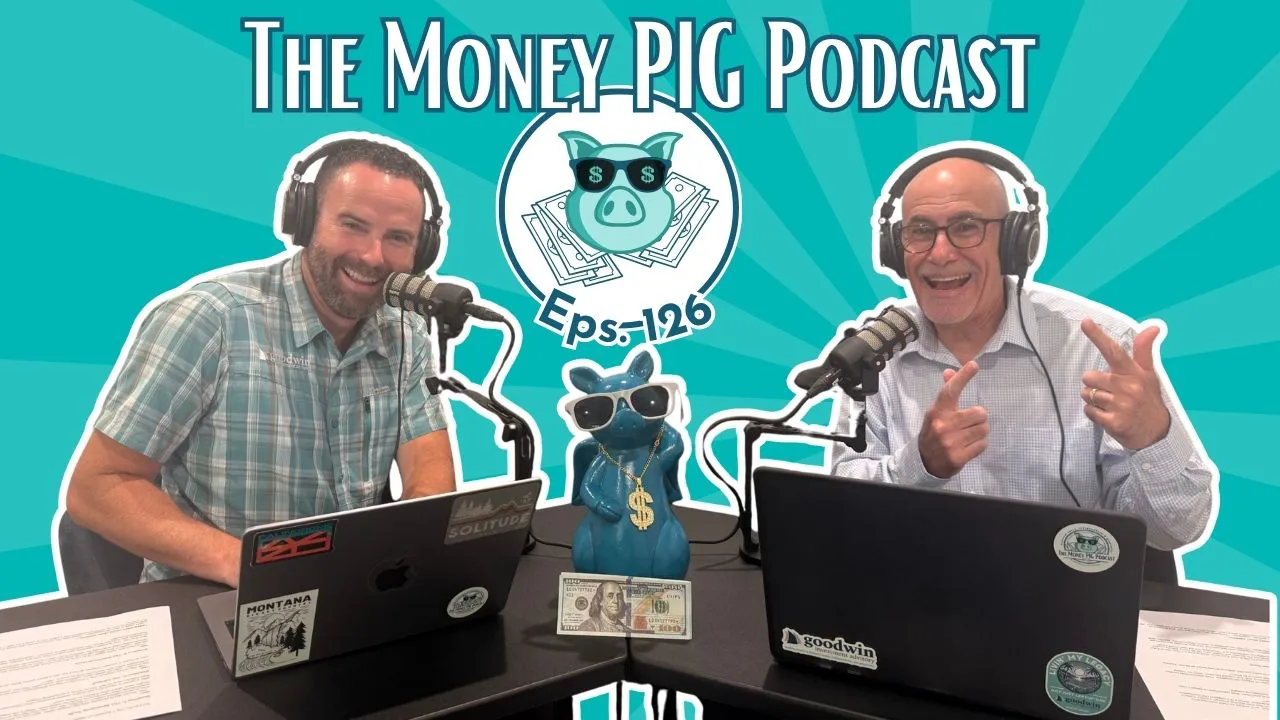
In this special Fourth of July edition of The Money Pig Podcast, hosts Tim Goodwin and Joe Beckford tackle one of the biggest questions in personal finance: what does financial freedom actually mean—and how close are you to achieving it? Instead of vague buzzwords, they break freedom down into practical terms like peace, independence, generosity, and control over your time, revealing why true wealth isn’t just about your net worth—it’s about having the option to choose how you live and work. Their message is simple but powerful: if more money wouldn’t change your lifestyle choices, you may already be richer than you think.
The episode also dives into the fascinating evolution of investing in America—from the Buttonwood Agreement of 1792 to modern tools like 401(k)s, IRAs, Roth accounts, and zero-commission trading apps—showing how financial opportunity has expanded dramatically over the last 250 years. Tim and Joe explain how today’s investors have more access, flexibility, and education than ever before, yet many people still miss out simply because they never start. Their takeaway? The barriers to building wealth are lower than ever—if you’re willing to take the first step.
Most importantly, the hosts challenge listeners to rethink retirement itself. Instead of being “put out of service,” financial freedom means working because you want to—not because you have to. Whether you’re early in your career or approaching retirement, they emphasize it’s never too late to build a strategy that lets you travel more, serve others, pursue meaningful work, and live life on your terms. If you’ve ever wondered when you can retire, how to invest smarter, or what freedom with money really looks like, this episode delivers eye-opening perspective you won’t want to miss.
https://www.goodwininvestment.com/die-with-zero/
The Psychology of Money by Morgan Housel
The following transcript of the podcast audio was software-generated, and not reviewed for accuracy. Therefore, the transcript below should not be used without verifying the validity and accuracy of its content. Please contact Goodwin Investment Advisory with any questions.
And welcome back to the Money Pig podcast. We’re your hosts, Joe Beckford and Tim Goodwin. And today we are super excited to discuss freedom reimagined. What is financial freedom? For those of you not watching at home and listening, we just did our own version. I’m in a just.
take my winnings here. yeah? I’m gonna finish. taking it up. You can finish the podcast. man, excited about this one. I’m go deposit Excited about this one. Joe, what did the duck love? Why did the duck, let’s back up a little bit. Why did the duck love the 4th of July? Because he was a fire quacker.
Okay, so what do you eat on the 4th of July? Barbecue. Okay, what do you eat on the 5th of July? Leftover barbecue. Independence Day old pizza. ⁓ God.
I mean, it’s not gross. Dale, pizza’s still good. Independence day. Old pizza. Very good. Okay. I’m impressed. Thanks for contributing. No worries. Jumping in there with me. Lift to serve. All right. Hey, before we jump into the content, which I guess we’re already getting into. Here we are. How do you and your beautiful wife, Mary Ellen, celebrate financial milestones? If you guys like hit set milestones, you hit them. Do you guys celebrate anything fun to celebrate? We do, but it’s how we celebrate a lot of things.
Honestly,
I You have like a go-to move. I do, and it would not be appropriate for everybody or most people by any is a family-friendly show. yeah, I mean, it’s family-friendly, but it’s not for children. It just involves… The producers behind the screen. It just involves the traditional American…
drink margarita. We have margaritas and we have a certain set of margarita celebratory margarita glasses. You go a little bit higher end on the tequila? Yes, definitely. So these are you’re making them? Oh, I’m making them. Yeah, yeah. And we go skinny margarita. We graduated because we’re trying to watch the glycemic index there. yeah, yeah. So it usually involves trying to make some cool new bougie margarita. And that’s fun. fun. That’s our thing. That’s super fun.
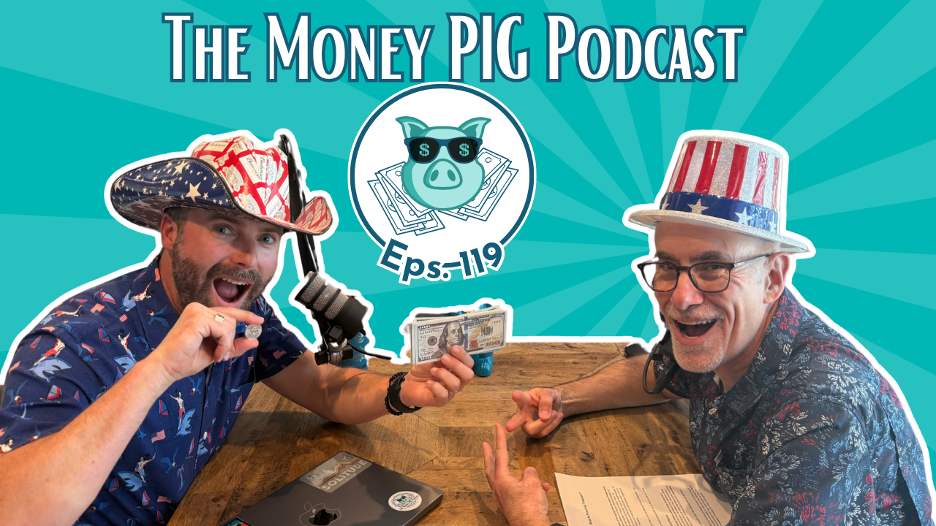
Well, awesome. did, you know, this podcast releases on July 4th. So happy Independence Day, everybody. We’re a little bit dressed up. 250th. watching the YouTube video here and you’re just listening, we’ve got all kinds of fun. Wait, you mean there people not watching? They’re missing my hat. They are. ⁓ geez. They need to just tune in for that part. Yeah, if nothing else. But while we’re talking about tuning in, I wanted to show you guys this cool thing I have right here. I’m going to go up to the camera closer.
This is a commemorative quarter. There it is. There it is. You can see it.
We’re gonna come back to the microphone. It is a quarter because it’s our 250th and the commemorative quarter which weirdly feels lighter. So maybe they spend less money making a currency. Maybe there’s not as much copper in those anymore. 1776 to 2026. Pretty cool. So the US Mint is minting a special commemorative quarter. Get yours now. But wait, there’s more. You order this quarter now. I can put that with my bicentennial quarters. There you go.
Oh, nice. I love it. That’s awesome. So we just kind of thought it would be fun to do something fun and usual, kind of a special edition of the Money Pig podcast celebrating the 250th on the 4th of July, but not necessarily talking about the USA’s freedom, which we’re excited to celebrate today with fireworks and all that things and barbecue and tomorrow day old pizza. That’s right. But today we want to talk about more about financial freedom.
So yeah, you’re celebrating, you’re talking about how you celebrate some milestones. One of the ways that we celebrate 4th of July is we typically get in our motor home and our RV and we head up to Minnesota and we usually there’s a big kind of family gathering and my wife’s family and we play croquet and could be some libations involved. If Tim’s there on 4th of July, he’s probably got a cigar in his hand. Just have a really, really great time with Maureen’s extended family on this big yard with this beautiful view of the lake. So I definitely, definitely love that. And then when you’re on
on the fourth, you know, get to see fireworks from all over, a lot of people on the lake will set them off. So that’s fun. So I want to kind of get us started with one of these quotes that I like. I’ve shared it before on one of the Money Pig episodes, but I wanted to share it again. It’s by a comedian, ⁓ United Kingdom comedian, Jimmy Carr. Highly recommend following him on Instagram, by the way. He’s got some really great skits that really get you thinking and you laugh at the same time. But his quote is, if having more money wouldn’t change what you do, then you are rich.
Do you agree with that Joseph? 100%. Yeah, because you have another version of that quote that I think that you really feel like what like
what is financial freedom? Like when people say financial freedom, what does that mean to you? What does financial freedom look like? Okay, so for me, you know, ⁓ one thing, I don’t know if our listeners know about us, but we are really big around learning around here, right? And around growing, and we read books as a team regularly. And ⁓ one of the books we read was called Psychology Money, and it’s in our library, and we recommend people read it, and we highly recommend our clients read it, and we will put it in the catalog. ⁓
for
you to have on your birthday. And we’d be happy to send that to you for free on your birthday. For free! Please, do that. Anyway, Psychology Money is a great book. The author, his name’s Morgan Housel, and I just think he sums it up best for me. And he says in here, I’m trying to find where is the exact quote here, about how money pays the highest dividend. But basically, the thing is that it allows you the freedom to do
what you want, when you want, with whom you want, for as long as you want.
So if I can do all those things, I am more than wealthy. Yeah, that’s awesome. You know, and that involves not just money, right? Because that involves time, there’s health, there’s, there’s, you’ve got constraints in there, but you’re hitting all cylinders there. And so to me, to me, that’s financial freedom. agree that like, uh, cylinders, you know, I think it’s one way to look at it. So, uh, for me, like it ties to the money pick, right? Here’s notorious PIG. Um, here’s the money. So PIG stands for.
Peace, independence, and generosity, our mission as a company ⁓ has been to lead people to financial peace, independence, and generosity. And if you kind of think about that like a formula, if you have peace plus independence plus generosity, what does that equal? Like on the other side of the equal sign for me, it’s financial freedom. If I feel like I’m being generous, if I feel like I have a plan for independence or a plan to maintain the independence I have, and I have peace when it comes to finances, ⁓
and my money then that’s where freedom follows in. That’s great. So Joe, we’re going to have a little bit of a history lesson here, think. How has investing helped expand financial freedom in America over time?
I’m just gonna read this. We talked about doing this earlier. I’m just gonna read this. I think there needs to be a little bit of a background. How did we get to where we are? Where the stock market is like… When we talk about the stock market, most people don’t even know… What does that even mean? Where’s that? We’re like, we point to that building in New York. Like, it’s over there.
Oh, like a New York Stock Exchange. like how did we get there? So, yeah, so we’re 250 years in as a country. We’re talking about the financial freedom aspect of freedom. So let’s kind of talk about, you know,
an aspect of finance over this 250 years in our country. so, and like Joe said, we’re all about the stock market. So, organized stock trading in the US dates back to 1792 with the Buttonwood Agreement. And over that time, the markets have evolved with more structure, investor protections, broader access. After the crash of 1929, Joe, you weren’t here for that, were you?
No, I was born the year after. Congress passed the Securities Act of 1933 and the Securities Exchange Act of 1934, which created the SEC. See, I was here for those. You were here for those. Yeah, for sure. The SEC is that kind of regulatory body that regulates us as well. But this helped to restore trust in the markets ⁓ and that makes for a great bridge into how we invest today. ⁓
while never without risk gives everyday families opportunities.
that earlier generations did not have in the same way. So that was the past. Joe, I think ⁓ you had some comment there about investing in America. I do. I mean, think the coolest thing that separates, you know, we talk about how we have a capitalistic society here, right? And so one of the things that has been unique and has built America and made us as awesome as we are right now is…
the fact that you can grow and you can go and you can open a business and you can do anything and you can invest in virtually anything that you want. There aren’t a lot of limits on what you could invest in. Especially nowadays. You know, there’s a lot of options for you, which that freedom is great. The downside is we don’t do the best job of educating people how to do that and how to…
take care of themselves and do things like that. So fortunately we have, like you were talking about how Securities and Exchange Commission came in and so put up some guardrails around things so that people, yes, so there’s always gonna be an element of risk and you can lose things, but there’s guardrails against being fleeced around things like that. So then we had 401K plans come in and it’s like, people can start investing even if you don’t have any education, don’t know what’s going on at all and you’re.
presented with an opportunity to invest in like a 401k plan with your employer like hey Tim I know you don’t know anything about investing but here you get to invest money we suggest you do and you can choose from some investments and a lot of people don’t know what to choose so they’re like well when am I gonna retire you’re retire here then pick that fund
You know, is that sophisticated? No. But will it get the job done? Probably. so we just have lots of options here that I think are pretty amazing and fantastic. That’s a great point. I like to build on the 401k, because then we created these Roth IRA, or actually, for the Roth IRA, the traditional IRA. So the government says, hey, we’re going to reward you to wait. You fund the traditional IRA. You save some taxes now, gross tax deferred. You use it for retirement. You don’t have to pay any penalties. Then we do the Roth IRA’s tax.
after tax contributions grows tax free, but there’s again penalties around using that before retirement. So I like those kind of incentives and constraints at the same time for these different types of accounts that have encouraged people to start participating in the stock market. And going back to something you said at the beginning was the barriers to entry essentially have been dramatically reduced. Even since you and I have been in business with Goodwin Investment Advisory, ⁓ so many things,
to open up brokerage accounts, there used to be fees. You used have to pay to open a brokerage account. They used to have an annual fee, regardless of whether you put money in or whether you traded or not. And if you did trade it, you would trade with a pretty substantial commission, even if you were picking the stock yourself. Even if you’re at a discount broker dealer, like we are, they used to be called discount broker dealers, Fidelian Schwa, because they charged, but it was a lot less. A lot of times it was a hundred bucks.
to buy, to make a trade. To make a trade. And it didn’t matter if you bought one share or a thousand shares. paid for the trade. And we were, I think I remember, so 22 years ago we started, it was $17.95 a trade at Fidelity.
And I remember like if I rebalance, if I invested like a new client, they put money in, I bought my portfolio for him, it would cost over $300 to get invested. And I think most trades elsewhere were like 30 bucks a trade at that time. Right, discount broker dealers, so I was still finding a cheaper place. But like that was really expensive. A lot of mutual funds, you can’t just throw 50 bucks or 100 bucks in in mutual funds back then because they had…
5 % front-loaded commission on them and a trade fee. And a trade fee and they would have a minimum. Yeah. So mutual funds would say, you’ve got to have $2,500 or $5,000 to start. That has to be your initial purchase of the fund. And there’s still some of that, but that’s largely gone away. You know, you can pay a commission for a mutual fund broker to buy you funds, but you don’t have to. And so you can open accounts now for free. You can put little to no money in it and you can get that money invested with usually zero
commission which I think is really cool on the bearish dentry. do think there’s really cool apps too like Robin Hood’s a great one as far as you just download this app and connect a bank account and fund it and start learning. They’re really strong on the educational side of the stock market. Greenlight’s a great app. We’ve talked about that before to teach kids about investing. there are a lot of
Easier access to education, easier access to investments than we had before. But you still got to learn. Just because that information’s there doesn’t mean people have learned about it. But it’s available and the barriers of entry have been reduced. Joe, one of the things I’m also looking forward to is the future. And we talked about this in our Trump accounts podcast, but I actually think those Trump accounts is going to do.
Two things, one that you share with me that people are probably kids are going to start learning more about investing earlier if their parents claim the Trump account. And by the time they’re of whatever age makes sense, but probably middle school, high school parents are going to be like, hey, this Trump accounts here. What does that mean? And what is it invested in? Kids, I think we’ll be more curious when there’s money in their name that’s grown on their behalf. So I think you’ll start having a future generations learn more about investing at an earlier age. And you said, I think you hit the nail on the head too, because you know, the Trump account is a little bit different from your normal five
because the 529 is actually the account of the owner.
and the child is a beneficiary, they don’t really technically own it, right? And I know we encouraged sometimes a lot of clients to even have maybe an offline brokerage account that you’re secretly sort of saving for your child’s money if you don’t like the strings that a 529 comes with, right? But that’s your money too. The Trump account is the kid’s money. It’s in their name. So what a great opportunity to have those conversations and get the kids invested in their own future. It’s totally different because my…
Beneficiary my 529 plan for my girls. I can change that beneficiary tomorrow. I change it to them. I can change it to myself. I can change it to you. I can change it to anybody. It’s not their money. It’s the custodians money, right? If I’m going to use it to benefit their college education, they need to be the beneficiary of the count, but they don’t control it. They don’t control.
They can’t prevent me from changing the beneficiary. Trump accounts, I think, very different. So yeah, that’s the past about investing in America. We talked about the present. think kind of the future will continue to be exciting and accessible for people and for young folks, even more accessible than it’s ever been. So let’s ⁓ switch gears here at the end, Joe. ⁓ What does financial freedom look like in real life as you approach retirement?
Well, that depends on everybody, right? And it’s funny, we were having a conversation a little earlier this week when we were talking with some of the members of our investment committee and we were talking about what retirement looks like, right? And what does retirement look like and how is it, how do you find purpose? How do you find meaning as you go forward? So there’s one element we help people.
build retirement plans, we build retirement plans, we do all the things, you and where you can’t see right now, we’re in a conference room and we got a TV on the other side and I can’t tell you how many retirement plans I’ve presented. Here’s how we get there. And it’s about the money though, right? It’s about the money, it’s not about…
But what’s going to make you want to get out of bed every day? Because you’ve got the money to do what you want. But how do you know what you want or what you want to do? So that looks different for everybody. And that’s a little harder nut to crack. And so we do work with people around those sorts of things, the sort of psychological part of retirement. But to me, and for me, from when I’m personally looking at retiring, which don’t worry, that’s not today, or this week or next week. ⁓
Thank God. And that to me looks like I’m going going to harken back to what I was saying before. I mean, I feel like it’s the you get to do what you want, when you want, with whom you want for as long as you want. ⁓ if you have all of those things, then that’s awesome. And I think one thing that changes for people when they early retire and I
When I work with people, I’m looking at their plans and we use the terminology go-go years, slow-go years, no-go years, and I always tell people like, you’re probably going to spend more in your early years of retirement than you are later. Absolutely. You’re go-going. Getting on a plane, flying over the pond, hitting the ground running at 6 a.m. in Amsterdam and I’m going to go see all the things. It’s not going to feel good when you’re 85. You’re just probably not going to want to do that as much as you feel like doing it when you’re 60. So get that stuff.
Go in, make those memories, do those sorts of things and all that kind of thing. And also I tell people you’re never younger, healthier, or have more money, probably, than you do right now. Like as soon as you retire. but.
I tell people, find your passion, find the thing that’s gonna make you get out of bed every day, find the people that you wanna do it with, and go and do. So to me, I think grabbing retirement by the horns is the only way to go. Let’s go, I love that, I love that. You got a cowboy hat on, you should grab it by the horns. That’s right, I’ll wrangle that sucker. That’s right, yeah. So when I think about financial freedom and approaching retirement or in retirement,
You know this Joe like I’m not actually a big fan of the word retirement I know ⁓ which is so funny because we’ve built an entire business around it, right? But it has a negative connotation really does you know? Because one of the dictionary definitions of retirement is to be put out of service And I and I use that example of like retiring a baseball bat or Jersey It’s just kind of put out of service and so it has this connotation and
You know, as a man of faith, I really don’t believe that God created us to be put out of service, certainly not service to others. That’s what it’s all about, talking about that meaning and that purpose. And so, you know, what we’ve done as a company over the years is really redefined retirement as the option to pursue meaningful work. You know, ⁓ I don’t know if you’ve come here from another country or if, you know, I look back, I think I’m 13th generation Goodwin, actually, in the United States. You know, when my
forefathers and mothers came over to the United States for the first time. mean, they probably didn’t have financial freedom. They probably didn’t have the option to pursue meaningful work. They probably just got to work in whatever they could do. But hopefully, their work allowed their kids to have more options and their kids to have more options and their kids to have more options. And I got to grow up in a…
middle income household and I got to go to college. I don’t know that 12 generations back, it wasn’t the same options and I don’t know what the meaningful work necessarily was there either. But my point is that as you build that wealth, as it gives you the option to, whether you start volunteering or you change how you work or you ⁓ start a business or work for a non-profit, like being able to…
spend that time with your hands toiling and laboring on things that you really enjoy serving others, whether you get paid for it not, to me, as that option grows, then you become kind of more retired because you have more options. To me, financial freedom is you have more options as far as what you’re doing with your time. You’re not working because, I gotta work in order to have the health insurance. I gotta work in order to save enough money in the 401k. I gotta work to pay for the kids in college or the bills.
from having to work to choosing to work. It’s a huge differentiator. You and I, we’re in there planning with clients, even when we can help them realize that, you talked about the TV back here that we throw a lot of plans on, when they realize that they could retire right now.
And that they hit that financial freedom. know. And you see their eyes light up. see it. You just gave me the ticket. Just gave it. I was like, hey man, I’m not telling you you have to quit today, but you can. So you get to go to work tomorrow and for the, you know, from this point on, knowing that like, me the money. If you have a bad day, you can leave. You’re now working because you want to, not because you have to. I’ve had so many clients come back like after that meeting that you’re describing that like even the next year and they’re working the next year. I’m like, how’s your job? they’re like,
It is so much better. Same different perspective. They’re like, I’m there because I still want to be there and my boss knows it. And I’m like, just changes everything. That mindset just changes everything. That’s awesome. Well, Joe, any final words on financial freedom? My last word would be wherever you are and wherever you’ve come from,
no matter how old you are, which I can say that, right? It’s never too late to start, right? If you haven’t been thinking intentionally about your financial future, your future is always still in front of you and it’s never too late to start thinking about.
that and about being intentional about what that looks like. So you might feel like you’re behind or behind the eight ball, but you live in an amazing country with lots of opportunities. There are a lot of Tim pointed out, there’s lots of education out there online. There are a lot of smart people like us, of course, who are, of course, who are certainly, you know, willing to work with clients that help educate and do stuff. So you’ve got it out there. Just go get it. Love it. I love it. And whether you are
beginning your personal journey or you’re thinking, maybe I could retire, I don’t know. If you lack that confidence, can I retire? ⁓ When can I retire? Is my money invested right? Will it be there when I need it?
talk to us, reach out. The best way to reach out is go to GoodwinInvestment.com because it can answer any other questions that you have in terms of FAQs, about us, our services, reviews are on there, resources are on there. if you got to the point where you built enough trust with us, then click on that schedule initial call button and pick a time to schedule an initial call just to kind of let us know more about you and we can let you know more about our services. And if the timing’s right to continue the conversation, we would be honored to do that with you.
We like to sign off with gratitude and so I will I will get started here with the gratitude So one be careful. It’s fourth of July. Be careful. Have a good time. Just be safe I’m a big fan of fireworks the fireworks I’m a bit of a pyro myself, but you got to be really really careful with that stuff. So don’t hold them Please have a great time. Hopefully you get to enjoy fireworks and a safe way ⁓
But actually, that is something that I’m grateful for is just the fun of fireworks. There’s just that thing when you hear the pop of a champagne bottle, that sound elicits this good feeling. Fireworks are just like, there’s not a sad reason to set off a firework. It’s just something that you celebrate. And I think today’s a big day to celebrate with USA being 250. So enjoy the fireworks and be safe. Oh, thanks for listening. Catch you next time. Bye bye.
The Money PIG podcast is hosted by Reid Trego. Goodwin Investment Advisory is a Registered Investment Advisory firm regulated by the Securities and Exchange Commission in accordance and compliance with securities laws and regulations. Goodwin Investment Advisory does not render or offer to render personalized investment or tax advice through the Money PIG podcast. The information provided is for informational purposes only and does not constitute financial, tax, investment or legal advice.
For personalized financial guidance, schedule an intro call with our team at Goodwin Investment Advisory in Woodstock, Georgia . Our CFP® professionals can provide advice and help you navigate how to invest your wealth and plan for your retirement. We’d love to help you live out your legacy! To learn more about the benefits and services we offer click here.
Goodwin Investment Advisory is an SEC-registered investment adviser (CRD #131193), and this episode is produced by evanced.net. This podcast is for informational purposes only and is not investment advice or a recommendation to buy or sell any financial products, securities, digital assets, or other investments. It should not be used as the basis for any financial decisions. The host and/or guests may personally hold investments mentioned in this episode. All investments involve risk, and past performance does not guarantee future results. Please consult with a qualified financial adviser, tax professional, and attorney before taking action on any information shared.
Share This Story, Choose Your Platform!
Related Posts