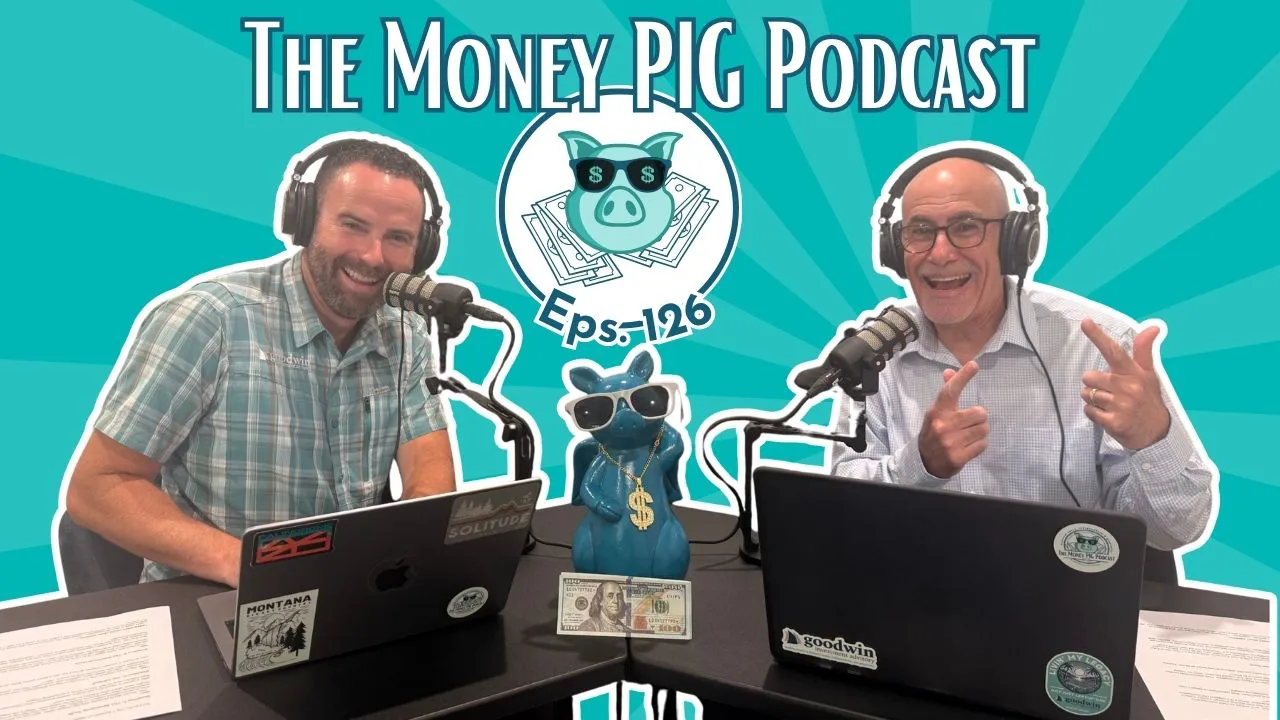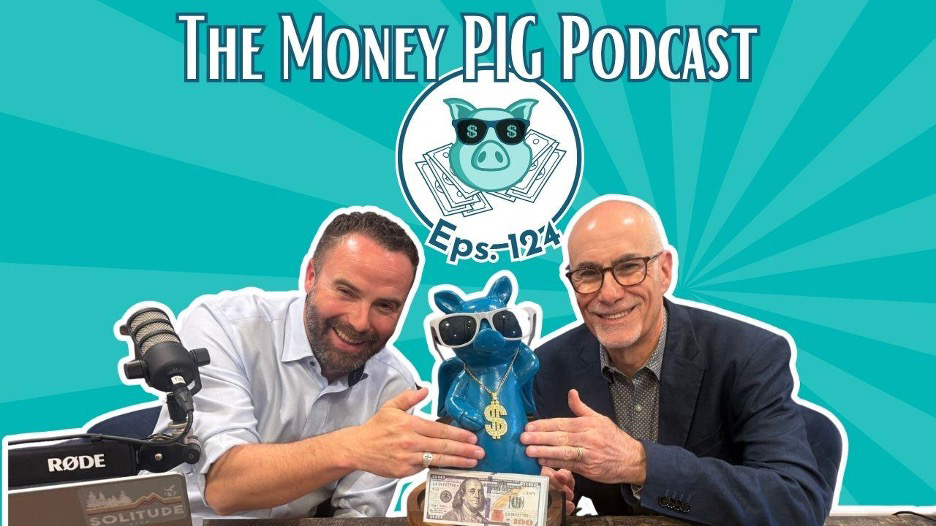
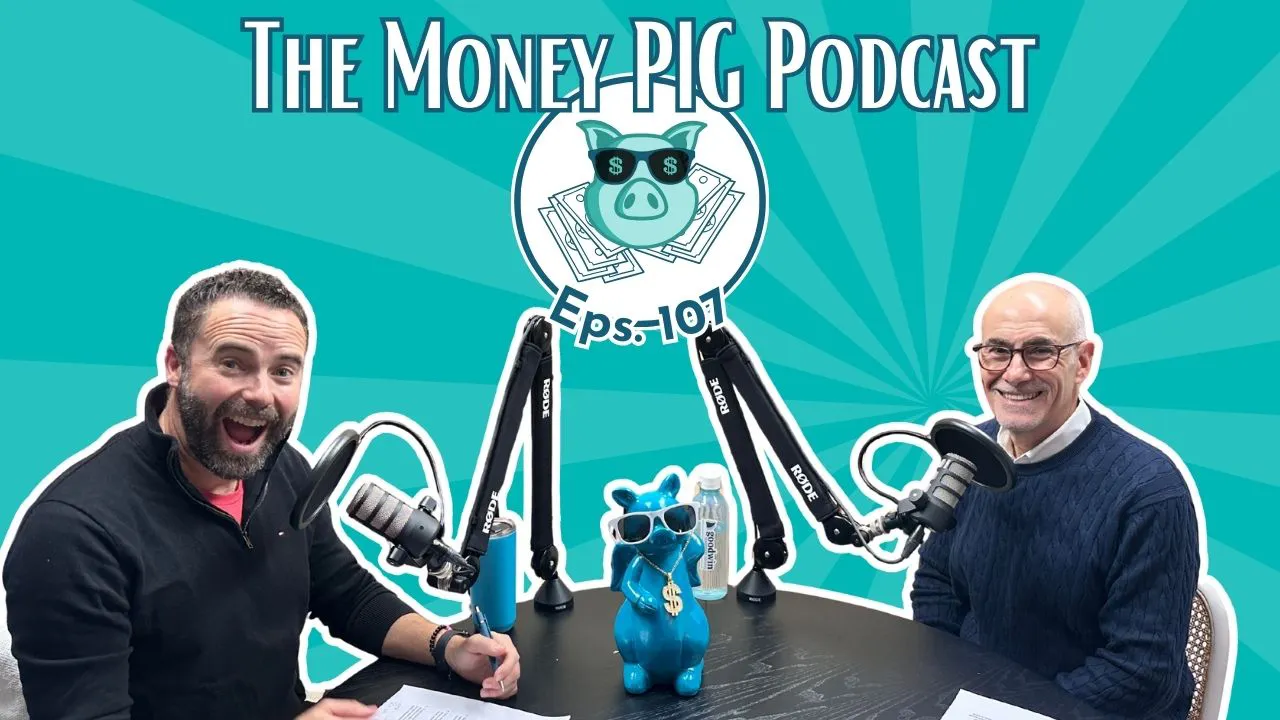
In this episode of the Money PIG Podcast, Tim Goodwin sits down with Joe Beckford for a candid, real-life conversation about the decisions that quietly shape your financial future—for better or worse. Joe shares that his best financial move wasn’t flashy: it was choosing to work with a financial advisor and committing to a more intentional plan instead of chasing returns. Together, they unpack how accountability, guidance, and small strategy shifts (like Roth vs. pre-tax decisions and automated saving) can compound over time into real confidence and freedom.
On the flip side, Joe opens up about a season of irregular income that led to using a home equity line of credit as a lifeline—and how that “temporary fix” ultimately delayed progress and added pressure. Tim adds his own lessons around keeping up with the Joneses, credit card debt, and learning to delay gratification. The takeaway is simple and empowering: financial freedom isn’t just a number—it’s a plan that helps you do what you want, when you want, with the people you love. The episode wraps with practical wisdom for younger listeners: seek wise counsel, know the state of your finances, and build habits that create peace, independence, and generosity over time.
Books mentioned: The Automatic Millionaire, Die With Zero, and The Psychology of Money.
If you’d like more insight, read this blog post: https://www.goodwininvestment.com/10-principles-to-build-a-meaningful-financial-life/
The following transcript of the podcast audio was software-generated, and not reviewed for accuracy. Therefore, the transcript below should not be used without verifying the validity and accuracy of its content. Please contact Goodwin Investment Advisory with any questions.
Tim: Welcome to the Money Pig podcast presented by Goodwin Investment Advisory
Tim: where our mission is to lead you to financial pig, peace, independence, and generosity. I’m your host, Tim Goodwin, and welcome back to the Money Pig podcast.
Tim: Today, I am super excited. I’m always super excited, but you know, having you here, Joe Beckford, Beckforth, we’re very excited to have you here back on the pod. How you doing today, Joe?
Joe: Fantastic. Anytime I can be on the pod’s a good day.
Tim: Hey, exactly. Absolutely. We’re in a new studio environment today. Obviously keeping Notorious PI with us. If you’re watching on video, you can see Notorious right here.
Tim: So Joe, to get us kicked off—and I know like a lot of our content, we call it evergreen. You know, it doesn’t really get outdated—but it is the Christmas season. So if you’re listening in July, it’s really about Christmas time. It’s Christmas time now when we’re recording, but I’m sure this content will be very applicable in July.
Tim: But I was curious if you knew… what do you call a kid who doesn’t believe in Santa?
Joe: A rebel without a clause.
Tim: Oh gosh. Oh my gosh. I’ve been waiting to get that out there for you, Joe.
Tim: So when we’re done with this, we can take an elfie, right?
Joe: Oh, an Elfie. Yeah, we’ll take an elfie later. I like it.
Tim: All right, Joe. So one thing that we love to do is have the guest share something maybe interesting that the audience doesn’t know about you. What would you like to share today?
Joe: Interesting the audience doesn’t know about me… I guess my youngest is going to graduate from college in two weeks.
Tim: Okay. Wow. That’s a big deal.
Joe: That’s a big deal. Yeah. Big, big deal.
Tim: Wow. So, no more tuition checks sending off here? Is that what that means?
Joe: Or I still have one in school for that one.
Tim: That’s right. That’s right. Yeah—on different schedules there. Okay. Well, that’s super exciting.
Tim: So today we are talking about the best financial decision I have ever made—and the worst. Can we just stick to the best?
Joe: Hey, it’s good to learn. It’s good to learn from our mistakes.
Tim: So let’s just jump right here into the content. Joe, when you look back over the last 20, 30 years, what would you say was the single best financial decision you ever made—the one that paid off over time, maybe didn’t look super flashy in the moment?
Joe: I thought about this question and I almost don’t want to answer it.
Tim: Those are the ones we like—the vulnerable ones.
Joe: Yeah. Well, I don’t want to answer it because it’s going to make you have a big head. But honestly—no joking aside—it was hiring you as an adviser. Back in 2008.
Tim: Oh. Oh, okay. Okay. Right. Hey, you made us look really good—hiring us at the bottom of the market.
Joe: It did. Timing was everything.
Tim: Timing is everything. But yeah—in the broader context, it was realizing I needed a financial adviser.
Joe: Yes. And helping. I mean, fortunately, I hired the right one.
Tim: Exactly. Great answer, Joe. That’s super true.
Joe: But I think that was it—taking my financial knowledge… I have a finance degree, I have a background in it… taking my knowledge and application and principles and stuff like that, and just having an adviser with guiding principles made all the difference.
Tim: So unpack that—other than it specifically being related to me. You hired a financial adviser—what did that end up doing for you and Mary Ellen? Why did that end up compounding into a better decision? What did having a financial adviser do that you feel like it wouldn’t have done the past couple decades?
Joe: Great question. One—somebody was making smart investment choices for me. Rather than just chasing… up to that point, I’d been managing my own 401k and I felt like I was chasing returns—pretty common.
Tim: So when you were going into your 401k, you were looking at the funds available, how they performed recently, and making changes based on the better performers?
Joe: Okay.
Tim: And I’m sure you’re not alone. We see that all the time.
Joe: Yeah. All the time.
Tim: Doesn’t always work out though.
Joe: Not always. Not always. But that was the extent of it. But it was beyond that—it was intentionality around “Hey, you should probably be making better financial decisions in your life.”
Tim: Was I sitting down meeting with you going, “These are bad financial decisions you’re making, Joe?”
Joe: Probably not. But you were opening my eyes to stuff I hadn’t thought about—like maybe you should be making Roth contributions instead of pre-tax contributions. Things like that. Maybe don’t do that—do this instead.
Tim: That’s a great example because it seems like a tedious technical thing. Most people aren’t thinking about that unless they really read into it—or they have a financial adviser bringing it up.
Tim: So part of having an adviser is sitting down and going over plans. You made a decision—maybe without realizing it—when you started the 401k and contributed to the traditional side. But then you sit down with a financial adviser and ask, “Should we make a change or keep it going?” That makes an impact over time.
Joe: 100%. Yeah.
Tim: In the investments—hopefully better results over time—but also in confidence. You’re having these conversations because you’re paying this person and you want value, and you realize it makes a difference.
Tim: And if you’re dedicated to a goal, you’re much more likely to achieve it if you have an accountability partner.
Joe: That’s true. Somebody else knows your goal. You shared the goal. You’re going over progress. That can be really powerful.
Tim: And if we fast forward—you decided to join the team and be a financial adviser, right? You hired me in 2008, and then came on as my first full-time employee in 2011.
Joe: Yeah.
Tim: You had three years of experiencing what we do and how we serve, and you wanted to help make that difference for other people.
Joe: We need to do that for other people.
Tim: Very cool.
Tim: If I look back, I think my single best financial decision was the concept of the Automatic Millionaire—forcing my money to go somewhere. Your money either has names or it has wings. Nail it down and tell it where to go.
Tim: And instead of “saving what’s left over,” it’s investing first—Roth IRA, 401k—then living off the rest. Not saving what’s left over—spending what’s left over.
Tim: That’s what’s powerful about 401ks in the U.S.—it can be automated and comes out before it even hits your checking account.
Joe: It is for sure.
Tim: On the flip side—what’s the worst financial decision you feel like you’ve made?
Joe: I thought about that. I’d love to say I’ve made only good decisions, but I’m human. Before I came to work here, I was in a situation where my income wasn’t what it should have been. I took out a home equity line of credit… not for a house repair—that would be one thing—but I used it to live on.
Tim: Yeah. And that—if you could go back—you’d change that decision.
Joe: Yeah.
Tim: In your defense, you were living on irregular income—commission only—feast or famine.
Joe: For sure.
Tim: That’s very real. Hole in the roof, no commission check—what do you do? Dave Ramsey talks about how it makes budgeting even more important.
Joe: Yeah, that’s huge.
Tim: But ultimately you borrow on the equity line and now you have another payment with inconsistent income—so why was it the worst decision?
Joe: Because it pushed today’s problem to tomorrow. You pay interest. It makes the hole bigger, and you dig out longer.
Tim: Kicking the road down the can. (We say it backwards, but it makes us laugh.)
Tim: For me, my worst decisions—keeping up with the Joneses and using credit cards. Travel, flights, hotels—all on credit cards. And also not delaying gratification. Culture teaches you can afford it if you can afford the payment, but I changed my belief: I can afford it only if I have the cash.
Tim: Even if a loan is 0%, you still have a payment. The more payments, the less wealth you build. Your greatest wealth-building tool is your income—if it’s going to payments, you can’t build wealth.
Tim: Many of our listeners are steady savers and disciplined planners. What habit or mindset helped you build wealth slowly and quietly?
Joe: Live below your means. You have to budget and spend less than you bring in. That debt from the HELOC made me think: I just need to live on less. Reduce expenses or increase income—or both.
Tim: It’s two variables. It’s not complicated, but it takes discipline.
Joe: It was a mindset shift. And then it was a decision. You can decide things—you just decide.
Tim: Joe—was there a moment you realized financial freedom isn’t about a number, but about having a strategy… the ability to do what you want, when you want, with the people you love?
Joe: I love that. We recently read Die With Zero, and I think that’s how it defines financial freedom. That’s when it clicked. People ask, “How much is enough?” and the answer is usually: just a little more. The goalpost keeps moving.
Tim: So how do you realize there is no goalpost?
Joe: Run your plan. Do the budget. Can I afford to live? Can I do what I want? If you add travel, vacations—can you afford it? If yes, then you have enough.
Tim: That’s great. It’s more about freedom and time with people you love.
Tim: For us, peace + independence + generosity equals freedom—financial freedom.
Tim: If you could sit down with your younger self—what simple advice would you give to someone just starting to build wealth today?
Joe: Seek wise counsel. Hire an adviser. If you’re young and don’t have much money, maybe you don’t hire a private wealth adviser, but you can still find a mentor—or pay someone hourly for wisdom. Decisions early in life make all the difference.
Tim: My answer complements yours—Proverbs: “Know the state of your flocks.” I have it on my calendar weekly as a reminder to check my plan, dashboard, investments, taxes, giving—does my wife know? Have I reviewed the 529 plan? Even if I don’t do it weekly, it keeps me aware.
Joe: Does Moren know?
Tim: Yeah. And if you combine wise counsel with a consistent reminder to learn and review—you’ll build the habits that create peace, independence, and generosity.
Tim: Instead of signing off with gratitude, I want to sign off with a book recommendation: The Automatic Millionaire. We’ll put the author in the show notes. Joe—remind the audience about the other book we love.
Joe: Die With Zero.
Tim: And for this episode—I recommend The Psychology of Money.
Joe: Morgan Housel—yes.
Tim: Joe, appreciate it. Thanks so much for coming.
Joe: Yeah, thanks for having me.
Tim: All right, bye-bye.
Tim: Goodwin Investment Advisory is an SEC registered investment advisory, CRD number 131193… (standard disclosure continues)
The Money PIG podcast is hosted by Reid Trego. Goodwin Investment Advisory is a Registered Investment Advisory firm regulated by the Securities and Exchange Commission in accordance and compliance with securities laws and regulations. Goodwin Investment Advisory does not render or offer to render personalized investment or tax advice through the Money PIG podcast. The information provided is for informational purposes only and does not constitute financial, tax, investment or legal advice.
For personalized financial guidance, schedule an intro call with our team at Goodwin Investment Advisory in Woodstock, Georgia . Our CFP® professionals can provide advice and help you navigate how to invest your wealth and plan for your retirement. We’d love to help you live out your legacy! To learn more about the benefits and services we offer click here.
Goodwin Investment Advisory is an SEC-registered investment adviser (CRD #131193), and this episode is produced by evanced.net. This podcast is for informational purposes only and is not investment advice or a recommendation to buy or sell any financial products, securities, digital assets, or other investments. It should not be used as the basis for any financial decisions. The host and/or guests may personally hold investments mentioned in this episode. All investments involve risk, and past performance does not guarantee future results. Please consult with a qualified financial adviser, tax professional, and attorney before taking action on any information shared.
Share This Story, Choose Your Platform!
Related Posts