Youtube Link https://youtu.be/I_q4yz2Nskc
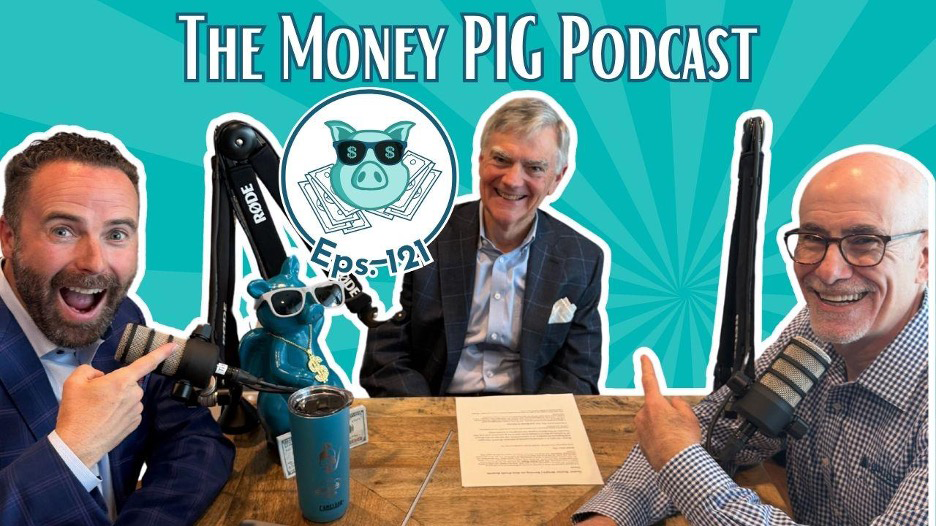
In this inspiring episode of The Money Pig Podcast, Tim Goodwin and Joe Beckford welcome special guest Buster Wright to unpack the real value of serving on nonprofit boards—and why it might be one of the most meaningful ways to give back. Drawing from decades of leadership and volunteer experience, Buster explains how board service is about far more than meetings and donations. It is about using your time, talent, and treasure to support causes you care about, build stronger communities, and stay connected to something bigger than yourself. For anyone wondering how to make a difference beyond writing a check, this episode is packed with practical and powerful insight.
The conversation also reveals what people often misunderstand about nonprofit board service. Tim, Joe, and Buster discuss how to evaluate whether a board is the right fit, what questions to ask before joining, and why vision, values, and expectations matter so much. From financial giving requirements to personality dynamics in the boardroom, they offer a candid look at what happens behind the scenes—and why the best boards stay anchored to a clear mission. The episode makes a compelling case that board service can deliver an incredible personal return, including wisdom, deeper relationships, leadership growth, and exposure to how strong organizations make decisions.
Perhaps the biggest takeaway is how nonprofit board service can become a powerful answer to one of retirement’s biggest challenges: finding purpose after your career ends. Buster shares why people should start volunteering before retirement, not after, so they already have meaningful outlets, relationships, and rhythms in place when work life changes. If you have ever asked yourself how to stay engaged, useful, and fulfilled in the next chapter of life, this episode offers a roadmap. It is a must-listen for professionals, retirees, community leaders, and anyone curious about how serving on a nonprofit board can transform both the organization and the volunteer.
https://www.goodwininvestment.com/community-partners/
https://www.goodwininvestment.com/ethos-of-generosity/
https://www.goodwininvestment.com/portfolio-greater-good/
Enjoy the episode?
Subscribe, share it, and leave us a review on Apple, Spotify, or Buzzsprout!
Like, subscribe, and leave us a review on YouTube if this resonated with you!
The following transcript of the podcast audio was software-generated, and not reviewed for accuracy. Therefore, the transcript below should not be used without verifying the validity and accuracy of its content. Please contact Goodwin Investment Advisory with any questions.
And welcome back to the Money Pig Podcast. We’re your hosts Joe Beckford and Tim Goodwin. And today we are super excited to have a special guest. Not me. Buster Wright, ⁓ not Buster Rhimes. No, but we do have the notorious PIG. the notorious PIG and we could have Buster Rhimes. Buster didn’t. I don’t know. Come.
Buster. Yeah. Buster, you done much rapping in your life? Not a lot, no. Not a lot, okay. ⁓ Well, we’re going to be talking about what it’s like to serve on nonprofit boards, which is something I got to do with Buster a while ago. But before we do…
I would love for us to maybe just share a little bit something interesting about us with the audience. would you like to go first? He always does this, like, how many episodes are we up to? We’re at least 100. Well over 100, yeah. So 100 different unique things about me. Something interesting. You know in, you know the movie Willy Wonka, right? come on. Where they’re talking about all the kids there and… ⁓
I think this is the one with Johnny Depp where he’s Willy Wonka and he’s talking about all the kids there and then he looks at Charlie and he goes, you’re just happy to be here, aren’t you? He’s like, uh-huh, just happy to be here. That’s me, I’m just happy to be here. Just happy to be here. ⁓ All right, we’re grateful that you’re here, How about you, Buster? Something interesting about you. My name is really Willy Wonka. Is it? Right now. Wow. This whole time you’re a candy man. That’s right. ⁓
Well, something interesting about me is I actually like to build fences. So that’s kind of weird. But I really like when it’s not like, you know, Georgia sweltering hundreds of degrees outside, but it’s not too bad.
I don’t know. It’s like digging the hole. Like, yeah, that is a nightmare. Absolutely. You know, got T-posts and you’re getting those things in or you’re digging a hole for, you know, four by four, four by six, attaching it, making it all kind of line up right and look straight. So still not making it sound good. Not making it sound good. Still not making it sound good. It’s like that mowing the lawn and you’re like, Hey, I did that today. So at least the lawn just keeps growing, but the fence generally stays there. So anyway, all right, we’re going to bring us back into something to do.
on the nonprofit board. That’s my break. That’s my escape from all the other things. So getting outside and working hard and sweating. ⁓ So wanted to introduce the listeners to Buster Wright. Here’s the official bio. He’s a retired investment advisor, branch manager, and regional.
President of a national firm. He served he serves on the Board of Trustees at Berry College ⁓ Which he graduated from so we both did we have that both of our alma mater’s and is the founder of the Berry Center for integrity and leadership I know Buster because he spoke one of my classes when I was a student in the business school at Berry and it’s just incredible that I got to kind of come full circle I got to serve with Buster on the Board of Trustees for a period of time and And then I was like, do I keep Buster in my life? I know
I’ll add them to one of my boards and we Buster serves on Goodman Investment Advisories Investment Committee and have for you know, good good many years now I really hadn’t thought about how long it’s been but it’s been a while. Yeah, so We’ve got some other members on our investment committee You can check that out on our website and your beautiful mug and and theirs as well and bios so I feel like usually has a bowtie on that. That’s you. Do you have? you have the bowtie darker casual today, but I’ve wondering why he has enough
that picture in a while. serving others and generosity and giving back, obviously we call this the Money Pick podcast, Peace, Independence and Generosity. We talk a lot about generosity on the pod. But a lot of times we’re talking about generosity in terms of giving money away and we as a company set a percentage of our revenue aside to give back into the community, local and beyond. But I really wanted us to talk a little bit about how do you serve with your feet?
beyond just serving with your wallet, right? And one of the ways that Buster does that is serve on the Board of Trustees at Berry and to serve in the Investment Committee as well, something that I found really, really meaningful too. And then as a company, Joe, do you wanna maybe share with the audience, how do we encourage our employees to participate in board service? ⁓ great question. So…
around here, everybody’s heard of PTO, right? Personal Time Off. have- Paid Time Off, but yeah, or personal. Okay, personal time off that’s paid, right? Yeah. So that’s super familiar in the industry and stuff like that. And we get a day a year to serve on a board somewhere, preferably like a nonprofit. It doesn’t mean like… ⁓
Like I was the president of my HOA for a while. It’s not bad. That’s a lot of work. It’s volunteer, but this is different. This is like giving back, you know? And there’s that whole ⁓ how do you give? Well, you’ve got time, talent, and treasure, right? So a lot of this is talent and time we’re talking about, not so much treasure. And so we get a day to serve and we call it a PPTO day. So it’s a purpose.
personal time off day. That is also paid. Which is pretty cool. So right, so if you are an employee here and you serve on a board and you have to do that during the normal work day, doesn’t, it’s not like, it’s not burning your PTO, it’s not unpaid time, we actually encourage that through that. ⁓
So that’s one way that we promote it. It’s a big deal. And that’s why we thought it’d be super cool, Buster, to have you come and share today. So ⁓ maybe you can share with us, Buster, what first drew you to board service. And if you wanted to share other boards you’ve been on in the past, that’s cool too. Why do you find it so meaningful? Well, I was blessed to be raised in a family of folks who did do that. really? Like your parents were active? parents. OK. And lived with my grandmother, and she did it as well. So it came kind of easily and just was sort of second nature.
⁓ So you saw it modeled growing up? Yeah, I saw it modeled, yeah. Okay. But you know, I always did that. I was an only child and so, you know, it’s… You know, I was always trying to be with groups of people and so it became a community that I could be a part of. What, you know, all through the years and I’ve, you know, the boards I’ve been on have been…
You know, some specific to what my age was, you know, I coached youth soccer for eight years. mean, and that was fun because getting to get together with a group or community, they’re all wanting to do the same thing. Like at that stage of life. Yeah. Right. Exactly. I, it would be difficult for me to coach a group of eight or nine year olds. ⁓ Well, I don’t know. I will challenge that because Buster shared with us before he went on the show that he worked out for how long this morning, Joe?
2.5 hours. This is way he normally does. So I don’t know, you might be in more shape than most of the soccer coaches out there. I like doing it with a community of people. Yeah, that’s pretty much the way it was and it’s changed over the years. The things that I’ve sort of… ⁓
lined up with and been on boards of. Right now in my retirement, I’ve cut down from eight to six boards that I’m on right now. Cut down to six boards. So yeah, this is a good topic for me. I can pretty much talk about board services. Hey, I’m going to pause real quick. Just check this time that we’re at.
⁓ We’ve got to figure out how to get you probably closer to that mic. Okay. So I don’t know if you want to move your chair maybe closer in. All right. There I am. it. Okay. So but do you want me to clap or anything or you guys kind of have you have a little note here on the time? It’s just to kind of splice that out. So okay. All right. So I’m just going to keep going because we’re recording. Okay. So okay. So you just said that you served on eight boards. Now it’s down to six. So I guess unpack a little bit like why did you reduce the boards and then and then maybe unpack the six of six. Well one of the things when people
realize that you love board service. The word gets out? The word gets out and there’s a very difficult language which I don’t speak well and it’s called thank you but no. Oh, you don’t… okay. Write that down, guys. Write that down. So you can get to a point where you’re, you know, that you’re not doing a very good job and if you’re on a board you want to be a part of it and to, you know…
earn your keep as it were. Yeah, it reminds me of something Dale Alexander says, who’s also on our investment committee. Right. And he says, everyone loves a giver. I mean, if you give, mean, Joe was saying maybe this is a little more of your time and your talent, but certainly with board service, there’s an expectation of financial gifts as well. So you’re really, it’s the trifecta. You’re doing all three, you know, work kind of gets out. I want to come back to something you were saying earlier, which was
It’s kind of my stage of life. I saw my parents do it. They were obviously older. You became that soccer coach and now you’ve moved more into board service. I remember a client ⁓ retired. One of my clients had recently retired and had said, hey Tim, I’m being asked to serve on this board. I’m considering it. What do you think?
And I was like, well, I hope you do because you have the time to do that. For those of us that are working, it’s a lot harder for us to serve on boards when we’re not retired. Like it’s sort of the mantle that you’ve walked into. If you are someone who cares about these nonprofits and like to give that time and find meaning and purpose there.
Like you have the capacity to do that now, you didn’t have as much when you were working full time. We have a client advisory board and initially I had tried to really try to diversify the age of the clients that we asked to be on the board. But the younger folks had a lot harder time coming because when is the client advisory board meeting? During the work day. During the work day. And they don’t get PPTO. They might not have PPTO. They don’t get those. on, yeah. ⁓
And so I realized, yeah, I’m just going to have to kind of stick mostly with retirees. just entrepreneurs have some of that freedom sometimes. They’ll take advantage of that. But young people in the workforce can make time. Maybe that meeting of that particular not-for-profit always meets at lunch on Wednesday. And you can make lunch for Wednesday. make that. Yeah. That’s a great point. Why has this been? So you’re like, OK, I’m in the stage of life. My parents did it.
I have a hard time saying no. So that’s some of your reasons so far. But what’s internal? How is it meaningful? Why do you enjoy it? Well, see, that’s the part that I get a lot out of it. I love people, so I love to be around people. I usually pick ⁓ not-for-profits.
candidly that I’m interested in. A lot of my not-for-profits over the years have been around kids. Whether they’re college kids or I was on the Boys and Girls Club board and was its president for a number of years. Boy Scouts ⁓ and then the coaching of course ⁓ and some other things that were relative to kids. ⁓
and I’m on three boards that involve my past and my career of investing and whatever else. And so I’m sort of needed there. And we all sort of need to be needed in some way or to be wanted, as you like to say. exactly. Yeah, it’s nice to be to be able to put a different spin on things for the board. it’s a gift to me to be able to do it. know, there’s a… St. Francis has a…
has a prayer that was sort of attributed to him and it ends up saying ⁓ something about giving and receiving. It is in giving that we receive, I think is the way it is. And that’s pretty much it. And I strongly recommend it. If it gets to the point where you don’t receive and it’s a chore, then you need to get out the way on it. And that can happen. ⁓
I have a reason that I serve on boards and you haven’t said it yet because you’re probably just not as selfish as I am. But one of the reasons, you know, I grew up, I’m a preacher’s kid, and one of my favorite things to read in the Bible when I got more curious about it was Proverbs. You know, just read a proverb. The proverb for the date that month. I read that for, I did that for years, you know, it’s 31 Proverbs.
And what you start to glean is that the writers of Proverbs, mostly King Solomon, is highly encouraging the pursuit of wisdom. That’s like this ongoing scholarly theme is like, go find it. Like, kind of it’s hard to find. Once you do, hang it around your neck. You know what mean? And ⁓ I think real wisdom is hard to find.
But do know where I find it? In board meetings of nonprofits. And I know, I don’t know if that sounds cliche or whatever, or biased, but it’s just been my case. Getting to serve at Berry College or other nonprofit boards I’m on, these are folks that are not paid to be there. They’re not paid to be there.
I mean, when I, it was three years or so I was on the board of trustees at Berry and there was I think a 175 page board book that the cabinet of the president would send us before the meeting. So we were expected to be familiar with that. If not read it word for word, know, donate that time to the school. Try to give advice and direction and shaping. A lot of us try to not head down a bad path that would put us in a legal situation. Well, how that benefits the kids.
all these kind of decisions and then certainly be generous financially or try to introduce the school to folks that could give or do fundraisers and so but I just realized that when I was on the board of trustees specifically just to be a fly in the wall in that room
is a huge benefit. I’m so grateful to see these folks that are passionate about a nonprofit so much that they would give up their time for free and then actually pay for it. They’re like paying to be on the board in a way. But to see how these men and these women made decisions. ⁓
I was really impressed with it. you’re never too old to not gain from that. Yeah, yeah. So you’re benefiting from that still, of course, right? I remember, too, some of the things that I took away from the Barry Board was thinking about risk.
They’re always thinking about how their decision impacts the student. That’s right. Because we’re at the school. And then they would think ⁓ long term, like big, like long term and global. Like how does this impact affect us long term? What’s kind of the global for the organization impact? How does it ultimately impact the student? And how does this change our risk profile?
So that’s been one of my favorite things. And then the folks that I meet there, it’s kind of like, you know, if you really enjoy pickleball, you’re talking about your wife liking pickleball. You you start playing pickleball, you like playing pickleball, you might end up having other things in common with folks you play pickleball with. And all of a sudden now you have like new friends and you have common interests. You know, we were able to connect a lot more through the board. I was able to meet some incredible people and expand that network. I heard recently, I don’t if was telling you
Joe, that your network is your net worth. ⁓ for sure. know yeah and so that’s for me that was a really great way to meet business owners, successful business folks, men and women, different ages, different backgrounds, but they did have that they loved Berry College, they were willing to donate their time and I knew that they had to be giving generously otherwise they wouldn’t be asked you know to be on the board.
I don’t know if you can unpack any, if you’ve got any particular story around that or getting to sit down and kind of… I think what I’ve found over the years though, relative to being on non-for-profit boards is that the key is the vision of that organization. Good call. Come on. And, you know, can you buy into that vision?
⁓ And the most successful organizations in the world, whether it’s educational, child-based, animal-based, whatever it is, have had a vision. And the magic is they stuck with that vision through all kinds of people over the years that have been on that board. And so you’ve got this excitement of everybody’s fired up about the same thing, whatever it is, but there’s that consistent thing that pulls them together. They may feel totally different about a
particular subject than you do. But it all pulls together when you focus in on why are we here. And those are the successful ones. And if they’re not, that’s the ones that fall apart. And it’s really sad. but yeah, that’s what you saw at Berry. I’m going through my…
What is it? Fifth president at Berry right now. Yeah. Yeah. And out served the presidents. The one thing that concert, the one thing that has has been the success of the school has been that vision that the founder started in 1902. Martha Berry. That’s right. Start by a lady. Boys and Girls Club. Same thing with boys, Boy Scouts and whatever else. But yeah, it’s it’s it.
You learn yourself and it’s for a good cause, you hope. You’ll find out soon enough if you’re serving on the board. Yeah, that’s right. That’s right. So are there any… I want to address misconceptions. if somebody is… I don’t know. Maybe they’re considering serving on a board, but they maybe have some misconceptions of what that board might be like. So maybe address the person…
who’s listening is like, I’ve never served on a nonprofit board and they’re hesitant to. Okay. The good news is that not-for-profit boards are put together by volunteers. Right. The bad news is not-for-profit boards are put together by volunteers. Right. People bring their own personalities there, their own ⁓ needs of power. ⁓
And if a person is in a career where he or she is in a position of power, they’ll bring that whole scenario to the board. So you got to be open to that. If you’re about to join a board, that there are going to be people in different personalities and you’ve got to make sure that that doesn’t distract you and that you’re able to work around that. But here again, that’s where the vision and staying close to the vision.
⁓ you know, keeps everything going. So it is volunteer ⁓ who is eventually responsible for what’s going on ⁓ in a college or a university board of trustees. It is a legal responsibility. ⁓ For the Boys and Girls Club Board of Northwest Georgia, it is not. It’s an advisory board. need to what level of liability you’re So there is an executive director.
that’s part of an organization, the Boys and Girls Club of America, which is based in Atlanta. so you gotta sort of be aware of what the structure is and what’s expected of you, other than just showing up. ⁓ yeah, the misconceptions are all people-based. Right, right. I have a question. So what if somebody is interested in serving on a board that they don’t know where to start?
You mentioned you’ve got this unique problem that you’ve said yes so many times that the word gets out. Like, ⁓ you need Buster on your board. But what if you’re just getting started? What if somebody’s out there going, wow, I feel called to serve, but I don’t even know how to get started. easy. ⁓ What you have to do, let’s say it’s you and you want to serve on the Boys and Girls Go Board with me or whatever. You call up and say, Buster, I know you and I think you know me. Let’s have lunch and talk about what’s involved.
Tell me what the meetings look like. Tell me what the history of the organization is. What’s the worst thing that can happen to the Boys and Girls Club of Northwest Georgia? Okay. Such that you’re, that I’ll have to make it very clear what’s expected of you. ⁓ On some boards they’re expecting the board members to give money. All right, well you need to know that up front. Sure. And so some boards do something which I think works and I’m saying, Joe,
to be on the board, you need to either give X number of dollars or raise X number of dollars. Go find people who can. Exactly. If you can’t, find people who can. really care which one it is. Just you’re responsible for X number of dollars. And so those are kind of things you need to know right off the bat. How many times can I miss and be able to stay on the board of whatever? Gotcha. Yeah. And so yeah, those are the things you need to know about. And are there…
Tell me a little bit about the people who are on the board and how long have some of these people been on the board? ⁓ you know, that’s when things like, well, you know, there’s this guy named buster, right? And he’s been on that board for a long time and he thinks it’s his deal. And crotchety and he’s crotchy. I know that guy. he’s the smartest guy in the room, or at least thinks he is, you know, that kind of stuff can come out, but he’s a great guy, you know, kind of thing. those are the kinds of things that you need to know. Cause you sure don’t want to go to a board and all of sudden realize.
Oh my God, I got to find $2,500 or $5,000 or whatever else. Or this Buster Wright guys are a real clown. can’t live with him. Also to ask, this is sort of a corny way to do it, but I always ask what the value system is of the organization. What’s important to them? And all of us hopefully have our own, you know,
inter-compasses as to what we are comfortable doing and if it sounds from the very beginning like, ⁓ don’t, ee, you know, that, I don’t know that that sounds like me, then now’s the time to know it. So, yeah, that’s a great question. But you do really need to ask some questions about that. Yeah, I think if you don’t know anybody on a board of a nonprofit, you like, start giving to that nonprofit. Start giving on a regular basis. Start asking those questions that you
just work going over, but you maybe ask it to the organization. So I know as well that if I give to a nonprofit through my donor advice fund, it kind of sends a signal to that nonprofit. And so I tend to get a little more attention even if the gift’s not very big, because I’m giving through a DAF. It shows I’m intentional. It shows I’m thinking about taxes, I’m giving maybe appreciated securities through a DAF. If I’m not giving it anonymously, then I want to be known.
by the organization because I maybe want to know about updates and initiatives and things that are going on. ⁓ So I have found, just like what Buster was saying, if you just keep asking questions, it starts to open doors. And if you read the material and if you ask questions about the ministry model, ⁓ often that can lead to an invite to more leadership. I want to share too kind of one of the misconceptions that I feel like people have. I think people definitely understand that you’re going to
be required to come to some meetings. There’s probably going be some financial commitment. If you’re giving that time and money, you’re hoping that you’re giving some feedback and adding some value. But I think one of the things that I try to explain to people as far as encouraging them to join a board is that my ROI, my return on that investment far exceeds my cost. Far exceeds my time that I’m putting in. Far exceeds.
The money I’m giving, FARC, seeds the frustration of dealing with the personalities on the board, hopefully. ⁓ And like for me personally, has driven a lot of my personal happiness because I enjoy, like I’ve said, being in those rooms, like Buster was saying, finding the values that align with you, seeing how maybe even other organizations plan strategically and execute on them. So I’ve really enjoyed that, getting to…
Like at Berry, I still get to meet students and get tours of some of the new stuff, get to know kind of what’s happening. And it’s a very special place to me for a lot of different reasons. So as we’re kind of signing off here, any last words, any last things you might want to share with listeners that would encourage them to serve on boards? I’ve got one. OK, go ahead. We’re talking about from GIA here. So we talk about preparing for retirement, don’t we? OK. All right. We can do that.
99 % of preparing somebody for retirement, but there’s a part that I will tell you and I will share with everybody who’s listening. Sometimes retirement is not as easy as we may think that it is. What am I going to do tomorrow? What am I going to do to fill up my life? I would recommend people who are still working to start volunteering for boards and to find some extra things that you enjoy doing.
such that when you do retire, it’s an easy step. right, because you’ve already got… That’s right. I do a lot of advice and lot of counseling with people who have had successful lives. They retire and they don’t know what to do with themselves. And you can only play so much golf. And so it can be a real saving thing for people who retire. I strongly recommend it.
I agree. I can’t top that. It’s of like trying to think of ⁓ the antidote for loneliness or depression. Because you lose lot of that meaning and identity when you graduate from that career that you’ve been doing forever that you love. You just stop doing that. You go from 40 hours to zero and just like, do I matter? Am I wanted? Am I needed? What’s my purpose? What am I retiring to? And it’s got to be more exciting. You only want to go to the future if it sounds better.
You know and so yeah if you’re already that’s great advice Buster if you’re already you know starting to volunteer on boards even before you retire then you know that you can continue to you know sink your teeth into that so Buster thank you so much for coming we like to sign off with gratitude something that we’re grateful for and I’ll share something while you guys are thinking about about your gratitude so I think what’s cool for me and I’ll tie it back to Barry College is to see that
Organizations I care about can outlast the people. So that you can, just to know that, so that hope for humanity, a hope for the future, that if you can structure the organization well, and you can build in good systems, and you can tie it to the vision, like you were talking about before, that I can come behind people that have come way before me, and people will come way after me. And just to be a small part of that journey, I think is…
is something I’m grateful for, that everything I’m involved in doesn’t just disappear and blow away in the ashes, at least for now. What you, Joe? What you grateful for?
Mine’s gonna be a weird thing. I’m gonna say I’m really grateful for modern medicine. Come on, let’s hear it. That’s mostly because ⁓ my dad just recently had a knee surgery and I was getting a message from my stepmom on the way in to work one day and that afternoon he’s called me and I thought I’m not gonna talk to him today. And he was home, he already been walking around the house three times with a full knee replacement. I was like.
You’re walking around, yeah, I had to get up three times and I’m doing this and doing this and showed me pictures and he’s like in a month I’m gonna be doing everything I want. He’s in his 80s. So I’m just really grateful. We live in a country where somebody who’s in their 80s can say I’m gonna be mobile and I’m gonna get back to my lifestyle again, which is pretty awesome. So good. That’s awesome. I’m incredibly grateful for my health.
Working out two and a half hours. I want your help. I’m really, really grateful for the people of my career and my luck of my career. I really enjoyed it. But the thing that I’m most grateful for is that I have the ability and I love paying back.
because I’ve really lucked out in my life and I love to sort of pass along the things that I’ve been fortunate enough to learn to younger people. That’s awesome. Well, we’re so grateful that you came, Buster. Thanks for being a guest on The Money Pig. Thanks for listening and we’ll catch you next time. Bye bye. Bye bye.
For personalized financial guidance, schedule an intro call with our team at Goodwin Investment Advisory in Woodstock, Georgia . Our CFP® professionals can provide advice and help you navigate how to invest your wealth and plan for your retirement. We’d love to help you live out your legacy! To learn more about the benefits and services we offer click here.
Goodwin Investment Advisory is an SEC-registered investment adviser (CRD #131193), and this episode is produced by evanced.net. This podcast is for informational purposes only and is not investment advice or a recommendation to buy or sell any financial products, securities, digital assets, or other investments. It should not be used as the basis for any financial decisions. The host and/or guests may personally hold investments mentioned in this episode. All investments involve risk, and past performance does not guarantee future results. Please consult with a qualified financial adviser, tax professional, and attorney before taking action on any information shared.
The Money PIG podcast is hosted by Reid Trego. Goodwin Investment Advisory is a Registered Investment Advisory firm regulated by the Securities and Exchange Commission in accordance and compliance with securities laws and regulations. Goodwin Investment Advisory does not render or offer to render personalized investment or tax advice through the Money PIG podcast. The information provided is for informational purposes only and does not constitute financial, tax, investment or legal advice.
The Money PIG podcast is hosted by Reid Trego. Goodwin Investment Advisory is a Registered Investment Advisory firm regulated by the Securities and Exchange Commission in accordance and compliance with securities laws and regulations. Goodwin Investment Advisory does not render or offer to render personalized investment or tax advice through the Money PIG podcast. The information provided is for informational purposes only and does not constitute financial, tax, investment or legal advice.
For personalized financial guidance, schedule an intro call with our team at Goodwin Investment Advisory in Woodstock, Georgia . Our CFP® professionals can provide advice and help you navigate how to invest your wealth and plan for your retirement. We’d love to help you live out your legacy! To learn more about the benefits and services we offer click here.
Goodwin Investment Advisory is an SEC-registered investment adviser (CRD #131193), and this episode is produced by evanced.net. This podcast is for informational purposes only and is not investment advice or a recommendation to buy or sell any financial products, securities, digital assets, or other investments. It should not be used as the basis for any financial decisions. The host and/or guests may personally hold investments mentioned in this episode. All investments involve risk, and past performance does not guarantee future results. Please consult with a qualified financial adviser, tax professional, and attorney before taking action on any information shared.
Share This Story, Choose Your Platform!
Related Posts