
Link to YouTube – https://youtu.be/yxWh51LapAc
Link to BuzzSprout – https://www.buzzsprout.com/admin/2136084/episodes/18496021-episode-108-wealth-vs-wealthy-the-lifestyle-gap
In this episode of the Money PIG Podcast, host Tim Goodwin and guest Joe Beckford unpack a powerful (and often misunderstood) distinction: being wealthy versus looking wealthy. Joe explains that the difference is essentially a mindset—an “intangible” shift from chasing appearances to building actual net worth. They describe it as the difference between income-statement wealthy (spending what you make to look successful) and balance-sheet wealthy (quietly building assets, margin, and freedom).
Tim and Joe also talk through the “comparison trap”—the constant pull to keep up with the Joneses through bigger homes, newer cars, and lifestyle upgrades. The problem isn’t just the spending; it’s how comparison can steal joy and create a never-ending finish line. Real, lasting wealth comes from getting grounded in what genuinely makes you happy, recognizing “style drift” as income grows, and choosing intentional habits that protect long-term freedom.
Throughout the episode, Tim shares memorable examples of quiet wealth builders—his grandfather who earned stability through pensions and lived modestly, a mentor who drove an old police car but lived with purpose, and a client with significant wealth who prioritizes experiences and passion (like competitive slalom skiing) over showy purchases. The common thread: wealthy people often appear ordinary—because their wealth has a purpose, and their lifestyle choices reflect values, not pressure.
Check out our blog and guides page for more resources
Books Mentioned
The Millionaire Next Door — Thomas Stanley
Wealth: Is It Worth It? — T.R. Cather
Exponential Wealth — Tim Goodwin
The Millionaire Mind — Thomas Stanley
If you’d like more insight, read these blog posts:
https://www.goodwininvestment.com/you-can-have-whatever-you-want/
https://www.goodwininvestment.com/investing-when-you-do-not-think-you-are-rich/
Enjoy the episode?
Subscribe, share it, and leave us a review on Apple, Spotify, or Buzzsprout!
Like, subscribe, and leave us a review on YouTube if this resonated with you!
For personalized financial guidance, schedule an intro call with our team at Goodwin Investment Advisory in Woodstock, Georgia . Our CFP® professionals can provide advice and help you navigate how to invest your wealth and plan for your retirement. We’d love to help you live out your legacy! To learn more about the benefits and services we offer click here.
Goodwin Investment Advisory is an SEC-registered investment adviser (CRD #131193), and this episode is produced by evanced.net. This podcast is for informational purposes only and is not investment advice or a recommendation to buy or sell any financial products, securities, digital assets, or other investments. It should not be used as the basis for any financial decisions. The host and/or guests may personally hold investments mentioned in this episode. All investments involve risk, and past performance does not guarantee future results. Please consult with a qualified financial adviser, tax professional, and attorney before taking action on any information shared.
The following transcript of the podcast audio was software-generated, and not reviewed for accuracy. Therefore, the transcript below should not be used without verifying the validity and accuracy of its content. Please contact Goodwin Investment Advisory with any questions.
Tim: Welcome to the Money Pig podcast presented by Goodwin Investment Advisory, where our mission is to lead you to financial pig, peace, independence, and generosity. I’m your host, Tim Goodwin.
Tim: Welcome back to the Money Pig podcast. Today I’m super excited to have Joe Beckford here in the studio. How you doing today, Joe?
Joe: FFantastic
Tim: Great to have you. Great to see you. So today we are talking about wealth verse wealthy—the lifestyle gap. But before we do, Joe,
I’ve got a question for you.
Tim: How much did Santa pay for his sleigh?
Joe: How much did Santa pay for his sleigh?
Tim: Nothing, Joe. It was on the house. This is what we put people through here.
Joe: Yeah, that was for free.
Tim: We should do this podcast.
Joe: Yeah, we just lost half the audience.
Tim: They just turned it off. Listen, come on now—we got to make finance fun around here. We get that started right off.
Tim: Wanted to recognize here we have another guest—Notorious PI, of course.
Joe: Yeah, we do. Got his bling, got his profiling right there.
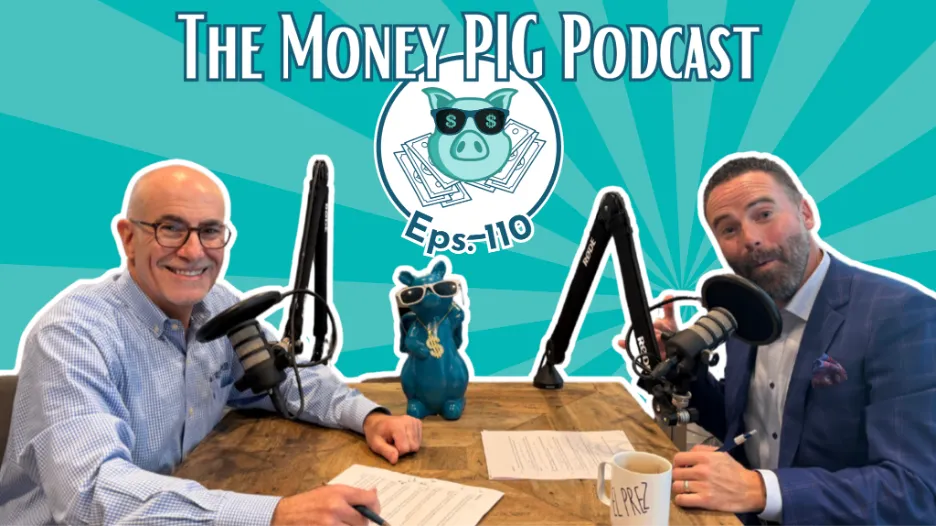
Tim: Yeah, if you are listening, you’re not able to see our beautiful statue of our Notorious P. So, all the more reason to watch this fantastic video of these guys here. But yeah—Notorious is great.
Tim: All right, so let’s get this sucker kicked off here. Wealth versus wealthy. Easy for me to say. Wealth versus wealthy—the lifestyle gap. Joe, how do you define the difference between actually being wealthy and just looking wealthy?
Joe: I think it’s a mindset thing. It’s intangible. Okay. I think… well, I mean, this is a nuanced question in general, right? The difference between wealth versus wealthy and like, oh, aren’t those the same thing? Well, yes, no.
Joe: You had talked about, I think in a previous episode, this whole issue of keeping up with the Joneses, right? Who has the biggest house, who has the coolest new car, whose wife has the biggest diamond on her hand—whatever that ends up looking like.
Joe: And I feel like particularly in America we fall into this trap very easily that, well, we have to do that. We have to do the stuff that at least our friends are doing, or the people that we ascribe to be.
Joe: And for some reason we ascribe, well, I need that big house. You know, we live in the Atlanta area, right? You ever driven down Paces Ferry—where the governor down Paces Ferry, right? Do you ever wonder… like I used to drive down… what do they do? How do they have that? What do these people do? And that’s the job I want.
Joe: And it took me a long time to realize that is totally the wrong thinking. The job you want should be the thing that makes you feel fulfilled and feel complete and all that. And a lot of those people, the reality is that they’re probably not even happy.
Tim: Right. Right. Be happier now during this season because of all the Christmas decorations. And so potentially until they get the bill they paid for. We hang Christmas lights and that was $8,000—at least.
Tim: I know you and I are getting to go down there for a holiday party and I’m looking forward to driving down that road at night and seeing something.
Joe: Yeah.
Tim: The obscene amount of money that’s probably being spent on Christmas lights to decorate these huge houses.
Joe: I think obscene is a good term. But anyway—I think it’s just a mindset of, you know, what is wealth and wealthy to you? And I think it’s a perception thing.
Joe: There’s a difference between balance sheet wealthy and income statement wealthy. And we see that all the time, right?
Tim: That’s right. That’s right. Yeah. Because you can look wealthy… if you’re saying wealthy it’s because somebody looks wealthy, right? That’s kind of what we’re talking about.
Tim: Having wealth can be more internal, can be more secret like you just said. If you’re wealthy and you’re just income statement rich and you’re just spending all the money—you look wealthy. You may not have any actual wealth, right?
Tim: Which you said—balance sheet wealth—what’s the assets that are going over there?
Tim: I remember coming out of college and hearing this concept… it’s been long enough now that it probably needs to be adjusted for inflation… but the idea of being a $50,000 millionaire—somebody who made $50,000 a year but looked like a millionaire because they spent all their money and probably then some.
Tim: Kind of like you’re saying—keeping up with the Joneses.
Tim: I remember a story. I was meeting with a client and he had looked outside at my car, and this was real early on, like within the first few years of starting the company, and he said, “Oh, am I paying for that?” is what he said.
Joe: Was this the Beamer?
Tim: This was the Beamer. I remember the BMW—silver Z3. Same Z3 that James Bond drove in one of his movies, which is why I thought it was super cool. I could feel like James Bond.
Tim: But the interesting thing is that was a very used car. It was a 97. This was probably 2007, so a 10-year-old car, right? But it’s a sports car and it’s a Beamer, and there was a perception there.
Tim: I didn’t really realize that my clients might see that and feel like that’s what I was spending my money on or that’s why I was charging them to have some fancy expensive car.
Tim: And after I realized how ridiculous it is to fix a BMW—a used BMW—I was like, “This is a horrible, horrible thing for me to be investing in at this time.”
Tim: So yeah, got rid of that—and that’s when I got the 4Runner. The Toyota 4Runner.
Joe: Nobody accused you of being wealthy when you’re driving an older… same year—it was a 97… the 4Runner.
Tim: Yeah. But it also kind of helped me, because our typical clients are the typical millionaire next door. The millionaire next door is quietly building wealth and usually driving a used car—maybe a Toyota—something for hundreds of thousands of miles.
Tim: And that matched more of the clientele I was after anyway, right? You start having kids, you can’t fit them in the sports car. So it’s not practical either.
Tim: Next question: Have you felt the pressure—the comparison pressure—and what helped you refocus on the long-term wealth part?
Joe: I’d be lying if I said I’d never felt comparison pressure, right? Because that’s a human thing. It’s a human temptation.
Joe: That whole idea of comparison—the comparison trap—what does comparison do? It robs your joy, right?
Tim: Totally.
Joe: But you’re sucked into it easily. I say “you”—I mean just humans. It’s normal and we get sucked into it. And I think we don’t even realize that we’re getting sucked into it. It’s like a gravitational pull.
Tim: It is.
Joe: It’s like the flow until something happens that makes you kind of open your eyes. It’s almost like you have scales on your eyes, right? And then the scales are removed and you’re thinking, why am I doing this?
Joe: I encourage people to seek wise counsel. And when I’ve received that before, it comes down to re-evaluate what is making you happy.
Joe: Is it making you happy to have that BMW in the driveway because it’s cool? And the reality is cool doesn’t even exist. It just doesn’t—because the first couple days of driving it… where’s your happiness level now?
Tim: Yeah.
Joe: Are you happy because of that? Or are you happy because other people think, “Ooh, Joe’s got money. That’s cool.” Like, what’s the purpose?
Joe: Or is it like: I can afford to send my kids to the school they need to go to. I can afford sports. I can afford groceries. I can afford the nice vacation we really want. That stuff’s way more important to me than having the flashy car or a house with many more rooms than I need.
Tim: Yeah. Yeah.
Joe: Discerning what actually makes you happy versus what you think society’s telling you to do—that’s a way to keep that in check.
Tim: So that answers the next question: What habits help you avoid lifestyle comparison and stay committed to wealth building?
Tim: You’ve got to realize that you’re drifting—because as income goes up, expenses keep slapping up. There’s drift to the newer car, bigger house, more expensive vacation.
Tim: It’s okay to do those things, but within reason of the budget you have—not just finances, but the emotional side too. Is this really going to bring lasting joy?
Tim: Checking the style drift is a super important habit.
Tim: Who’s someone you’ve seen who didn’t look wealthy but embodied real wisdom and financial strength? I’ve got an answer too, but I’ll let you go first.
Joe: Several of our clients came to mind. But the one example I’m thinking is my grandfather.
Tim: Oh wow. Okay.
Joe: He grew up super poor. Great Depression poor for sure. Went into the military, had a career there, retired from the Air Force—so he had a pension.
Joe: But he was young enough to keep working, so he went to work for the post office. You know why? Because they offered a pension—and he liked it. He liked to talk to people. He did special delivery—he was the guy bringing your Christmas present on Christmas Eve.
Joe: So he retires with two pensions… Social Security… and he had been this quiet wealth builder. House paid for. Cars paid for. House wasn’t big and ostentatious, but it was enough.
Joe: Cars weren’t big. He loved Chevy Suburbans and drove an old one. I’d be like, “Can we get a newer Suburban? This one’s falling apart.” He’s like, “This one’s just fine. It does the job.”
Tim: Yes—that’s where you get it, Joe. You finally got rid of that Toyota Sequoia. Tell the audience how long you drove that and how many miles.
Joe: 21 years. 320,000.
Tim: Oh my goodness. Did you have it from new?
Joe: Basically. It was a holdover year older, so they had to sell it to me used, but it was essentially new.
Tim: And you splurged and got yourself a new car—Genesis, right?
Joe: Yeah. Certified pre-owned.
Tim: Of course. Let somebody else take the depreciation. Joe is the epitome of what we’re talking about here—millionaire next door. That grandfather DNA passed down.
Joe: Yeah.
Joe: In my lifetime of knowing him, he never wanted for money. He could take vacations, took care of my grandmother, and they always had what they needed and then some.
Tim: That’s an awesome story. And I was telling a story this morning about starting Goodwin Investment Advisory in 2004. I’m 22, I start calling on everybody I thought had money—and you know what, Joe? They didn’t.
Joe: They didn’t because they were income statement.
Tim: That’s right. I thought they had money because they were spending it all—house looked great, cars looked great, traveling.
Tim: And I’m like, “Hey, can I manage money?” And it wasn’t even “you’re 22”—it wasn’t even there. It wasn’t an option. I was scratching my head.
Tim: One of my mentors at the time—driving an old town car, like an old police car with that old spotlight—recommended I read The Millionaire Next Door by Thomas Stanley.
Joe: Thomas Stanley.
Tim: That was one of the first books I read and it shifted everything. Follow-up book is The Millionaire Mind—maybe do Next Door first. Next Door is better.
Joe: Yeah, The Millionaire Mind gets long and techy.
Tim: That showed me the folks who don’t look wealthy—but are saving—are the ones building real wealth.
Tim: I think of one client in particular—a competitive slalom skier. In retirement years. Always drives a conservative car. I’m trying to get him to buy something fancy—Tesla, tech—he could have a bigger house or a garage of cars, but that’s not his priority.
Tim: He’s built wealth, inherited some wealth, but wants to steward it and pass it down—very intentional. Gets kids and grandkids involved in generosity. Trips are there but not ostentatious.
Tim: He’s that quintessential millionaire next door—wisdom, strength—but not flashy. And that’s mostly who we attract. If you drive up to our office, you don’t see Ferraris and McLarens. It’s usually used Toyotas.
Tim: If someone feels pressure to keep up—what simple mindset adjustment can help them stay grounded and intentional?
Joe: A couple of things. Be mindful you’re drifting and being sucked into culture. Ask yourself: is more stuff going to make me happy? Bigger stuff? More expensive stuff? For most people—no.
Joe: It’s the ability to take care of my family, do things that give me joy. If a ski trip is your jam—can you afford your ski trips? Great.
Tim: The answer is yes for me, Joe.
Joe: That’s why I used it.
Joe: Find what brings you joy and invest in that—rather than what you think other people think of you. It’s hard not to worry about what people think, but in the end it doesn’t matter.
Tim: And even looking forward to the ski trip—that space between now and then—you’re recalling favorite memories. That matters.
Tim: We were talking about happiness earlier—science backs this up—there’s an initial hit of happiness when you buy something, but it doesn’t last. Serotonin, endorphins… it feels good, but it’s not lasting.
Tim: Soul-searching on what creates ongoing happiness is more important. And giving to other people—research shows people are happier buying things and giving it away than buying things for themselves.
Joe: 100%.
Tim: Awesome. Let’s sign off. We’ll talk about what we’re grateful for and then books we recommend.
Tim: We already talked about The Millionaire Next Door. Any other book you’d recommend on this topic?
Joe: TR Cathy’s book—Wealth: Is It Worth It? He poses the question: wealth—is it worth chasing? He worked hard, built an empire, and he loved collecting cars. Having stuff isn’t bad if it brings you joy—ski trips, car collections—just find what that is.
Joe: But his premise was: wealth is it worth it? Yeah—if you give it away. I tell clients: a generous hand, more will flow in than will ever flow out. Don’t be worried about unclenching your fist and letting it go.
Tim: A closed fist doesn’t let go of your money, but it doesn’t let money come in either.
Joe: Right.
Tim: As far as what I’m grateful for—I’m grateful for these clients—the millionaire next door—who lived below their means, drove used cars, didn’t look wealthy, but built true wealth.
Tim: Early on, I called on people I thought had money—they didn’t. Eventually I figured out where the real wealth builders were and got access to them and learned how they did it. That helped me tremendously. I wrote about that in Exponential Wealth, and I’m working on another book: The Seven Secrets of Happy Millionaires.
Tim: I’m grateful for these clients and learning from them and having access to them early in my career.
Joe: I’ll keep it in that vein too. I’m grateful to work with people like that—people who seek counsel, take it, and do something with it and make themselves better. That’s fulfilling for me.
Tim: That’s awesome. Well, thanks for coming, Joe.
Tim: I want to remind listeners—you can listen or view on YouTube anonymously. If you’re interested in taking your next step with us, go to our website and subscribe to our blog.
Tim: Tara—who’s behind the camera, behind the microphone—has helped us create and cultivate great content for years. Go to the Knowledge Center, search topics, stay anonymous—or subscribe to get the newest content sent to your inbox.
Tim: We’ve got over 5,000 subscribers now, Joe. We send two a month, so we’re not hitting your inbox every week.
Tim: Topics may not apply today, but often they will later. It’s a great way to learn what we’ve learned from our millionaire next door clients.
Tim: Thank you for listening. We’ll catch you next time. Bye-bye.
Tim: Gilman Investment Advisory is an SEC registered investment advisory CRD number 131193… (standard disclosure continues)

The Money PIG podcast is hosted by Reid Trego. Goodwin Investment Advisory is a Registered Investment Advisory firm regulated by the Securities and Exchange Commission in accordance and compliance with securities laws and regulations. Goodwin Investment Advisory does not render or offer to render personalized investment or tax advice through the Money PIG podcast. The information provided is for informational purposes only and does not constitute financial, tax, investment or legal advice.
For personalized financial guidance, schedule an schedule an intro call with our team at Goodwin Investment Advisory in Canton, GA . Our CFP® professionals can provide advice and help you navigate how to invest your wealth and plan for your retirement. We’d love to help you live out your legacy!
Goodwin Investment Advisory is a Registered Investment Advisory firm regulated by the Securities and Exchange Commission in accordance and compliance with securities laws and regulations. Goodwin Investment Advisory does not render or offer to render personalized investment or tax advice through the Money PIG podcast. The information provided is for informational purposes only and does not constitute financial, tax, investment or legal advice.
Share This Story, Choose Your Platform!
Related Posts