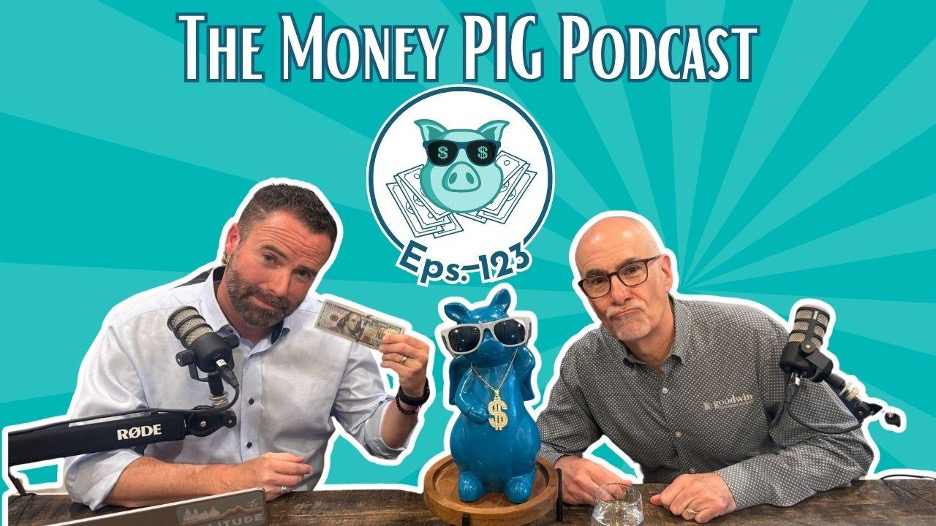
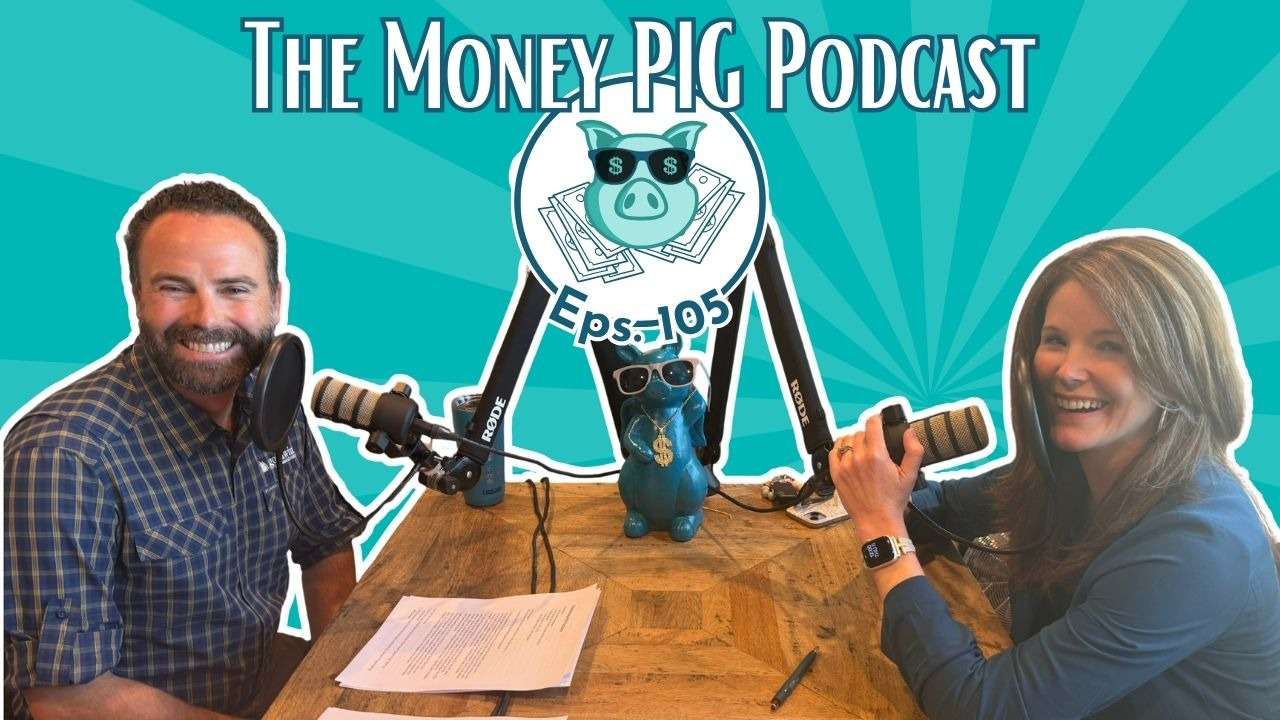
On this episode of the Money Pig podcast, host Tim Goodwin sits down with CPA and firm owner, Jamie Howell Quinn, to unpack why collaboration between your financial advisor and your tax professional can make or break your financial plan. Jamie shares real-life stories of clients who were blindsided by big tax bills because their advisor never explained the tax impact of trades—especially large capital gains that were immediately reinvested. Together, Tim and Jamie walk through how proactive communication, tax planning, and simple organization can reduce stress, avoid penalties, and create a smoother experience at tax time.
They also explore how strategies like capital gain planning, carryover losses, RMDs, Qualified Charitable Distributions (QCDs), and donor-advised funds can help you be both wise and generous with your money. The conversation ends on a deeply human note as Jamie talks about learning to give herself grace—and Tim challenges listeners to be generous not just with time and money, but also with encouragement, forgiveness, and grace toward themselves.
Key Takeaways:
- When your advisor and CPA don’t communicate, you’re more likely to be surprised by unexpected tax bills, penalties, and confusion.
- Large capital gains—even if reinvested and never seen as cash—can still trigger big tax liabilities that should be discussed before trades happen.
- A strong advisor–CPA partnership helps coordinate tax-loss harvesting, capital gain realization, and carry-forward losses to optimize your tax picture over time.
- RMDs (Required Minimum Distributions) are increasingly complex; missing one can mean steep penalties, so tracking and proactive planning are critical.
- Tools like QCDs (Qualified Charitable Distributions) and donor-advised funds can help you give more tax-efficiently and direct more of your money to causes you care about instead of to taxes.
- Simple habits—like using organizers, keeping a yearly tax folder, and saving all tax documents in one digital place—can dramatically reduce stress at tax time.
- It’s normal to feel anxious about taxes; partnering with a trusted professional lets you “hand off” that anxiety and focus on what you do best.
- Generosity isn’t just about money; you can also be generous with grace, encouragement, and forgiveness—especially toward yourself.
Keep transcript disclosure
The following transcript of the podcast audio was software-generated, and not reviewed for accuracy. Therefore, the transcript below should not be used without verifying the validity and accuracy of its content. Please contact Goodwin Investment Advisory with any questions.
Tim:
Welcome to the Money Pig podcast, presented by Goodwin Investment Advisory, where our mission is to lead you to Financial P.I.G.—peace, independence, and generosity. I’m your host, Tim Goodwin.
Alright, welcome back to the Money Pig podcast. Today I am super excited to have the one, the only, Jamie Howell Quinn. How you doing, Jamie?
Jamie:
I’m doing good.
Tim:
Awesome. Awesome. We are super excited to have you here.
Let me read a quick bio. Jamie is a CPA—Certified Public Accountant—and leads North Georgia CPA Services, which she founded in 2011. She’s a Kennesaw State grad and a lifelong Cherokee County resident, which is a rare thing these days. Jamie is known for her integrity, service, and genuine care for her clients. Named one of Cherokee’s Top 10 Young Professionals, she believes real success is built on relationships, not just numbers.
Welcome to the pod, Jamie.
Jamie:
Thank you for having me.
Tim:
When I read this bio earlier, I realized I didn’t know about the Top 10 Young Professionals accolade, but I was not surprised at all. We’ve known each other for a long time. Full disclosure for our listeners: Jamie is my personal tax preparer and CPA as well.
Jamie:
Pray for me.
Tim:
Yeah, whether she likes it or not. She’s very organized—and I have lots of “stuff.”
Jamie:
Lots of stuff.
Tim:
If you’ve got a lot going on, you need to be organized. But I love this last part of your bio about relationships over numbers. I read your monthly email, and you always lead with that—“you’re not just a number; you’re family.” You really prioritize that relational feel over purely transactional interactions. You build relationships with clients over a long time, which I think is super special.
Before we jump into the technical stuff, share with the audience something they don’t know about you.
Getting to Know Jamie
Jamie:
Alright, two things. First, I started taking piano lessons about a year and a half ago.
Tim:
Good for you.
Jamie:
I tried a little bit as a kid, but it never really went anywhere. My siblings stuck with it and I didn’t. So I’ve started again as an adult and I’m trying to actually learn how to play.
Second—and I wasn’t sure I was going to share this, but I will because it’s sweet. I’m not really a drinker. During tax season, I’ll have days where I go, “I’m having a drink tonight; this was awful.” And then a week goes by and I realize—I never had the drink. I just don’t drink very often.
But me and my daddy drink whiskey together.
Tim:
What? I love that.
Jamie:
Yeah, so that’s kind of our thing. We’ll try different kinds—Crown Royal, blackberry, peach, the regular. When my husband and I went to Scotland last November, I brought back some Scotch from a distillery, and that’s what we’ll sip together. It’s just a fun way to connect with my dad.
Tim:
You’re broadening your horizons one sip at a time.
Jamie:
Exactly—but only with my daddy.
Tim:
Speaking of your daddy, he’s got a nickname for you, right?
Jamie:
He does. He calls me Horse Fly.
Tim:
I can’t believe your dad calls you Horse Fly. Explain that one.
Jamie:
When I was little, our family had horses. We’d ride on the family property—because I live on family land. I’d have my hair in a ponytail, and it would swish back and forth when I was riding. On a horse, the tail is always swishing to knock the horse flies off, so my dad nicknamed me Horse Fly, because my ponytail moved like the horse’s tail.
Tim:
That’s fantastic. Does the nickname spread to nieces and nephews too?
Jamie:
Sometimes. My dad hands out nicknames like candy. One kid is Peanut, one is Tater because she used to eat dirty potatoes straight from the tater patch, one is Firecracker… he just comes up with stuff. And now my cousin, who lives on the property too, has goats—and one of them is named Tater.
Tim:
That’s so great. For anyone who ever watched the Blue Collar Comedy Tour, I immediately think of Ron White’s bit about getting pulled over and the cop asking if anyone in the car is named Tater.
Anyway, clearly we could talk family nicknames and whiskey all day. My wife and I enjoy whiskey too—she leans toward Woodford Reserve; I’m more of an Angel’s Envy guy. But you and your dad trading tiny shots and comparing faces—that’s awesome.
Alright, we should probably get to the content before this turns into a whiskey podcast.
Why the CPA–Advisor Relationship Matters
Tim:
You and I have worked together for years—not just on my personal returns, but with clients. We often recommend you when someone asks, “Do you know a good CPA?” There was a season when you weren’t taking new clients for a while, so we also built relationships with a few other firms. But we love sending folks your way when we can.
Let’s unpack the advisor–CPA relationship a bit. Why does that matter so much for the client?
Jamie:
I’ll give you a specific example. I have a client whose financial advisor I don’t know at all—no relationship, no communication. I’m doing her tax return, and she has $100,000 of capital gains on the return. When I finish it, she owes around $15,000 in federal taxes alone.
She says, “Why do I owe that?” I explain, “Because you had a $100,000 gain.” And she says, “But no one told me! I didn’t get any money; it was just reinvested.”
From her perspective, it doesn’t make sense—she never saw the cash. But she’s still taxed on it. That conversation should’ve started with her advisor before the trade happened. Instead, I become the messenger of very bad news.
That never happens with my clients who work with GIA. You all do a great job preparing them, explaining what’s happening and why. That’s the difference when there’s a relationship and communication between advisor and CPA.
Tim:
Yeah, that’s a terrible client experience—thinking you might get a refund and instead finding out you owe $15,000, plus maybe penalties. We realized we had to get ahead of that.
From our side, if we’re only realizing a small gain that might generate a couple hundred bucks in taxes, we’re not going to bother the CPA or the client. But once it hits a certain threshold—a couple thousand dollars in tax or more—our advisors are required to reach out and talk to the client before we make the trade.
We walk them through why we’d be willing to realize that gain and create taxes. Taxes are certain. The “better investment” we’re moving into, we just hope it does better. And sometimes we’re not even selling to chase returns—it might be a risk management issue. If someone is a moderately aggressive investor and over a few years the equities run up, they may drift from 80/20 to 90/10. We have to rebalance—sell some equities, buy some fixed income, and bring the risk back in line. That often creates capital gains, too.
So we talk to the client, explain the reason, and then we put it in writing—“Here’s the gain we realized.” But we’ve also learned that clients often forget to tell their CPA.
Jamie:
Yes. A hundred percent.
Tim:
So now, when we know a client works with you, we’ll reach out to your team directly and say, “Here’s the gain we just realized. If an estimated payment needs to be made, let’s coordinate.”
Because it’s not just “You owe $15,000 in taxes.” It’s also, “If you were supposed to make a quarterly estimated payment and didn’t, you might owe penalties because we’re in a pay-as-you-go tax system.”
That’s another reason the advisor–CPA partnership matters.
Planning Together: Capital Gains, Carryforwards, and RMDs
Jamie:
Exactly. When we’re talking throughout the year, I can tell you about carryover losses a client has. That lets you harvest some gains intentionally because you know they’ll be offset. Or you can tell me about trades you’re planning, and I can factor that into their tax projections.
Right now, I’m deep into tax planning for both businesses and individuals. I’m looking at year-to-date income, whether they need to buy assets, what their interest, dividends, and capital gains look like from their investment accounts. Quarterly statements from you all really help.
Then there’s the whole world of RMDs—Required Minimum Distributions. I’ve got a lot of older clients who are reaching that age. Every year, there are one or two who didn’t take their RMD because no one reminded them or they didn’t know.
Tim:
Remind the audience what the penalty is if you miss your RMD.
Jamie:
So, there is a form we can file to ask for relief, and often the IRS will waive it if you correct it quickly. But if you just flat miss it, the penalty can be very steep, based on the amount you should have taken out, plus tax on the earnings that shouldn’t have remained in the account.
It gets complicated quickly, and that’s why I’m thankful when an advisor is on top of it. But I still see people who don’t have an advisor or whose advisor isn’t tracking it closely.
Tim:
We are borderline obsessive about RMDs over here. We work with Fidelity as our custodian, and we track who’s subject to RMDs, who’s new to RMD age, what they did last year, what’s outstanding this year.
We literally have it on one of our ops team members’ weekly scorecard: how many RMDs are due, how many conversations have been had, and how many have been processed. If we don’t do that, suddenly it’s December and everything becomes a mad scramble.
And it’s gotten more complicated. It used to be simple: once you’re over 70½, you have RMDs. Now, the age rules depend on when you were born, whether the account is inherited, whether the original owner had started their RMDs, and so on. We’ve got a mind map just to keep it straight.
Jamie:
Same here. For inherited IRAs especially, there are all these different timelines for when the money has to be withdrawn. From my angle, I’m focused on how it’s taxed, but I lean on the advisor to help interpret the rules and execute the withdrawals.
Generosity: QCDs and Donor-Advised Funds
Tim:
Let’s talk generosity. You mentioned earlier that you like using RMDs for charitable giving.
Jamie:
Yes, I love Qualified Charitable Distributions (QCDs). For clients who are already taking RMDs, they can direct part or all of that amount straight to charity, and it can reduce their taxable income.
I’m also a big fan of donor-advised funds (DAFs)—for people who may not be using QCDs yet, or who want to give more. They can put money in the DAF in a higher-income year, potentially get a larger deduction, and then distribute to charities over time.
Tim:
We talk about donor-advised funds on this show a lot. If you’re funding a DAF with appreciated securities that you’ve held more than a year, you often end up sending more money to the cause and less to Uncle Sam.
When the charity or DAF sponsor sells those securities, they’re tax-exempt, so no capital gains tax. Meanwhile, you may get a deduction and can even repurchase the same investment with the cash you would’ve given anyway, resetting your basis. It’s a powerful strategy.
And we’re always asking clients, “Why are you giving in cash when you have this big basket of appreciated investments?”
Tax Prep vs. Tax Planning (and Reducing Stress)
Tim:
Let’s talk about the difference between tax prep and tax planning. Because during filing season, you’ve got a million returns to get out the door. That’s not the best time for big strategic conversations.
Jamie:
Exactly. We CPAs are in short supply, and our services are in high demand. During tax season, we’re heads down—cranking out returns, meeting deadlines, working crazy hours. If a client wants strategic advice, that’s better scheduled in a different season when we can focus on planning.
That’s where you, as a CFP®, can do ongoing tax-aware planning: Roth vs. traditional decisions, distribution strategies, sequencing withdrawals, etc. We work hand in hand.
Tim:
Alright, let’s give listeners something practical. Whether they work with you directly or not, what’s a good way to make tax season less stressful for them and for you?
Jamie:
First, if you’re a current client of mine, we send out organizers in mid-January. They’re basically detailed questionnaires plus a summary of your prior-year information.
I know they’re long. If you can’t sleep one night, reading the organizer might knock you out. But when you check “Yes” on something, it prompts me to ask more questions. It helps us not miss things.
If you’re new and don’t have a prior-year organizer with us, we can still give you a generic organizer to help you gather information.
Second, I’m very Type A, so I recommend creating a tax folder at the beginning of the year—label it with the year (for example, “2025 Taxes”). Every time you receive something that might be tax-related, toss it in the folder. I’d rather you give me something I don’t need than need something you never kept.
Then in January and February, as W-2s, 1099s, and other tax forms come in, drop them into that same folder. And for digital items, you can do what you do, Tim—take a picture of mailed documents, upload PDFs, and store everything in one Google Drive folder. That way you’re not hunting through email, stacks of paper, and portals trying to remember what you received.
For many people, taxes are incredibly stressful. For me, it’s just what I do. I can practically do it in my sleep. But I never minimize their feelings—I tell them, “You’re stressed about this because it’s not your world. Let me carry that stress for you.”
Tim:
I love that—“Let me worry about it for you.”
Jamie:
Exactly. And I remind them: you may be anxious about taxes, but there is something you do that would stress me out. We all have different strengths. That’s what partnership is for. So don’t beat yourself up—you don’t have to be good at everything.
Using organizers, filling out questionnaires, and keeping that one folder—physical or digital—can really lower your stress.
Closing Thoughts: Grace and Generosity
Tim:
As we wrap up, is there any final piece of wisdom or best practice you’d like to share?
Jamie:
Honestly, I’m still figuring it out like everyone else. Work is kind of my baby. I love the certainty of it—two plus two is always four. I knew I wanted to be a CPA back in high school, which is a little weird. No one in my family was an accountant, but numbers were always my thing.
Even so, I fall short every day. There’s always more to learn. The biggest advice I’m trying to give myself lately is: give yourself grace.
God gives us grace every day, but giving it to ourselves is much harder. I tend to hold myself to a higher standard than I hold everyone else. My husband often tells me, “You’re way too hard on yourself.”
So I’m praying for peace, asking the Lord to help me lay my burdens down. The challenge is not picking them back up—trusting that I don’t have to carry everything alone. So my encouragement is: give grace to others, and also give grace to yourself. We’re all just doing the best we can.
Tim:
That’s powerful. This year I’ve been thinking a lot about generosity—most people think of time and money. But we can also be generous with forgiveness, generous with encouragement, and, like you just said, generous with grace toward ourselves.
I really appreciate that perspective.
And if any of our listeners enjoyed this episode—even just for the chance to hear Jamie’s wonderful Southern belle voice—we’d be so grateful if you’d leave a review for the Money Pig podcast.
Jamie, thanks so much for coming on and sharing your wisdom with us.
Jamie:
Thank you for having me.
Tim:
And thank you, listeners, for joining us today. We’ll talk to you next time. Bye-bye.
Outro & Disclosure
Narrator:
Thank you for tuning in to the Money Pig podcast. We hope you enjoyed today’s episode. To stay updated on new episodes, be sure to subscribe wherever you listen to podcasts. If you found value in today’s discussion, we’d greatly appreciate it if you could leave a rating and review.
If you have any questions about the topics we covered, feel free to visit us at goodwininvestment.com and reach out.
This episode is produced by evanced.net. This podcast is provided for informational purposes only and should not be considered as investment advice, a solicitation to buy or sell any financial products, securities, digital assets, or other investment vehicles, nor as a basis for making any financial decisions. Goodwin Investment Advisory is a registered investment adviser with the SEC, CRD number 131193.
Please note that the host and/or guests may personally own securities, digital assets, or other investments mentioned in this podcast. Investments carry risk and are not guaranteed unless stated otherwise. We strongly recommend consulting with a qualified financial adviser, tax professional, insurance professional, and/or legal professional before implementing any strategies discussed in this episode. Lastly, past performance is not indicative of future results.
The Money PIG podcast is hosted by Reid Trego. Goodwin Investment Advisory is a Registered Investment Advisory firm regulated by the Securities and Exchange Commission in accordance and compliance with securities laws and regulations. Goodwin Investment Advisory does not render or offer to render personalized investment or tax advice through the Money PIG podcast. The information provided is for informational purposes only and does not constitute financial, tax, investment or legal advice.
For personalized financial guidance, schedule an intro call with our team at Goodwin Investment Advisory in Woodstock, Georgia . Our CFP® professionals can provide advice and help you navigate how to invest your wealth and plan for your retirement. We’d love to help you live out your legacy! To learn more about the benefits and services we offer click here.
Goodwin Investment Advisory is an SEC-registered investment adviser (CRD #131193), and this episode is produced by evanced.net. This podcast is for informational purposes only and is not investment advice or a recommendation to buy or sell any financial products, securities, digital assets, or other investments. It should not be used as the basis for any financial decisions. The host and/or guests may personally hold investments mentioned in this episode. All investments involve risk, and past performance does not guarantee future results. Please consult with a qualified financial adviser, tax professional, and attorney before taking action on any information shared.
Share This Story, Choose Your Platform!
Related Posts