
“Where should I invest my money?”
It sounds like a simple question. But the right answer for someone in their 30s may look very different from the answer for someone who hopes to retire in five years or someone who has already been retired for a decade.
That is because your money does not have just one job. Some of it may need to be available for an emergency. Some may need to provide income soon. Some may be invested for growth over many years to come. Other dollars may eventually support children, grandchildren, charitable causes, or a legacy you care deeply about.
This is where the idea of investment buckets can be helpful. It can also be confusing, because the word “buckets” means different things to different people.
In a recent episode of the Money Pig Podcast, co-hosts Tim Goodwin and Joe Beckford unpacked what people may mean when they talk about buckets and how our team at Goodwin Investment Advisory approaches the conversation.
The goal is to understand what your money needs to do for you, then build a coordinated strategy around your life.
First, what does “bucket strategy” mean to you?
Joe shared that clients often arrive with very different ideas about what an investment bucket is. For one person, buckets may refer to levels of risk, such as conservative, moderate, and aggressive. For someone else, they may represent time periods, with one bucket for spending now and another for later. Others think of buckets by purpose, such as retirement, college, travel, or legacy.
At Goodwin Investment Advisory, the first question is often the most important one:
What do you want your “bucket strategy” to do?
That answer helps us understand what someone is trying to accomplish and where confusion or gaps may exist. At Goodwin Investment Advisory, we create customized retirement plans rather than applying a generic bucket strategy. However, because this terminology may be familiar, we will explain our perspective using these terms.
Tim and Joe explained that our advisors tend to view buckets through two connected lenses:
1. The purpose, time horizon, and appropriate risk for the money
2. The tax treatment of the account and how it may fit into a long-term withdrawal strategy
Both matter, but neither should be considered in isolation.
Start with why: What does this money need to do?
Before choosing investments, we believe it is important to start with the end in mind. Is this money intended to cover an unexpected expense next month? Help fund the first few years of retirement? Continue growing for another 20 years? Or pass to the next generation? The answer helps determine how much risk may be appropriate and how easily the funds need to be accessed.
A younger investor saving for retirement may have decades to benefit from long-term growth and compounding. Someone planning to retire next year may need a more balanced strategy that provides a reliable income while keeping a portion invested for the future.
That does not mean every younger investor should be aggressive or every retiree should avoid stocks. Even in retirement, some growth may remain important because retirement can last 20, 30, or more years, and inflation can slowly reduce purchasing power.
The goal is to understand which risks you are taking and whether they fit the role each portion of your money needs to perform.
The peace-of-mind bucket
One point Tim and Joe emphasize is the importance of having readily available savings. For many retirees, that may mean keeping approximately three to six months of expenses in a checking, savings, or high-yield savings account.
Someone who is especially conservative may feel more comfortable holding more.
This money provides a safety net and peace of mind, especially when markets fall. Accessible savings may cover an unexpected expense or provide flexibility in retirement distributions without requiring you to sell a long-term investment at an unfavorable time.
However, too much cash can create another risk. Money that remains in cash for many years may lose purchasing power to inflation and miss the opportunity for long-term growth. The right reserve depends on your spending needs, other income, comfort level, and overall plan.
Your internal risk meter matters too
Risk is not only a number on a questionnaire. Each person has what Tim described as an “internal risk meter.” Two people with similar ages, assets, and retirement dates may react very differently when the market declines.
A portfolio may look reasonable on paper, but it will not serve someone well if the experience is so uncomfortable that fear drives them to abandon the strategy at the worst possible time.
Our advisors consider both a client’s financial capacity for risk and emotional comfort with market movements, as well as when the money may be needed and who may ultimately use it.
Sometimes, different accounts may appropriately carry different levels of risk. For example, a client may have more than enough to support retirement and intend for a particular Roth account to pass to the next generation. Because the time horizon may extend beyond the client’s lifetime, that account could have a different investment approach than an account used for current retirement distributions.
This is one reason why age alone cannot determine the right allocation.
The three tax buckets
When our team thinks about buckets, we often focus heavily on three broad tax categories: tax-deferred, tax-free, and taxable.
Tax-deferred accounts
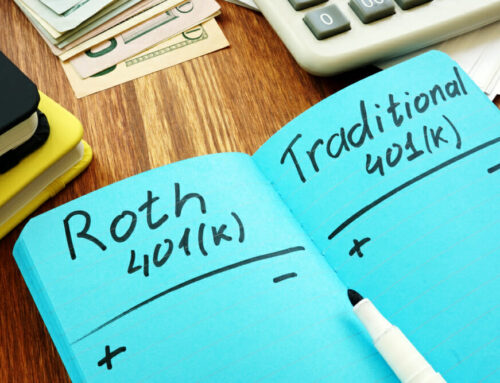
Traditional 401(k), 403(b), and IRA accounts generally allow investments to grow tax-deferred. Contributions are generally made with pre-tax dollars, which can have a tax benefit, depending on the account and the investor’s circumstances. Withdrawals of pretax contributions and earnings are generally taxed as ordinary income, and required minimum distribution rules may apply beyond age 73.
Tax-free accounts
Roth IRAs and Roth workplace accounts are funded with after-tax dollars. Qualified withdrawals are generally tax-free. These accounts may offer valuable flexibility for managing taxable income in retirement, although conversion and distribution rules must be carefully considered.
Taxable accounts
Brokerage accounts are generally funded with cash that an investor may have, e.g. from the sale of a house. These accounts do not provide the same tax deferral as retirement accounts, but they may add flexibility to your retirement strategy. Interest, dividends, and realized gains can create current tax consequences, while long-term capital gains may receive different federal tax treatment than ordinary income.
Having money across more than one tax category can give a retiree options. That is where thoughtful planning and sequencing become especially powerful.
Why withdrawal sequencing matters
Retirement income is about more than deciding how much to withdraw. It is also about deciding where that money should come from and when.
As Tim and Joe discussed, an advisor may blend distributions from pre-tax, Roth, and taxable accounts based on the client’s needs and projected tax picture. In a year when taxable income is already high, qualified Roth withdrawals or funds from a taxable account may offer flexibility. In a lower-income year, it may make sense to consider traditional IRA withdrawals, Roth conversion, or realizing capital gains in a taxable account.
These choices can affect more than the current year’s tax bill. They may also influence:
- How much of Social Security is taxable
- Medicare income-related surcharges
- Health insurance tax credits before Medicare eligibility
- Future required minimum distributions
- The after-tax value of the estate
This is why we look beyond a single tax year. Our goal is to help clients consider how today’s choices may affect their lifetime tax burden while still providing the money they need to live their lives.
It is important to remember that tax planning with your financial advisor should always be coordinated with a qualified tax professional.
It is not just what you own. It is where you own it.
Asset allocation is about the mix of investments you own. Asset location is about which types of accounts hold those investments.
The distinction can matter because the same investment may create different tax consequences depending on where it is held. Trading within an IRA or Roth account generally does not trigger a current capital gains tax bill. Trading in a taxable brokerage account may.
Interest, dividends, and realized gains in a taxable account may also create taxes even when the investor does not withdraw the money. For that reason, our investment team considers tax efficiency when building and rebalancing portfolios. Depending on the client and current tax rules, certain investments may be better suited to a taxable account while others may fit more naturally inside a tax-deferred account.
The best approach depends on the investor’s tax situation, goals, risk profile, and income needs.
How your strategy may evolve throughout life
There is no perfect bucket allocation based only on age, but the purpose of your money often changes as life unfolds.
During the building years
An investor may emphasize long-term growth while establishing emergency savings and protecting against major risks. Consistent contributions, diversification, and time can be powerful advantages.
This may also be a valuable time to build tax diversification. Saving only in pretax retirement accounts may reduce taxes today, but create significant taxes later. Depending on the circumstances, contributing to Roth and taxable accounts alongside traditional retirement accounts may create more flexibility in the future.
In the years before retirement
As retirement approaches, the plan becomes more connected. You may need to review risk, set aside near-term spending money, decide when to claim Social Security, plan for health care, and determine which accounts may fund your lifestyle.
This does not necessarily mean moving everything into cash or bonds, but matching each portion of the portfolio with its expected timeline.
During early retirement
The first years of retirement can be especially important because withdrawals begin while the portfolio remains exposed to market movement.
Poor returns early in retirement, combined with ongoing withdrawals, can have an outsized effect on how long a portfolio lasts. This is known as sequence-of-returns risk. A thoughtfully designed reserve and income strategy may provide flexibility during a downturn without requiring as many sales from long-term growth investments.
Early retirement may also create valuable tax-planning windows before required minimum distributions begin. Any strategy should consider both the immediate cost and the potential long-term effect.
During later retirement and beyond
Over time, spending patterns may change, health care needs may increase, required distributions may begin, and legacy goals may become more prominent.
The right plan at age 65 may not be the right plan at age 80, so it should be revisited as your life, the markets, tax laws, and your family’s needs change.
Common mistakes to avoid
Even a well-labeled bucket system can fall short if the pieces are not coordinated. Common mistakes include:
- Taking more risk than the plan requires
- Becoming too conservative too early
- Holding excessive cash for too long
- Making portfolio changes based on news headlines or emotion
- Ignoring taxes until retirement
- Treating every account exactly the same, even when each has a different purpose
- Focusing on investments without coordinating income, Social Security, Medicare, estate planning, charitable giving, and legacy goals
- Accumulating accounts is not the same as having a coordinated plan.
A plan built around your life, not a row of buckets
You may have a 401(k), IRA, Roth account, brokerage account, pension, and money in the bank, yet still wonder whether everything is working together. That is where the guidance of a coordinated team can make a meaningful difference.
At Goodwin Investment Advisory, our advisors and planning team consider your goals, cash flow, retirement timeline, comfort with risk, tax categories, withdrawal options, health care costs, and the legacy you hope to leave. When a situation is especially complex, we bring the team together to explore scenarios and identify planning opportunities.
As Tim noted in the podcast, it is valuable for an advisor to have “a bench behind you”, i.e. a team that will provide backup and diversity of skills that you may need. Our clients benefit from that same team approach.
The goal is to help you understand how the pieces support one another and what decisions may help you move forward with greater clarity and confidence.
 Listen to the Money Pig podcast: Hear Tim Goodwin and Joe Beckford explain investment buckets, tax types, risk, and retirement distributions in their own words.
If you are ready to stop guessing and start creating a coordinated strategy, schedule a complimentary introductory call with the team at Goodwin Investment Advisory. We would love to learn about your story, what you want your money to make possible, and how we may help guide you.
You may also enjoy:
Sources
Disclosure:
This material is provided for educational purposes only and should not be considered individualized investment, tax, legal, or insurance advice. Asset allocation and bucket strategies do not ensure a profit or protect against loss. The appropriate strategy depends on individual goals, time horizon, risk tolerance, tax circumstances, liquidity needs, and other factors. Consult the appropriate financial, tax, legal, and insurance professionals regarding your specific circumstances. Investing involves risk, including the possible loss of principal. Diversification cannot guarantee a profit or protect against loss in a declining market. Insurance guarantees are subject to the claims-paying ability of the issuing company. Registration with the SEC does not imply a particular level of skill or training.
The Money Pig podcast is produced by Goodwin Investment Advisory. The podcast is for informational purposes only and is not investment advice or a recommendation to buy or sell any financial product, security, digital asset, or other investment. It should not be used as the basis for financial decisions. The hosts or guests may personally hold investments mentioned in the episode. All investments involve risk, and past performance does not guarantee future results. Please consult a qualified financial adviser, tax professional, and attorney before taking action on information shared.
Share This Story, Choose Your Platform!
Related Posts